Walt Hampton, J.D.

Creating the Work & Life You LOVE

At Your Age?

At Your Age?

Ann and I took up backcountry skiing at the beginning of the winter.

We started out clumsily. There’s no more elegant way to say it. Skins. Bindings. Transitions. Climbing technique. Figuring out how to move uphill without feeling like we were fighting the mountain the entire way.

But we got better quickly.

Soon we were skinning up trails through the woods, finding quiet places away from the crowded ski areas, and skiing down challenging lines in deep powder. We worked hard. We laughed a lot. We came home tired in the best possible way.

We finished the season in Tuckerman Ravine.

It was a spectacular winter. And I didn’t want to let it go. So to ease the transition, I went to REI and bought a gravel bike.

Now, I’d never ridden a gravel bike. I’d never biked off road. I had no idea what I was doing. Which, honestly, was part of the appeal.

When I told a dear friend about my plan, he looked at me and said, “At your age?”

The question stung a bit. Not a lot. But enough.

It has never occurred to me that one could age out of adventure. It had never occurred to me that beginning something new required a permission slip. Or that curiosity had an expiration date.

I know my friend meant well. I’m sure he was thinking about risk. Falls. Injuries. The long list of things that can go wrong when we step outside the familiar.

Risk is real. But so is regret.

And as I thought about it, I realized his question was probably more about him than it was about me. His fears. His limiting beliefs. His sense of what’s appropriate at a certain stage of life.

We all carry those stories. Some of them are handed to us. Some we pick up along the way. Some sneak in quietly while we’re busy “being responsible.”

But they can shrink a life. They can convince us that there’s a time to begin and a time to stop beginning.

I don’t believe that.

Life is short. The seasons pass quickly. Winter gives way to spring. Spring gives way to summer. One day, if we’re lucky, we look around and realize that the only life we get is the one we’re living right now.

So start the business. Go back to school. Write the book. Take the trip. Fall in love again.

Yes, buy the bike.

Not because it’s safe. Not because it’s sensible. Not because everyone will understand.

But because something in you still wants to be alive.

Aging happens. Decay is optional.

So whatever it is for you, begin it.

At your age?

Yup. Especially at your age.

Think About The F Word

Think About The F Word

It’s the very start of summer!

Will you be getting enough F in your life?

Get your mind out of the gutter. I’m talking about fun!

Because life should be fun.

Joy is your birthright.

But given the intensity of your life, given how many demands there are for your time, quality F doesn’t just happen.

It needs to be planned. It needs to be intentional.

Former First Lady Michelle Obama spoke about it this way:

“Starting every year, before I booked anything, agreed to any meetings or conferences, we’d sit down with my assistant and we looked at our lives first,” Obama said. “We put potlucks in there, we put date nights in there, I put my workouts, we put our vacations on the calendar first, we put sports things and summers. We planned that out first, and then what was left would be left for work.”

Likely, you’re not busy running the household that runs the free world. Which means that you could approach your life this way too!

It begins by being mindful and intentional.

What do you value?

What matters most?

What will you regret not doing when the sands of your life have slipped through the glass?

Get clear on those things.

Then get them on the calendar.

Your health and wellness. The adventures and vacations. The date nights. The getaways. The magic moments.

Make them appointments with yourself.

Then dial the work in around those things.

Not the other way around.

Because the sands will slip through the glass.

And there are no do overs.

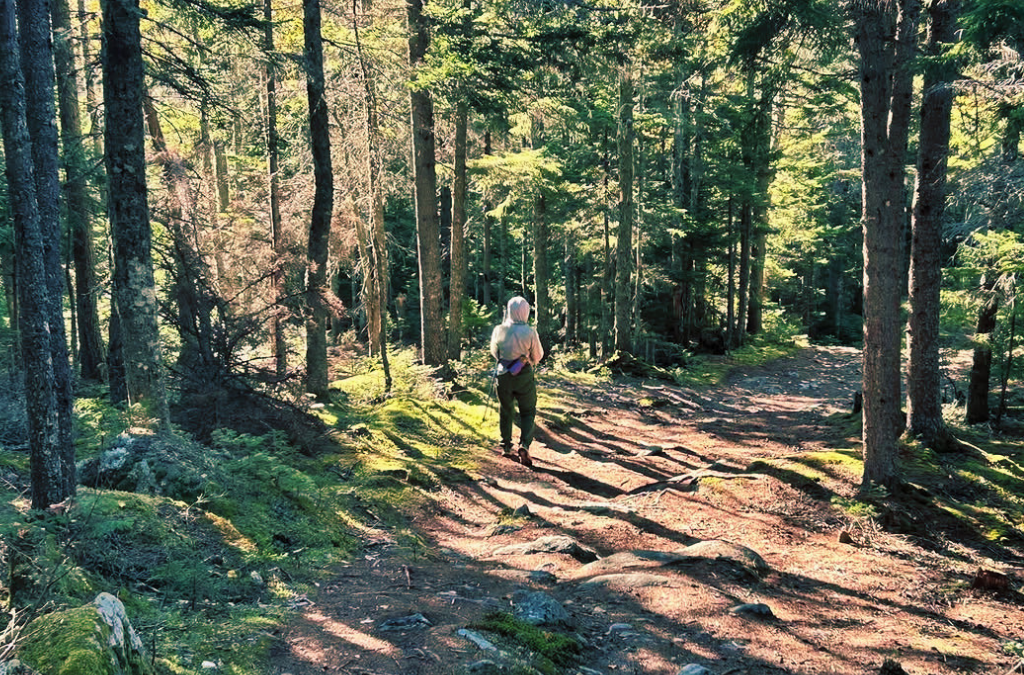
Lost In A Dark Wood

Lost In A Dark Wood

My eyes scanned the shelves. I nodded and I smiled.

I recognized that I owned nearly all of the self-help books in the store. And I knew in that moment that I was finally on the road to getting better.

That was decades ago now. Yet I remember clearly the bleakness of that time. How very lost I felt.

Divorced; single parenting; raising boys; practicing law.

Making lunches; taking kids to school; racing to work; getting the calls from daycare, the fever of 102º; the homework; the soccer games; the parent-teacher meetings; the calls from the principal; and, oh yes, the clients and the cases and the employees and the office management.

Falling into bed at night, exhausted and depleted. One day melting into the next; every day like the last.

And wondering: Is that all there is? What in god’s name is the point?

Dante wrote,

Midway on our life’s journey, I found myself in dark woods, the right road lost. To tell about those woods is hard — so tangled and rough and savage that thinking of it now, I feel the old fear stirring… .

(Yup. He sure had that right.)

The truth is: All of us get lost from time to time. We lose our way. The road gets rough and savage and really hard.

None of us escapes. (It’s what brings many folks to coaching.)

And there really is no way out of that dark wood.

The only way out is through.

Good teachers and mentors and therapists, and of course dear friends, can help us along the way.

But only we can do the heavy lifting.

Nietzsche wrote, “Those who have a ‘why’ to live, can bear with almost any ‘how.’

Rediscovering our purpose, reclaiming our sense of meaning, finding again that grand vision for our lives, allowing for the possibility of our dreams, getting in touch again with what quickens our hearts, what fires our imaginations: This is where the work is done. These are what finally lead us to the forest clearing.

SunStar3

Because our purpose is our power; and a purpose driven life is a life on fire.

I remember climbing Mt. St. Helens after it had erupted, the volcanic ash ankle deep, two steps up, one step back. A demoralizing slog.

But the view; oh the view from the top, across that landscape of renewal and regrowth: It was magnificent.

And the slide back down the hill such fun.

It’s kinda like that.

So don’t despair. You will find your way through.

And if you need help, email me: [email protected]

Turn Off The Spigot

Turn Off The Spigot

There’s too much coming at us.

Emails. Text messages. Notifications. Alerts. News updates. Social media across more channels than any sane person could possibly track. Then there are the breaking news banners, the talking heads, the outrage machine, and the endless scroll that somehow convinces us we need to keep watching.

It’s like drinking from a fire hose. Except, at some point, we’re not drinking anymore. We’re drowning.

And most of us know it.

We feel it in our bodies. The tightness in the chest. The distracted conversation. The restless sleep. The vague sense that we’re always behind, always missing something, always supposed to be responding to someone, somewhere, about something.

It’s stressful. It’s overwhelming. It’s exhausting.

And it’s not sustainable.

The strange thing is that we’ve convinced ourselves this is responsible behavior. We tell ourselves that good people stay informed. Good leaders stay reachable. Good professionals stay on top of things. Good citizens keep up.

There’s some truth in that, of course. We don’t want to be indifferent. We don’t want to be careless. We don’t want to disappear from the people and responsibilities that matter.

But constant availability isn’t the same as responsibility. Constant information isn’t the same as wisdom. And keeping up with everything is a fool’s errand, especially if the cost is your health, your presence, your relationships, and your peace.

Sometimes the most responsible thing you can do is turn it all off.

Not forever. Not as a rejection of the world. Not because you don’t care.

But because you do.

You care about your life. You care about the people you love. You care about the quality of your work. You care about your capacity to think clearly, feel deeply, listen fully, and move through the world without being constantly hijacked by someone else’s urgency.

We need to get off the grid from time to time.

That might be dinner without the smartphone. Not face down on the table. Not buzzing in your pocket. Away. Out of sight. Out of reach.

It might be an evening without email. A long walk without earbuds. A Sunday morning without news. A Saturday where you don’t check in, catch up, or scroll through the digital wreckage of everyone else’s life.

It might even be longer.

Ann and I once spent 17 days entirely off the grid in Nepal. No texts. No email. No news. No social media. No checking in to make sure the world was still turning.

And here’s the amazing thing.

The world was still turning.

Nothing collapsed because we weren’t watching. Nothing essential was lost because we weren’t available every minute of every day. We came back rested, recharged, clearer, and more alive.

You don’t need to disappear into the Himalayas for 17 days. Although I won’t argue against it.

But you do need a regular practice of unplugging. Not once a year when you’re finally exhausted enough to crash. Not only when your body or your family or your spirit forces the issue. Regularly. Intentionally. Without apology.

The spigot won’t turn itself off.

The apps won’t decide you’ve had enough. The news won’t say, “You seem tired, why don’t you rest?” Your inbox won’t close itself out of compassion for your nervous system.

You have to choose.

You have to decide that your attention is sacred. Your presence is precious. Your wellbeing is not an expendable resource to be sacrificed on the altar of staying current.

Turn off the spigot.

For dinner. For an evening. For a Saturday. For a weekend. For long enough to remember that you have a body, a breath, a life, a love, a purpose that exists beyond the screen.

You’ll miss less than you think.

And you’ll recover more than you can imagine.

AI Won’t Save You From The Treadmill

AI Won’t Save You From The Treadmill

AI has arrived with the same old promise.

More efficiency. More productivity. More speed. More time.

We’ve heard this before.

Email was going to save us time. Smartphones were going to save us time. Zoom was going to save us time. The cloud was going to save us time. Every new tool came wrapped in the promise of freedom, and yet somehow we ended up working more, not less.

The treadmill just got faster.

Now AI is here, and it really is extraordinary. It can summarize, draft, organize, research, outline, analyze, and accelerate. It can help us do things in minutes that used to take hours. Used wisely, it’s an astonishing tool.

But here’s the danger.

If we bring AI into the same old game, it won’t give us our lives back. It will simply help us produce more, respond faster, generate more content, create more noise, and keep up with a pace that was already making us tired.

That’s the zero-sum game of productivity.

Everyone gets faster. Everyone has access to better tools. Everyone can create more. The bar rises. The noise increases. The expectations expand. And pretty soon, the very tool that was supposed to free us becomes one more way to stay trapped.

AI won’t save us from the treadmill if all we want is a better treadmill.

The deeper opportunity is not to become more productive machines. It’s to become more fully human.

That’s where the wisdompreneur comes in.

A wisdompreneur doesn’t win by knowing more information. Information is everywhere now. It’s cheap, fast, and abundant. A wisdompreneur wins by bringing discernment to the information. By bringing judgment, taste, lived experience, empathy, courage, imagination, and perspective.

AI can help you assemble the pieces. But it can’t know what you know in your bones.

It can’t live your life. It can’t climb your mountains. It can’t sit across from a client and feel the hesitation behind their words. It can’t make meaning from your scars. It can’t tell you what kind of life is actually worth building.

Only you can do that.

So yes, use AI. Let it help. Let it carry some of the low-value load. Let it support your thinking, your writing, your planning, and your execution.

But don’t outsource your humanity.

Don’t use AI to become a faster version of an exhausted person. Use it to create more space for wisdom, creativity, relationships, health, reflection, and the work that is uniquely yours to do.

The real question is not, “How much more can I produce?”

The better question is, “What becomes possible if I stop confusing speed with freedom?”

Because AI can help us move faster.

But faster is not the same as freer.

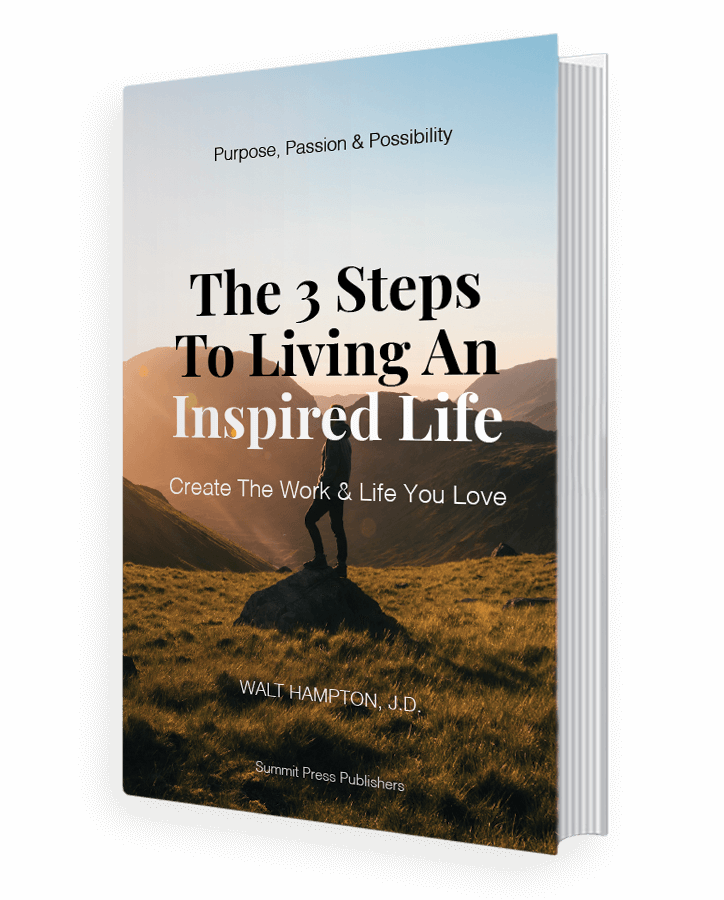
DOWNLOAD your FREE BOOK!

The-3-steps-to-living-an-inspired-life

DOWNLOAD Your Free E-Book NOW! Click Below And Get Going!

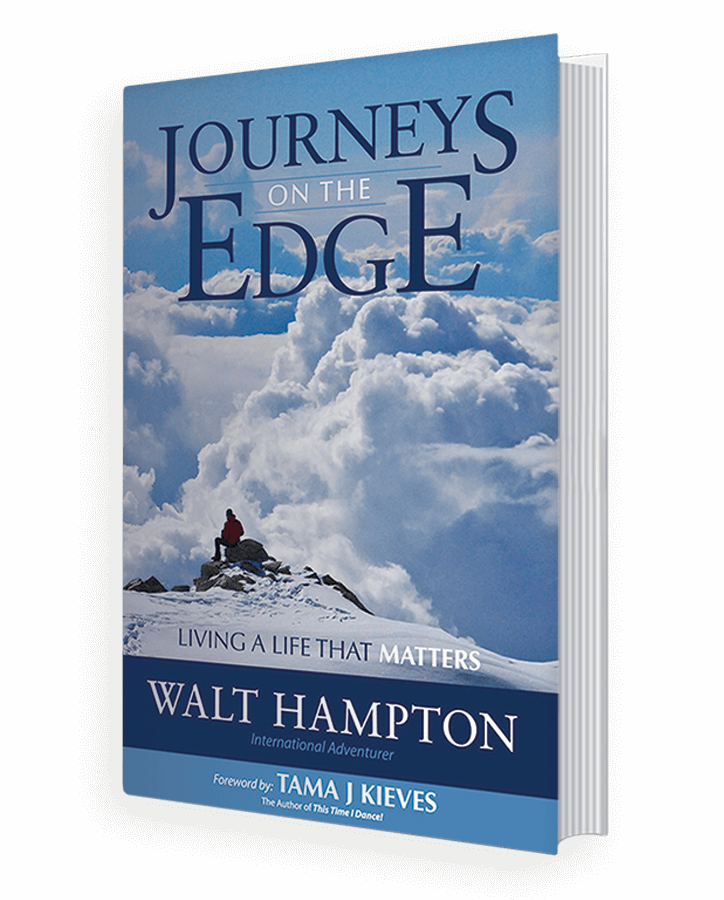
Click on the button for your copy of journeys!

Journeys-On-The-Edge

You’ll Get A Signed Copy!

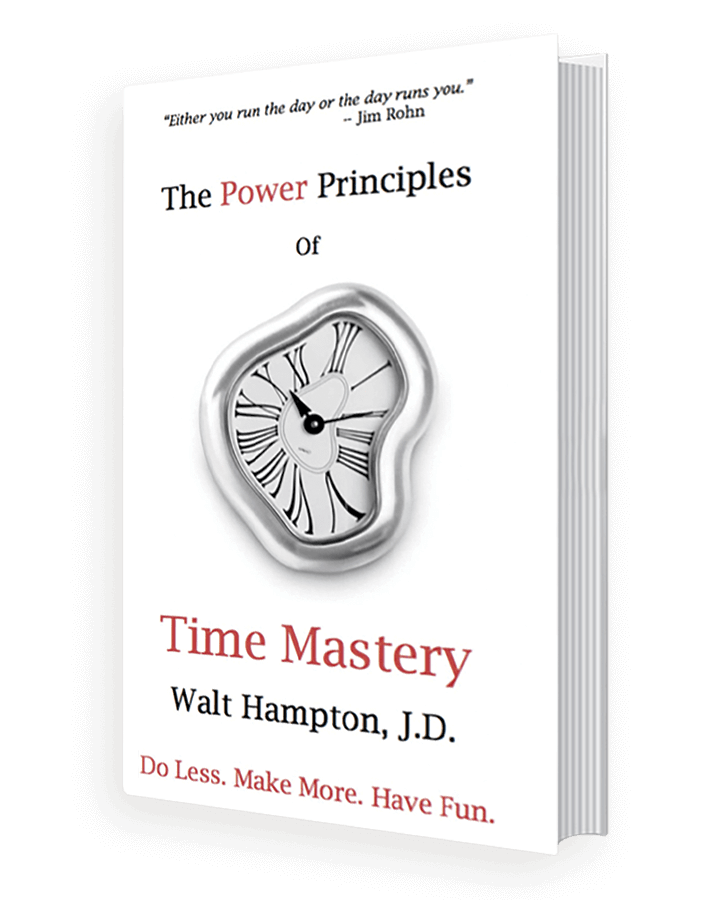
Click on the button for your copy of my brand new book “The power principles of time mastery!”

The Power Principles of Time Mastery

You’ll Get A Signed Copy!

REGISTER HERE

Free Online Training Workshop

Thanks for signing in to the workshop!