Walt Hampton, J.D.

Creating the Work & Life You LOVE

Get Some Help

Get Some Help

It was late in his career.

He’d abandoned the whole idea of a 45- or 50-minute therapeutic hour. We’d have these marathon two-hour sessions.

I think about him all the time. Irv saw me through one of the darkest chapters of my life.

I’ve been with my coach, Tama, now for more than 16 years. She’s helped me see the path when I couldn’t see it myself.

I’ve been lucky to have found wise guides across the decades. And I’m pretty sure I wouldn’t have co-created the amazing life I’m blessed to have without them.

Turns out, all those years of getting help may have been one of the smartest things I ever did.

Psychologist and MacArthur Fellow, Angela Duckworth, knows something about grit.

She’s spent much of her career studying perseverance, passion and what allows people to achieve difficult things over long periods of time.

So you might expect her to celebrate the lone striver. The fiercely independent person who keeps grinding until the problem finally yields.

She doesn’t.

In a recent piece in the The New York Times, Duckworth writes that every high performer she has studied credits other people with helping them succeed. She points to research showing that knowing when to ask for help is itself an important part of achievement.

That’s worth paying attention to if you’re an entrepreneur or business professional.

Most successful people I know are pretty fiercely independent. They’re resourceful. They’re accustomed to figuring things out and staying with hard things long after other people might have quit.

That quality probably helped make them successful.

It can also become a problem.

There comes a point when self-reliance starts narrowing your field of vision. You get locked inside your own thinking. Assumptions begin to look like facts. Old patterns become difficult to see simply because you’ve been living with them for so long.

Duckworth points to what psychologists call the “illusion of self-sufficiency.” We tend to underestimate how much of what we know, and how much of what we’ve accomplished, came to us through other people.

I’ve certainly found that to be true.

The value of a good coach isn’t that they have all the answers. I’d be suspicious of one who thought they did.

The real value is perspective.

When you’re living inside a problem, it can be remarkably difficult to see it clearly. Someone standing outside the frame can notice things you’ve stopped noticing. They can help you question what you’ve quietly come to accept as fixed.

Sometimes all it takes is seeing the problem differently. That can be enough to change what happens next.

And asking for that kind of help doesn’t make you less independent.

If anything, it’s an assertion of agency. You’re deciding that your current way of seeing things isn’t the only one available to you, and that pride isn’t a particularly good reason to stay stuck.

Duckworth also notes that entrepreneurs tend to do better when they’re connected with other people who can help them learn, think through problems and avoid bad decisions.

None of this means handing your life over to somebody else.

The responsibility remains yours.

But the mythology of the self-made person has done us no favors. Nobody gets very far entirely on their own.

Irv helped me when I was lost.

Tama has helped me see possibilities I couldn’t see by myself.

And looking back across the years, I can see how much of my life has been shaped by people who were willing to walk alongside me for part of the journey.

Getting help isn’t a failure of grit.

Often, it’s what grit actually looks like.

How To Catch A Monkey

How To Catch A Monkey

This is not a riddle.

Question:  How do you catch a monkey?

Answer: The same way we get caught ourselves.

Catching a monkey is fairly easy.  Find a coconut and go to the jungle where monkeys live.  Cut a small hole in one end of the coconut  so that a monkey can just slide its hand in. Fill the coconut with fruit. Tether the other end of the coconut  to a stake driven in the ground.

Now here’s the cool part:  a monkey will come along and, smelling the fruit, stick its hand into the hole in the coconut.  When the monkey closes its fist around the fruit, it won’t be able to pull its arm free from the coconut. Voila, it’s caught!  Go get your monkey and take it home.

Of course if the monkey gave any thought to this, it would realize that it isn’t really caught at all.  All it has to do is release its grasp and slide its hand out of the coconut. And run free.

But, you see, monkeys like their fruit. Once they get their hands around some, they’re not about to let go. Even if holding on costs them their freedom.

We do the same thing.

We hold on to work that no longer serves us. Relationships we’ve outgrown. Old grievances. Old identities. Possessions. Expectations. Ways of living that once made sense but don’t anymore.

And because our hand is clenched so tightly around them, we begin to believe we’re trapped.

Often, we’re not.

Sometimes the thing keeping us stuck isn’t the coconut.

It’s our grip.

Freedom may not require fighting harder, working harder or finding some clever way out.

It may simply require opening our hand.

What are you holding onto that it’s time to release?

Running Down The Battery

Running Down The Battery

There’s a little light in your car that can cause a surprising amount of trouble.

The dome light.

Leave it on for a few minutes and nothing happens. Leave it on all night and you may come back to a dead battery.

The light itself isn’t the problem. The problem is that it stayed on too long.

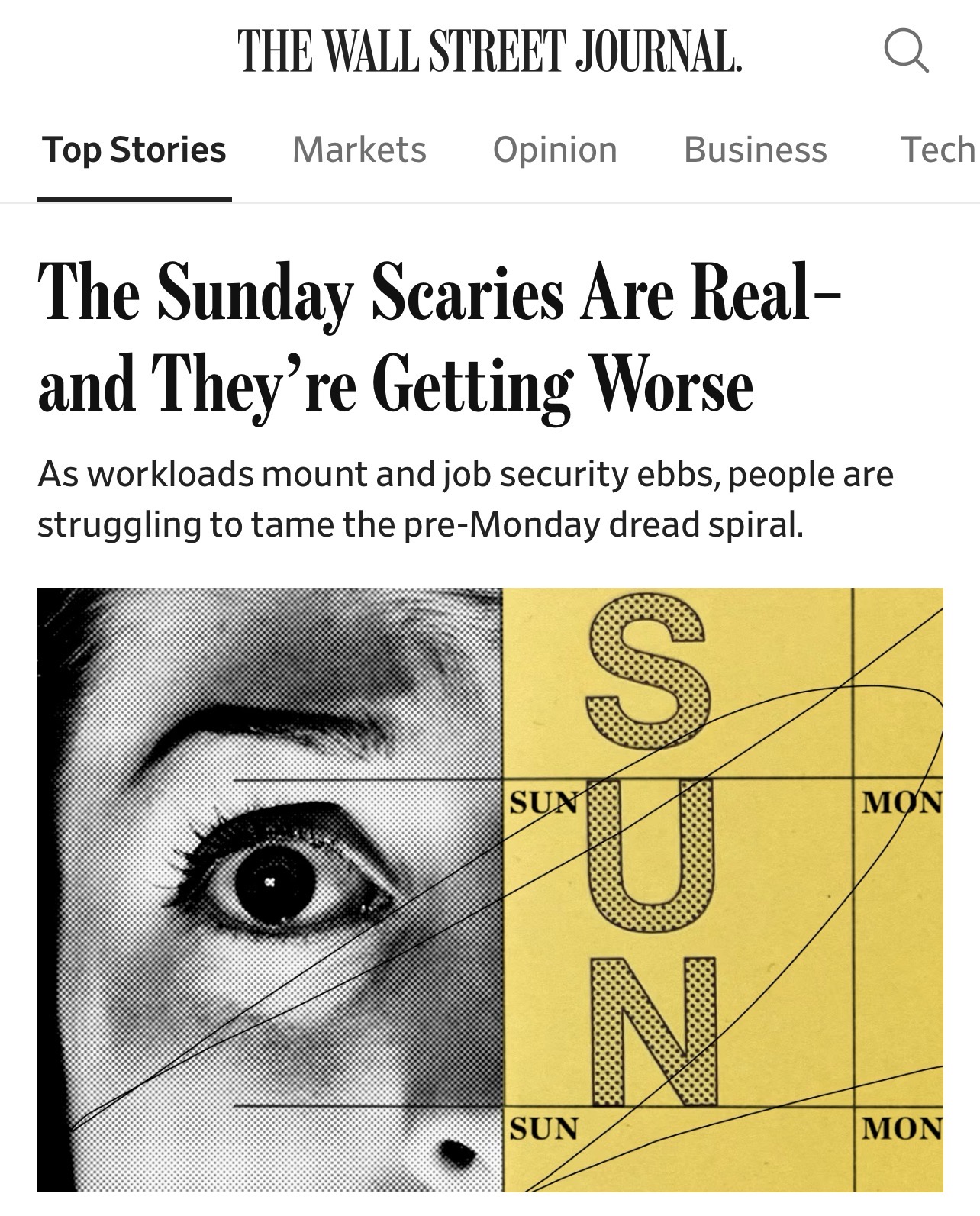
I think about that when I think about the news.

There’s so much coming at us all the time. War and unrest around the world. Political infighting and name calling. Wildfires. Climate worries. Financial markets swinging wildly. Gas prices. Violence. Tragedy. Crisis.

There’s no stopping point. The news is always there.

The red banners flash BREAKING NEWS. The talking heads dissect what happened, what might happen next, and what it all means. Then there’s another story. Another alert. Another reason to keep watching. Or scrolling.

Staying informed matters. We should know what’s happening in the world. We should understand the issues that affect our communities, our country and the people around us.

But there’s a difference between being informed and being immersed. Immersion wears us down.

We can spend an hour reading about things over which we have little or no control and then wonder why we feel agitated, distracted or exhausted.

We carry it into dinner. Into our work. Into conversations with people we love.

Sometimes we carry it right into bed with us, the phone glowing inches from our face as we take in one more awful thing before trying to sleep.

That’s the battery running down.

And the trouble is that our attention and energy are finite. If we give too much of them to the endless stream of bad news, we have less available for the life that’s actually in front of us.

Less capacity to notice a beautiful morning, enjoy a meal, take a walk, do good work or really listen when someone we care about is talking.

So the answer isn’t to tune out. It’s to create better boundaries.

Decide when you’ll check the news rather than allowing the news to decide when it gets access to you. Turn off the constant alerts. Choose a few reliable sources. Check in once or twice a day, then move on.

Be mindful about what you let in. Be intentional about how long you stay there.

The world will keep turning while you take a walk, have dinner, read a book or sit quietly for a while.

And the news will still be there when you come back.

Take care of your battery so that you can actually live this one wild and precious life.

A Night In The Museum

A Night In The Museum

The Uffizi Gallery is Florence’s great Renaissance art museum near Piazza della Signoria. Its halls are filled with works by Botticelli, Leonardo da Vinci, Michelangelo, Raphael and Titian.

You can certainly walk through it by yourself. You can admire the paintings, read the little placards on the walls, take some pictures and come away believing you’ve seen the Uffizi.

But to really see it, you need a guide.

A good guide points out the things you would never notice on your own. The symbolism hidden in a painting. The political intrigue behind a commission. The small detail in the corner of a canvas that changes the meaning of the entire work.

The painting was there all along. You simply couldn’t see everything that was there to be seen.

We understand the value of guides in so many areas of life.

The best golfers in the world have coaches. Often several of them. A swing coach. A putting coach. A strength coach. A sports psychologist.

Professional tennis players have coaches working on their serve, their backhand, their conditioning and their mental game. Actors have acting coaches. Singers have vocal coaches.

In the mountains, having a guide can be even more important. The terrain can look perfectly safe to an inexperienced eye while hiding crevasses, avalanche danger or a route that leads nowhere good.

The guide doesn’t climb the mountain for you. But the guide sees things you don’t.

And yet, when it comes to our businesses and our lives, many of us suddenly decide we should be able to figure everything out by ourselves.

We go it alone.

Part of it is pride. Part of it is independence. And part of it is simply that we don’t know what we don’t know.

We all have blind spots. We get too close to our businesses, our relationships, our habits and our ways of thinking. What looks obvious to someone standing ten feet away can be almost impossible to see when we’re standing in the middle of it.

I’ve had coaches for decades. Not because I want someone telling me what to do. And certainly not because I believe a coach has all the answers.

I have coaches because I know I don’t have all the answers.

A good coach helps me step back. Challenges my assumptions. Asks questions I haven’t thought to ask. Calls me on my stories. Sometimes sees possibilities I’ve stopped being able to see for myself.

I believe good coaches have coaches for exactly that reason.

The greatest value of a guide isn’t that they know the path better than you. It’s that they can see the terrain from somewhere you can’t.

You can certainly walk through the museum alone.

You can try to build the business alone. Navigate the transition alone. Overcome the stumbling block alone.

But there may be masterpieces hanging right in front of you that you’ll never really see.

A Vacation From The Vacation

A Vacation From The Vacation

I saw a colleague recently who had been away on vacation for a few weeks.

“How was it?” I asked.

“Good,” he said. Then he paused. “But I’m exhausted.”

They’d been to a lot of places. Seen a lot of sights. Covered a lot of ground.

By the end, he was out of sorts. The kids were out of sorts. Everyone needed some time to recover from the time they’d taken to recover.

They needed a vacation from the vacation.

Taking time away is important. Really important.

We need a break from the routines and demands of our daily lives. We need distance from the inbox, the meetings, the errands and obligations that fill our days.

A change of scenery can be restorative. New places can wake us up and remind us that the world is larger than the small circle of concerns we’ve been carrying around.

But a vacation can easily become another project.

There are reservations to make, routes to plan and sights to see. We race from one experience to the next because we may never be here again, and we don’t want to miss anything.

So we create lists. We organize the days. We measure the success of the trip by how much we managed to fit in.

It starts to look a lot like work.

The location changes. The underlying rhythm doesn’t.

We’re still rushing. Still producing. Still trying to get the most out of every hour.

And we still come home to ourselves.

That may be the part we overlook.

We carry our inner lives with us wherever we go. The restless mind comes along. So does the part of us that needs to be accomplishing something, even when there is nothing that needs to be accomplished.

We may tell ourselves that we need to get away. But sometimes the mad dash to get away is really a mad dash away from ourselves.

Then we come home and begin the cycle again.

Maybe the deeper work isn’t finding a better destination. Maybe it’s learning how to settle our hearts, minds, spirits and souls.

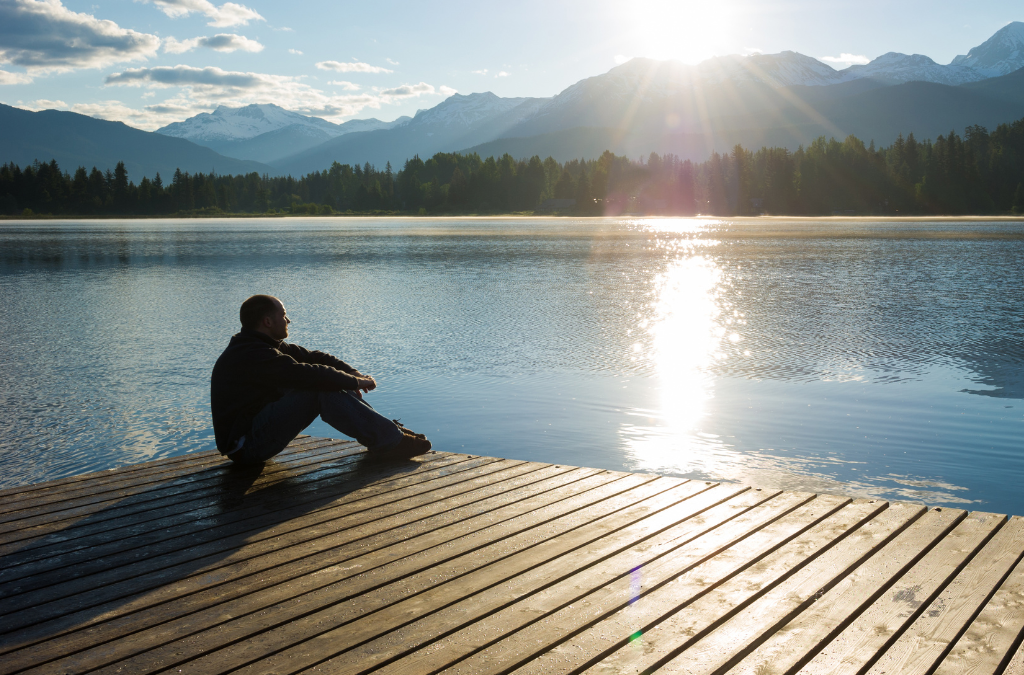
It’s learning how to sit by the water without checking the time. How to take a slow walk without needing it to count as exercise. How to have an afternoon with no agenda and not feel as though the day has been wasted.

That kind of rest can feel uncomfortable at first.

When we’ve spent years equating movement with value, stillness can make us anxious. When we’re accustomed to filling every space, an empty hour can feel like a problem to solve.

But rest isn’t another achievement.

It’s a way of returning to ourselves.

A good vacation doesn’t need to be extravagant. It doesn’t need to cover much ground. It may not even require going very far.

It needs space. It needs ease. It needs enough quiet for us to hear what has been drowned out by the noise of our ordinary lives.

The purpose of a vacation isn’t to come home with more photographs, more stories or a longer list of places we’ve been.

It’s to come home more fully alive.

DOWNLOAD your FREE BOOK!

The-3-steps-to-living-an-inspired-life

DOWNLOAD Your Free E-Book NOW! Click Below And Get Going!

Click on the button for your copy of journeys!

Journeys-On-The-Edge

You’ll Get A Signed Copy!

Click on the button for your copy of my brand new book “The power principles of time mastery!”

The Power Principles of Time Mastery

You’ll Get A Signed Copy!

REGISTER HERE

Free Online Training Workshop

Thanks for signing in to the workshop!