Walt Hampton, J.D.

Creating the Work & Life You LOVE

Be Messi

Be Messi

In high-altitude mountaineering, we have a mantra we repeat often: “When you’re in a hurry, dress slowly.”

It sounds backward. But in the mountains, hurry can be dangerous.

A rushed knot; a missed buckle; a carabiner clipped to the wrong place; a glove dropped into the wind. Small mistakes can become consequential very quickly.

When the weather is closing in, when the route is unclear, when everyone is tired and the stakes are high, the instinct is to move faster. That’s often exactly when we need to slow down.

Not stop. Not freeze. Slow down enough to become deliberate.

I thought about that while reading a recent piece about Lionel Messi. At 39, surrounded by younger players sprinting, pressing and colliding, Messi walks.

He isn’t disengaged. He’s watching.

He sees who is following him. Who has stopped. Where the space is opening. What may happen next. The game is moving quickly around him, but inside Messi, time has slowed down.

That may be his real genius.

Most of us do the opposite. When business gets chaotic, we speed up.

We answer faster. Schedule more meetings. Make quick decisions. Fill every open space with motion. We confuse urgency with importance, activity with progress, and speed with leadership.

But hurry narrows our vision.

We miss the opening, overlook the obvious, react to the loudest thing in front of us instead of seeing the deeper pattern unfolding underneath it.

The best leaders I know have a different internal clock.

They can step into a difficult conversation without being swallowed by it. They can sit inside uncertainty without rushing toward the first available answer. They can remain calm while everyone else is reacting.

They aren’t slow because they lack urgency. They’re slow enough to see.

The same is true in life. We rush through meals, conversations, weekends and even vacations, always leaning toward whatever comes next. Then we wonder why the days feel full but strangely unlived.

This doesn’t mean we never move quickly. Messi still accelerates. Mountaineers still move fast when the mountain demands it.

But speed works best when it comes after awareness. The pause creates the possibility of precision. It gives us room to choose instead of being driven by urgency of the moment.

So when the pressure rises, resist the urge to rush. Take one breath. Look again.

Notice what everyone else is missing.

Then move.

Be Messi.

The Revolution You Can Lead

The Revolution You Can Lead

We live in a time that often feels dominated by loud voices and contentious debates, where the urgent frequently drowns out the important. Yet, amidst this noise, a simple truth whispers quietly, waiting to be heard: kindness is the revolution we need.

You don’t need grand gestures or public platforms to begin this transformative work. There is no need for legislative approval, divine commandments handed down from on high, or viral social media campaigns. The call to action is far closer and far more accessible—it resides in the heartbeat of everyday interactions.

Consider this: every person you encounter carries their own burdens, battles unseen struggles, and harbors secret hopes. As you step out into your day, imagine the profound impact you could have by choosing to leave each person a little less burdened than you found them. Offer a smile, a listening ear, an understanding nod. The small acts you do can transform the world.

Encourage others to love freely and live authentically, supporting them as they build lives with those who make their hearts feel at home. Embrace the diversity of belief and thought in our world. Whether someone worships differently, or not at all, show respect for their spiritual journey, recognizing that it is as deeply considered as your own.

Reject the idea that life is a zero-sum game, where one person’s gain is another’s loss. Abundance surrounds us—there is enough kindness, enough compassion, enough understanding to go around. Resist the impulse to hoard these riches.

In the end, every life on this planet is finite, every human story a brief chapter in the vast narrative of time. Knowing this, how can you choose anything but kindness? Each moment offers a choice to affirm life or to ignore it, to build up or to tear down, to heal or to wound.

Empathy is a feature of our humanness, not a flaw. So, choose to be an architect of encouragement, a healer of hearts, and a builder of bridges. In doing this, you may just find that the most revolutionary act is also the simplest: just be kind.

Let this be the legacy you choose, the path you walk, and the gift you offer freely, without reservation.

The Productivity Gap

The Productivity Gap

Greg came into my office, closed the door, and sat down.

It was a Friday morning, and I had a pretty big pile of work to finish before the week was out. I wasn’t down for idle chitchat.

I looked up. Greg had tears in his eyes.

I was the senior associate in the litigation department, charged with guiding the new young associates. So I put my pen down and looked at him.

“What’s going on?” I asked.

Greg brushed the tears back and caught his breath.

“I used to like to wash and wax my car by hand on Saturday mornings.”

I wasn’t sure what to do with that.

“Not my jam,” I said. “But that sounds great.”

The tears welled up again.

“So what’s the problem?” I asked.

“It’s not billable time,” Greg said. “It feels unproductive.”

There it was.

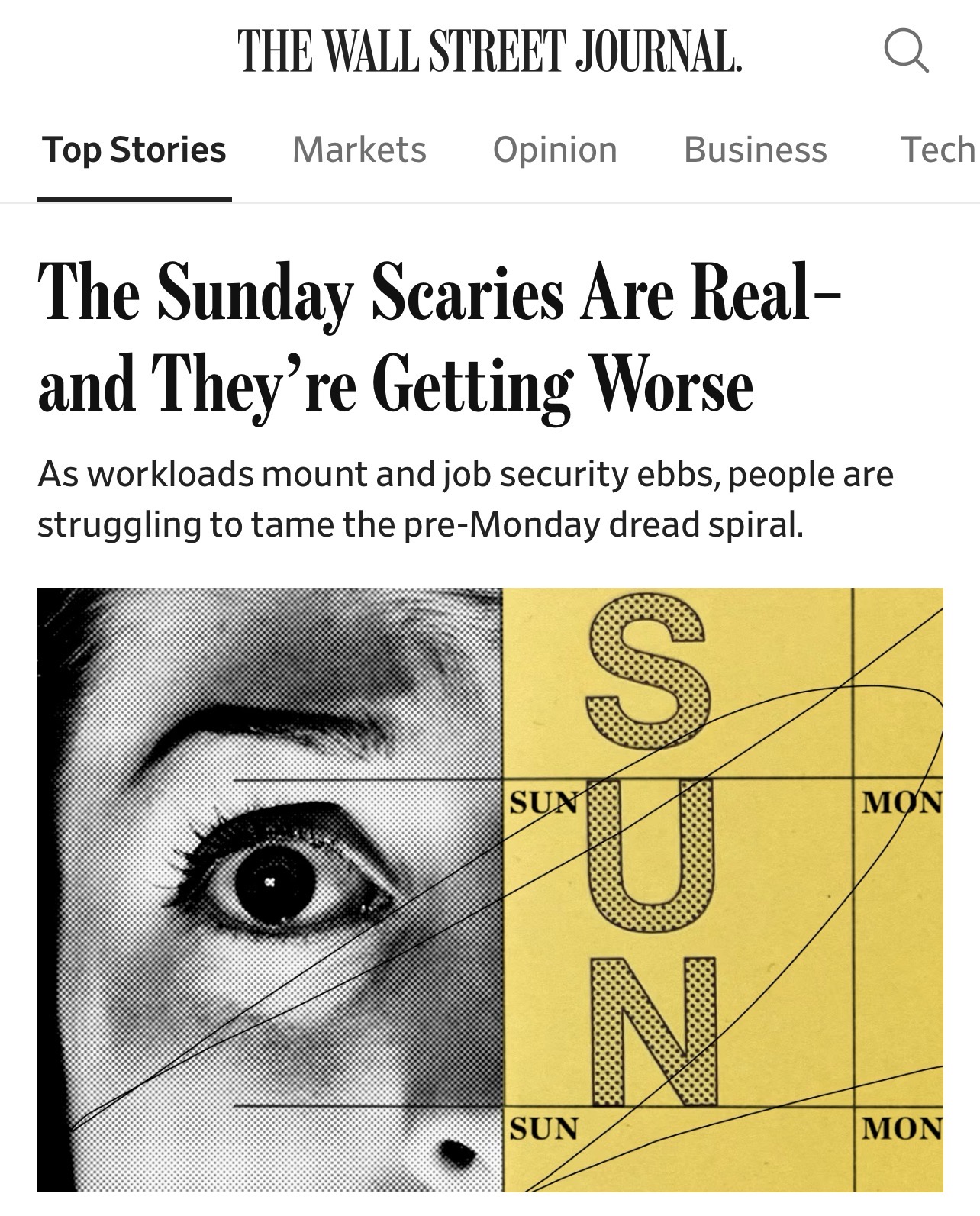
The whole sickness of the culture in one sentence.

We had a requirement to bill 2,000 hours a year as associates. That was billable time, not time in the office. Not time thinking. Not time reading. Not time walking down the hall to ask a question. Not time staring at a legal issue until the answer finally appeared.

Two thousand billable hours meant a lot more than 2,000 working hours.

It was a heavy load.

And the pressure was always there.

Stay productive. Stay billable. Stay useful. Stay ahead.

For Greg, that pressure had started to invade everything. Even a quiet Saturday morning in the driveway with a bucket, a hose, and a can of wax.

It had stripped the joy out of being unproductive.

That’s the productivity gap.

It’s the gap between how much we produce and how much life we actually experience.

Business professionals know this gap well. Entrepreneurs know it. Lawyers know it. Executives know it. High achievers know it.

At some point, productivity stops being a tool and becomes an identity.

We don’t just produce work. We measure our worth by the work we produce.

Lawyers count hours. Entrepreneurs count launches, leads, revenue, meetings, posts, podcasts, proposals, deliverables. Executives count emails answered, calls taken, fires put out, and decisions made.

The scoreboard changes from profession to profession, but the inner message is often the same.

I am valuable when I am producing.

I am falling behind when I am not.

This belief can make us successful for a while. It can help us build careers, companies, practices, and reputations.

But it comes at a cost. Because productivity is not infinite.

We like to pretend it is. We build systems, apps, calendars, reminders, workflows, and dashboards. We optimize the morning routine. We stack habits. We squeeze more out of the day.

And some of that can be useful.

I’ve spent a lifetime teaching time mastery. I believe in clarity. I believe in focus. I believe in using time well.

But I no longer believe that the goal is to stuff life with more stuff.

The longer and harder we work, the less effective we become. Our thinking gets dull. Our judgment gets brittle. Our creativity dries up. We may still be moving fast, but we’re not necessarily doing better work.

We’re just grinding. And grinding is not mastery.

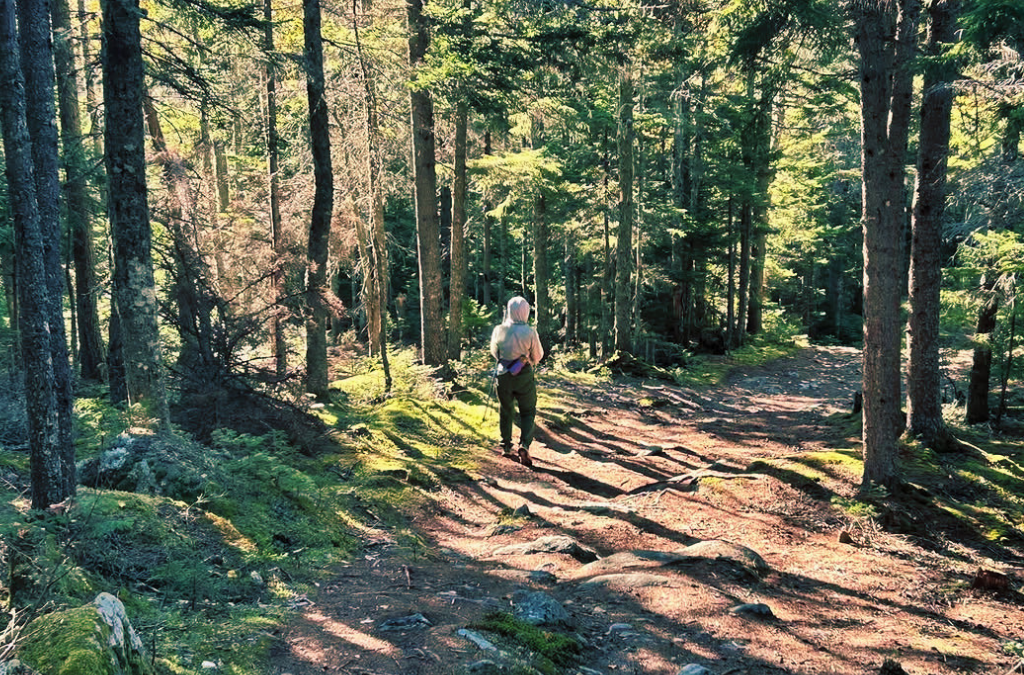
Some of our best ideas don’t come when we’re grinding. They come when we’re in the shower. Walking in the woods. Driving with the radio off. Sitting with coffee before the world gets loud.

They come when the mind has room to breathe. They come in the quiet spaciousness.

This is hard for high achievers to trust because quiet can feel like laziness. Space can feel irresponsible. Rest can feel like falling behind.

But the truth is that a life without margin is not a well-designed life.

It’s a crowded life. And often, a joyless one.

Greg wasn’t really talking about his car. He was talking about losing access to a part of himself that had nothing to do with work. He was talking about a simple pleasure that had been made to feel suspect.

That’s what an unhealthy productivity culture does. It takes ordinary human things and puts them on trial.

That’s what an unhealthy productivity culture does. It starts to put ordinary human things on trial.

A slow walk with no step-count goal. Dinner that lingers long after the plates are cleared. A Saturday with no particular agenda. A few hours with the phone off. Some small hobby that doesn’t build the brand, grow the business, or improve the bottom line.

Even conversation can begin to feel suspect unless it advances the deal, deepens the network, or moves something forward.

Without our noticing, the question starts to hover over everything:

What did this produce?

But our humanity doesn’t depend on productivity.

We’re not more worthy on the days we crush the list. We’re not less worthy on the days we don’t.

Our personhood is not tied to billable hours, revenue, inbox zero, completed tasks, or measurable output.

We’re worthy because we’re human.

Full stop.

I wish I had known that more deeply when Greg sat in my office.

I gave him some kind of pep talk and sent him on his way. I don’t remember exactly what I said. I hope it helped. But the truth is, I was pretty neurotic myself back then when it came to billable hours.

I knew the pressure. I lived inside it too.

What I know now is different.

Time is precious. It passes way too quickly to spend it always jacked up with urgency, always chasing the next thing, always trying to prove we’ve earned our place on the planet.

Work matters. But work is not the whole of life.

Productivity matters. But productivity is not the measure of a soul.

The real magic often happens in the spaces we’re tempted to dismiss.

In the quiet. In the woods. In the pause.

In the ordinary ritual that restores us for no reason other than that we love it.

Maybe it’s washing and waxing the car by hand on a Saturday morning. Maybe it’s something else entirely.

Whatever it is, it doesn’t need to be useful. It doesn’t need to be monetized. It doesn’t need to be justified.

It just needs to be lived.

Because the goal was never to produce so much that we miss our lives.

The goal was to build a life spacious enough to actually experience it.

At Your Age?

At Your Age?

Ann and I took up backcountry skiing at the beginning of the winter.

We started out clumsily. There’s no more elegant way to say it. Skins. Bindings. Transitions. Climbing technique. Figuring out how to move uphill without feeling like we were fighting the mountain the entire way.

But we got better quickly.

Soon we were skinning up trails through the woods, finding quiet places away from the crowded ski areas, and skiing down challenging lines in deep powder. We worked hard. We laughed a lot. We came home tired in the best possible way.

We finished the season in Tuckerman Ravine.

It was a spectacular winter. And I didn’t want to let it go. So to ease the transition, I went to REI and bought a gravel bike.

Now, I’d never ridden a gravel bike. I’d never biked off road. I had no idea what I was doing. Which, honestly, was part of the appeal.

When I told a dear friend about my plan, he looked at me and said, “At your age?”

The question stung a bit. Not a lot. But enough.

It has never occurred to me that one could age out of adventure. It had never occurred to me that beginning something new required a permission slip. Or that curiosity had an expiration date.

I know my friend meant well. I’m sure he was thinking about risk. Falls. Injuries. The long list of things that can go wrong when we step outside the familiar.

Risk is real. But so is regret.

And as I thought about it, I realized his question was probably more about him than it was about me. His fears. His limiting beliefs. His sense of what’s appropriate at a certain stage of life.

We all carry those stories. Some of them are handed to us. Some we pick up along the way. Some sneak in quietly while we’re busy “being responsible.”

But they can shrink a life. They can convince us that there’s a time to begin and a time to stop beginning.

I don’t believe that.

Life is short. The seasons pass quickly. Winter gives way to spring. Spring gives way to summer. One day, if we’re lucky, we look around and realize that the only life we get is the one we’re living right now.

So start the business. Go back to school. Write the book. Take the trip. Fall in love again.

Yes, buy the bike.

Not because it’s safe. Not because it’s sensible. Not because everyone will understand.

But because something in you still wants to be alive.

Aging happens. Decay is optional.

So whatever it is for you, begin it.

At your age?

Yup. Especially at your age.

Think About The F Word

Think About The F Word

It’s the very start of summer!

Will you be getting enough F in your life?

Get your mind out of the gutter. I’m talking about fun!

Because life should be fun.

Joy is your birthright.

But given the intensity of your life, given how many demands there are for your time, quality F doesn’t just happen.

It needs to be planned. It needs to be intentional.

Former First Lady Michelle Obama spoke about it this way:

“Starting every year, before I booked anything, agreed to any meetings or conferences, we’d sit down with my assistant and we looked at our lives first,” Obama said. “We put potlucks in there, we put date nights in there, I put my workouts, we put our vacations on the calendar first, we put sports things and summers. We planned that out first, and then what was left would be left for work.”

Likely, you’re not busy running the household that runs the free world. Which means that you could approach your life this way too!

It begins by being mindful and intentional.

What do you value?

What matters most?

What will you regret not doing when the sands of your life have slipped through the glass?

Get clear on those things.

Then get them on the calendar.

Your health and wellness. The adventures and vacations. The date nights. The getaways. The magic moments.

Make them appointments with yourself.

Then dial the work in around those things.

Not the other way around.

Because the sands will slip through the glass.

And there are no do overs.

DOWNLOAD your FREE BOOK!

The-3-steps-to-living-an-inspired-life

DOWNLOAD Your Free E-Book NOW! Click Below And Get Going!

Click on the button for your copy of journeys!

Journeys-On-The-Edge

You’ll Get A Signed Copy!

Click on the button for your copy of my brand new book “The power principles of time mastery!”

The Power Principles of Time Mastery

You’ll Get A Signed Copy!

REGISTER HERE

Free Online Training Workshop

Thanks for signing in to the workshop!