Walt Hampton, J.D.

Creating the Work & Life You LOVE

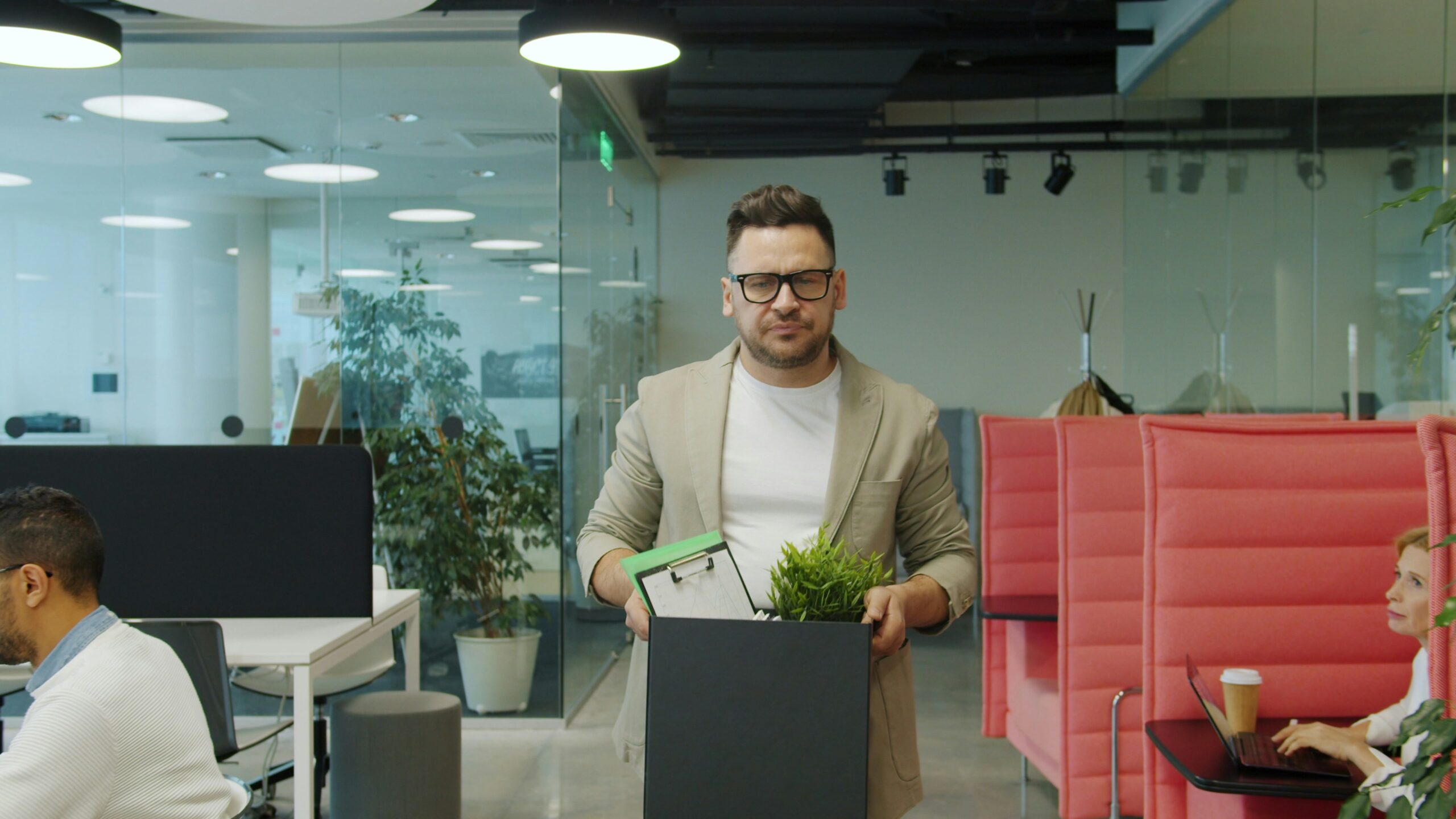
You Are Not Unemployable

You Are Not Unemployable

Maybe you’ve started to wonder.

You sent out the résumé. Worked your network. Applied for roles you could do in your sleep. And still, nothing. No interview. No call back. No human being even acknowledging that you exist.

That kind of silence can get in your head.

You start asking dangerous questions. What’s wrong with me? Am I too old? Too expensive? Too specialized? Have I somehow become irrelevant while I wasn’t looking?

Hear me on this: You are not unemployable.

You may be miscast for a hiring system that no longer knows what to do with real experience. You may be caught in a market that screens people out by algorithm before wisdom, judgment, and depth ever get a chance to speak. You may be running into age bias, institutional cowardice, or companies that say they want seasoned talent while quietly chasing younger, cheaper, more pliable labor.

That is not the same thing as being without value.

Not even close.

A lot of highly skilled professionals are living through this right now. They did good work. Built real expertise. Solved meaningful problems. Led teams. Carried responsibility. Made things better. And now they’re being treated as if none of it matters.

It’s disorienting.

It’s also a lie.

The market may not want to employ you in the old way. But that doesn’t mean the market has no use for what you know.

This is where the reframe begins.

For years, maybe decades, you were taught to think of your knowledge as something to be rented out through a job title. You had experience, yes. But the company packaged it. The company branded it. The company sold it. The company decided what it was worth.

Now that arrangement is breaking down.

Painfully, for many people.

But hidden inside that pain is an opportunity. You can begin to see your experience differently. Not just as a résumé. Not just as a list of positions held. But as an asset. As value. As a body of knowledge that can be named, shaped, and offered directly to the world.

That’s a very different posture.

Instead of asking, Who will hire me?

Begin asking, What problem do I know how to solve?

Who needs that solved?

What would it look like if I offered that help directly?

That is the beginning of reinvention.

For some people, that may mean consulting. For others, coaching. Advising. Teaching. Facilitating. Speaking. Building a small specialized practice around what they know and who they can help.

Not everyone wants that path.

But more people are capable of it than they realize.

Especially now. When the ability to create deep relationships will be the thing that is valued most in the age of AI.

The old bargain was simple. Be loyal. Work hard. Build your credentials. Give the institution your best years. In return, the institution would give you stability, identity, and a paycheck.

That bargain was never as solid as it looked.

Now the cracks are obvious.

So if you are in that painful in-between place, trying to make sense of the silence, don’t make the mistake of turning a market failure into a personal verdict.

Don’t confuse rejection with uselessness.

Don’t confuse delay with disappearance.

And don’t confuse a broken system’s inability to see you with your lack of worth.

You are not unemployable.

You may simply be standing at the threshold of building something the old system could never give you in the first place.

Freedom.

Ownership.

A next chapter that is actually yours.

If you’re highly skilled, in transition, and wondering what your next chapter could look like, let’s talk. Email me: [email protected]
Soft In The Head

Soft In The Head

Are you getting soft in the head?

I’m a bit worried that I am.

Soft in the sense that my mind is less sharp than it used to be. Less able to stay with a hard idea. Less patient with a long book. More tempted to reach for the phone, skim, swipe, sample, and move on.

That worries me.

A recent opinion piece in The New York Times by Cal Newport raised the concern that technology is not merely distracting us. It may actually be weakening our capacity for attention, reflection, and deep thought. That rings true to me.

And not just for teenagers.

For grown adults. For professionals. For business owners. For people like you and me who make our living by thinking, deciding, imagining, leading, and creating.

That’s no small thing.

If your work depends on judgment, insight, originality, discernment, and wisdom, then your mind is one of your primary assets. Maybe the primary asset.

And yet many of us spend our days in conditions that make good thinking nearly impossible.

We keep the phone within reach. We break concentration every few minutes. We let alerts, inboxes, feeds, and endless digital noise fragment our attention into tiny unusable pieces.

Now add AI to the mix.

I love AI as a tool. I use it. It can be immensely helpful.

But used carelessly, it becomes a crutch. A way to avoid the hard but necessary work of thinking for yourself. A way to bypass struggle. A way to skip the very mental reps that keep the brain strong.

That’s the danger.

Not that the tools exist. But that we let them do too much of the heavy lifting.

A strong mind, like a strong body, requires resistance.

It needs stretches of quiet. It needs sustained attention. It needs time to wrestle with ideas. It needs imagination. It needs boredom. It needs depth.

That means we have to become more intentional.

Some suggestions:

Get away from your phone. Better yet, get the phone away from you. Even its presence in the room can pull on your attention. Put it in another room. Leave it charging in the kitchen. Take back the space around your mind.

Use AI as a tool, not a substitute for thought. Let it help with research, organization, or routine tasks. But do your own writing. Build your own arguments. Form your own conclusions. That work matters.

Spend time in quiet reflection every day. No input. No stimulation. No scrolling. Just silence and space to think.

Develop ideas on purpose. Sit with a question longer than is comfortable. Let your imagination run. Follow threads. Daydream a little. Some of your best thinking will not come when you are consuming. It will come when you are allowing.

Journal deeply. Not a few bullet points dashed off in a hurry. Real journaling. Write until you get underneath the surface noise and into what you actually think.

Read books. Fiction and nonfiction both. Read without interruption. Read things that ask more of you. Reading is one of the great ways we strengthen attention, deepen empathy, and expand imagination.

And from time to time, get off the grid entirely.

A day. A weekend. Longer if you can swing it.

No feeds. No alerts. No digital drip of everybody else’s priorities entering your nervous system.

Just you. Your own thoughts. The natural world. A notebook. A book. A walk. A long conversation.

In a world built to scatter your attention, depth has become an act of resistance.

Protect your mind. Don’t let it get soft.

Train it.

Use it while you’ve got it.

Need help? Let’s talk. Email me: [email protected]

Use Your Words

Use Your Words

I could see it from my parking space. Less than a quarter mile away.

Ann’s plane from Scottsdale. On time. I was so excited.

But the plane had stopped short of the gate. Another plane was parked there.

Five minutes went by. Ten minutes.

Ann texted me. The flight attendant had announced they’d stopped short of the gate because another plane was there and couldn’t move.

Ten minutes went on and on. Ann texting me periodically. With nothing to report.

This went on for ninety minutes. No communication whatsoever from the pilot or flight attendants.

People were losing it. Frustrated. Angry. Done.

And the thing is, it didn’t have to be that way.

Even if someone had gotten on the intercom every ten minutes and said, “We’re still waiting. Here’s what we know. Here’s what we don’t know,” it would have changed everything.

Same delay. Different experience.

Because communication regulates emotion. Silence amplifies it.

Here’s the part most professionals miss.

When people don’t hear from you, they don’t assume everything is fine. They assume something is wrong.

Worse, they fill in the blanks. And the stories they create are almost always negative.

You don’t care. You forgot. You’re incompetent. You’re hiding something.

None of that may be true.

But silence writes the story for you. And it never writes a good one.

This is why one of the biggest complaints against lawyers rises to the level of disciplinary action. Not bad lawyering. Not losing cases.

Lack of communication.

Clients can tolerate a lot. They cannot tolerate being left in the dark.

And this isn’t just a legal issue. It’s a leadership issue. A business issue. A human issue.

If you run a business. If you lead a team. If you serve clients.

You are in the communication business.

Full stop.

Your job is not just to do the work. Your job is to narrate the work.

To bring people along. To reduce uncertainty. To create clarity in the midst of ambiguity.

And here’s the standard.

Communicate early. Communicate often. Communicate even when there is nothing new to say.

Especially then.

Because what people are really asking is not, “Do you have an update?”

They’re asking, “Are you paying attention? Are you still with me? Can I trust you?”

A simple message does more than convey information.

It conveys presence.

“I haven’t forgotten you.” “I’m on it.” “Here’s what I know.” “Here’s what I don’t know yet.” “I’ll check back in at…”

That’s it. That’s the move.

It takes two minutes. And it builds enormous trust.

Or preserves it.

Because the absence of communication erodes trust faster than almost anything else.

You can do great work. You can be brilliant. You can deliver results.

And still lose the relationship.

All because you didn’t use your words.

So here’s the invitation.

Take a look at your clients. Your team. Your partners.

Where are people waiting on you? Where are they in the dark? Where are they making up stories because you haven’t closed the loop?

Go there.

Send the note. Make the call. Give the update.

Even if the update is, “We’re still waiting.”

Especially then.

Use your words.

They matter more than you think.

Afraid

Afraid

Fear is in the air right now.

You can feel it in conversations. In the news. In the markets. In the low grade tension people carry around in their bodies. War in the Middle East. Cultural uncertainty. Financial uncertainty. A sense that the ground beneath our feet isn’t quite as solid as it used to feel.

And when fear rises in the larger culture, it doesn’t stay out there. It finds its way into our personal decisions.

Especially the big ones.

I see it often in mid and late career professionals who are standing on the edge of a possible next chapter. They’re considering a pivot. A new business. Consulting. Coaching. Finally writing the book. Moving into work that feels more aligned with who they’ve become.

There’s excitement there.

Real possibility.

But also fear.

The unknown has a way of doing that. Even when the future holds promise, the human mind is very good at inventing worst case scenarios. What if it doesn’t work? What if the money isn’t there? What if people judge me? What if I fail?

Those questions can stop people dead in their tracks.

And right now, with so much uncertainty swirling around us, that fear can feel even louder.

Which is why I sometimes ask a coaching question that tends to cut straight through the noise.

“What would you do if you weren’t afraid?”

It’s a simple question. But it has a way of illuminating things.

When people pause and really sit with it, something interesting often happens. The fog begins to lift. The answer that comes forward is usually not complicated or dramatic. Often it’s something they’ve quietly known for a long time.

Start the business.

Reach out to that potential client.

Write the first chapter.

Have the difficult conversation.

Take the first step toward the work they actually want to be doing.

Fear doesn’t disappear when you ask the question. It’s still there. Fear is part of being human.

But the question shifts the focus.

Instead of organizing your life around fear, you begin organizing it around possibility.

And from there, the next step often becomes clear.

If you’re standing at the edge of a decision right now, try asking yourself that question.

“What would you do if you weren’t afraid?”

You might already know the answer.

Need help? Let’s talk. Email me: [email protected]

The Hidden Cost of Busyness

The Hidden Cost of Busyness

No doubt you’re busy. Which might be a good thing.

But, what’s easy to miss is that busyness has a cost. A cost many professionals don’t recognize until a lot of time has already slipped by.

When your days are packed from morning to evening, your attention starts to fragment. One thing rolls into the next. Emails, texts, meetings, conversations, more emails. The day moves quickly, and by the time evening arrives you’re worn out from the pace of it all.

Yet if you pause for a moment and look back on the day, something unsettling can appear. You were active for hours. But the work that truly matters didn’t move very far forward.

Busyness can create the feeling of productivity without delivering real progress. The activities fill the calendar, but the important work remains untouched.

Meaningful work rarely happens in the cracks between interruptions. It needs space. It requires the kind of focus that only comes when the noise quiets down and your attention can settle on one thing long enough for real thinking to occur.

Most people don’t give themselves that kind of space. Instead they live in a constant state of reaction, responding to the next email, the next request, the next thing demanding attention.

Over time, days blur into weeks and weeks blur into months. A tremendous amount of energy gets spent simply maintaining motion rather than creating meaningful momentum.

I see this all the time in my coaching work. Talented professionals and capable entrepreneurs are working incredibly hard, yet their energy is scattered across too many directions. Their calendars are full, their inboxes are overflowing, and their attention is constantly being pulled toward the next urgent demand.

The problem usually isn’t effort. Most of these people are working very hard.

The real issue is focus. Without protected time to think, plan, and build something meaningful, even very capable professionals can find themselves spinning their wheels.

The people who move forward most consistently tend to operate differently. They guard their attention carefully. They block time for the work that matters most and become selective about what earns a place on their calendars.

And the most successful of all open up be swaths of time for thinking and reflection.

This can feel pretty uncomfortable at first. Saying no to meetings or requests doesn’t always come naturally, and leaving open space in the day can seem almost irresponsible in a culture that celebrates constant activity.

But that space is exactly where clarity emerges. It’s where strategy begins to form and meaningful work finally starts moving forward.

Busyness may look impressive from the outside. But real progress comes from focus, intention, and the willingness to step out of the noise long enough to do the work that truly matters.

So the question isn’t whether you’re busy. Most professionals are.

The better question is this. Are you busy with the things that actually move your life and work forward?

DOWNLOAD your FREE BOOK!

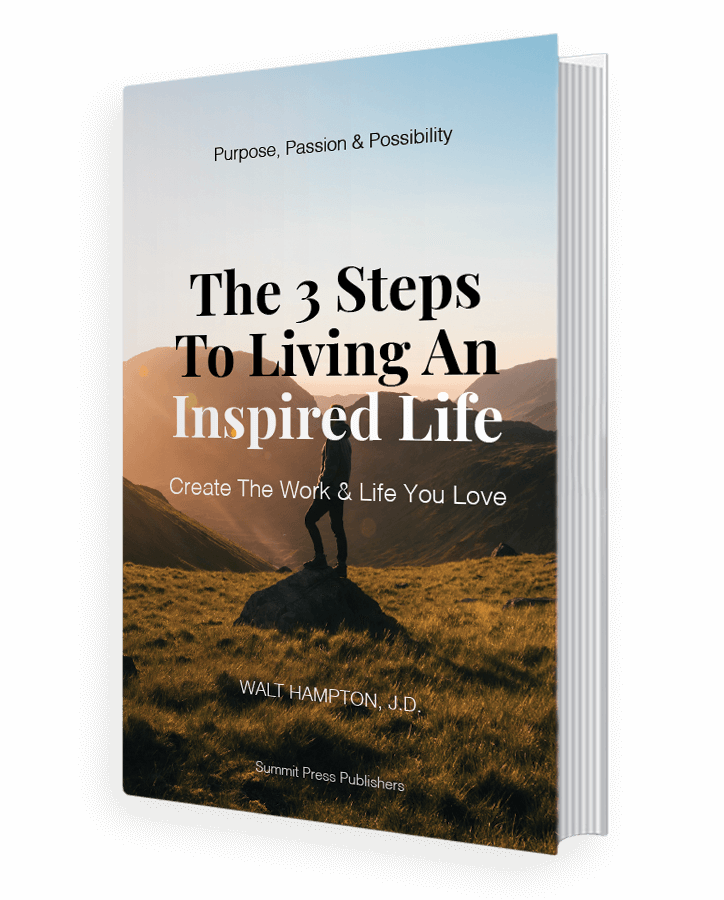
The-3-steps-to-living-an-inspired-life

DOWNLOAD Your Free E-Book NOW! Click Below And Get Going!

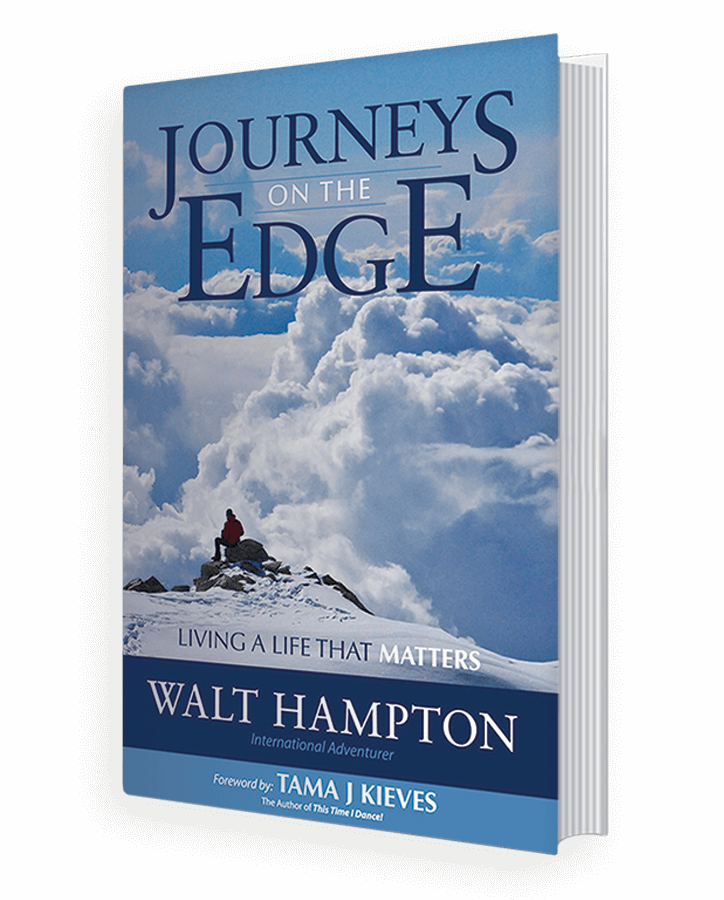
Click on the button for your copy of journeys!

Journeys-On-The-Edge

You’ll Get A Signed Copy!

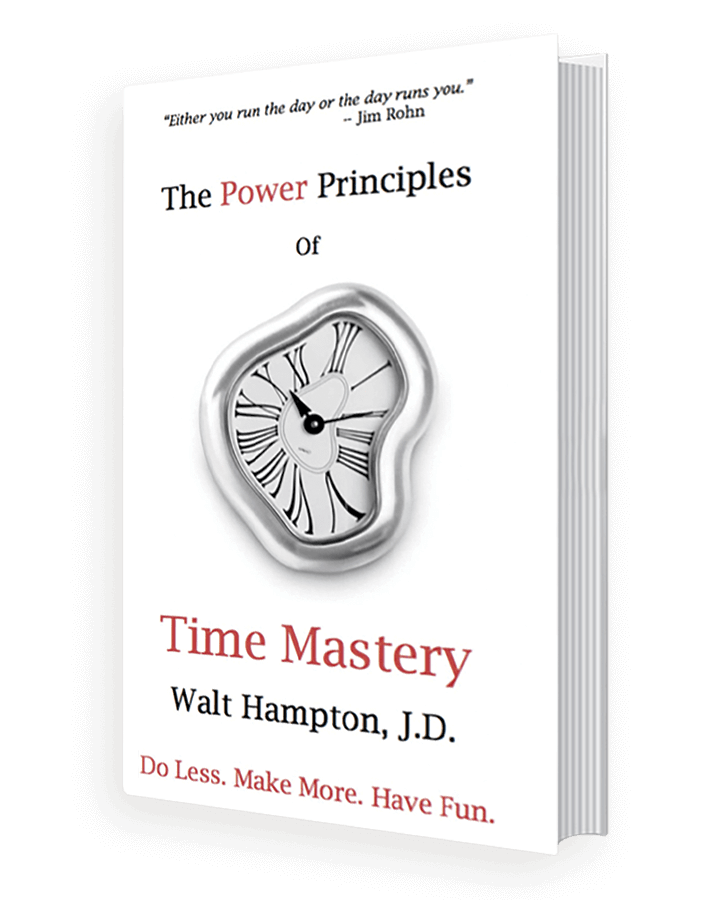
Click on the button for your copy of my brand new book “The power principles of time mastery!”

The Power Principles of Time Mastery

You’ll Get A Signed Copy!

REGISTER HERE

Free Online Training Workshop

Thanks for signing in to the workshop!