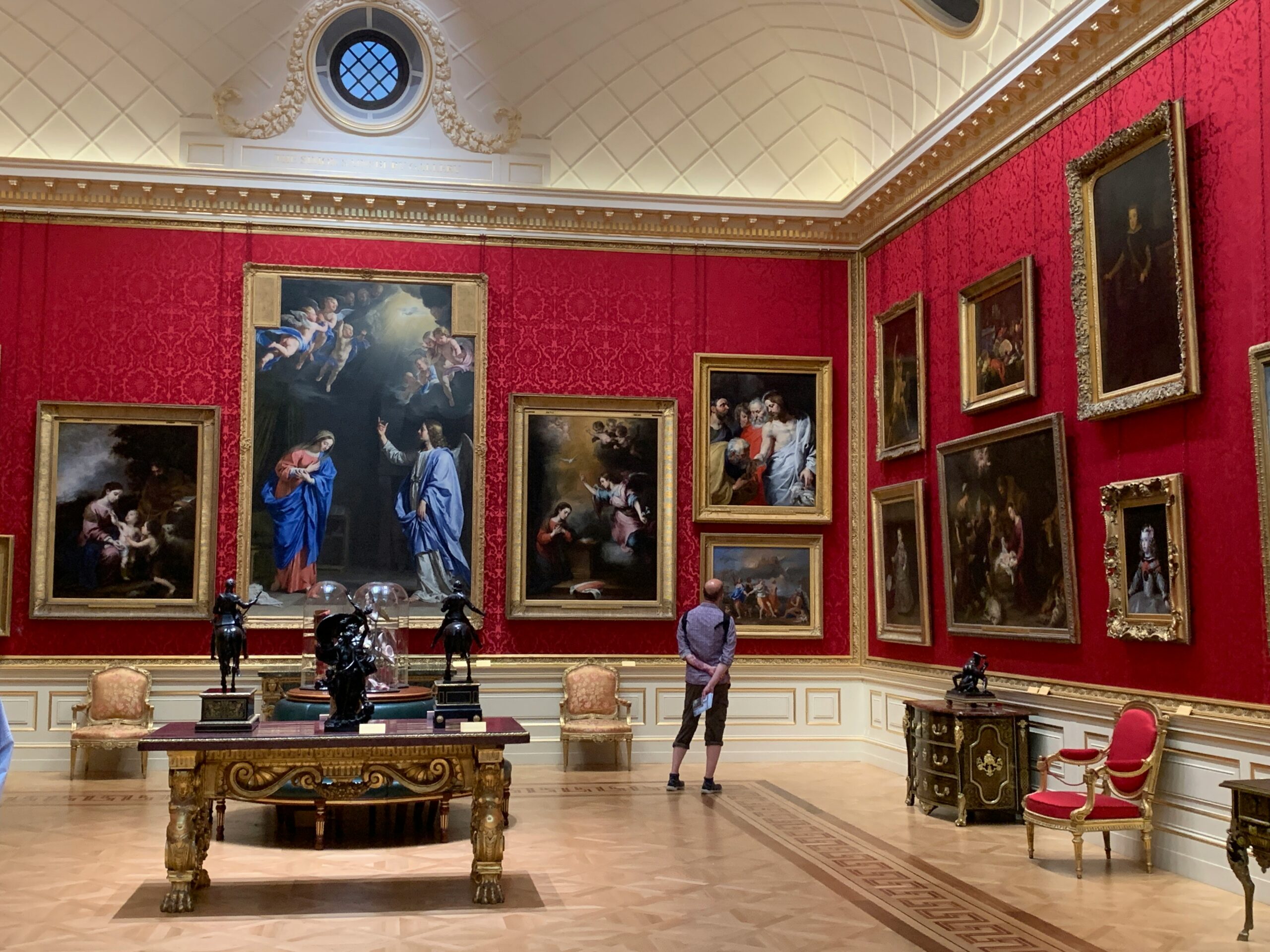
The Uffizi Gallery is Florence’s great Renaissance art museum near Piazza della Signoria. Its halls are filled with works by Botticelli, Leonardo da Vinci, Michelangelo, Raphael and Titian.
You can certainly walk through it by yourself. You can admire the paintings, read the little placards on the walls, take some pictures and come away believing you’ve seen the Uffizi.
But to really see it, you need a guide.
A good guide points out the things you would never notice on your own. The symbolism hidden in a painting. The political intrigue behind a commission. The small detail in the corner of a canvas that changes the meaning of the entire work.
The painting was there all along. You simply couldn’t see everything that was there to be seen.
We understand the value of guides in so many areas of life.
The best golfers in the world have coaches. Often several of them. A swing coach. A putting coach. A strength coach. A sports psychologist.
Professional tennis players have coaches working on their serve, their backhand, their conditioning and their mental game. Actors have acting coaches. Singers have vocal coaches.
In the mountains, having a guide can be even more important. The terrain can look perfectly safe to an inexperienced eye while hiding crevasses, avalanche danger or a route that leads nowhere good.
The guide doesn’t climb the mountain for you. But the guide sees things you don’t.
And yet, when it comes to our businesses and our lives, many of us suddenly decide we should be able to figure everything out by ourselves.
We go it alone.
Part of it is pride. Part of it is independence. And part of it is simply that we don’t know what we don’t know.
We all have blind spots. We get too close to our businesses, our relationships, our habits and our ways of thinking. What looks obvious to someone standing ten feet away can be almost impossible to see when we’re standing in the middle of it.
I’ve had coaches for decades. Not because I want someone telling me what to do. And certainly not because I believe a coach has all the answers.
I have coaches because I know I don’t have all the answers.
A good coach helps me step back. Challenges my assumptions. Asks questions I haven’t thought to ask. Calls me on my stories. Sometimes sees possibilities I’ve stopped being able to see for myself.
I believe good coaches have coaches for exactly that reason.
The greatest value of a guide isn’t that they know the path better than you. It’s that they can see the terrain from somewhere you can’t.
You can certainly walk through the museum alone.
You can try to build the business alone. Navigate the transition alone. Overcome the stumbling block alone.
But there may be masterpieces hanging right in front of you that you’ll never really see.

0 Comments