Walt Hampton, J.D.

Creating the Work & Life You LOVE

Why You Need To Stop Thinking

I’m a big fan of thinking and reflection. In fact, carving out dedicated blocks of time for thinking and reflection is a practice essential for creativity, innovation, and long-term success. And sadly, it ‘s become a lost art; a casualty of our culture of overwhelm.

But ‘thinking’ can become a roadblock; and excuse for not taking deliberate action.

Perseveration the poor cousin of resistance.

(After all, who can really fault you if you’re ‘thinking’ about a challenge, ‘working’ on it, ‘trying’ to figure it out? Read this: sitting around, wringing your hands.)

At some point in time, you need to take action.

Races get run, mountains get climbed, art gets made, books get written, businesses are built, masterpieces are created… only when you act.

I have one client who tells me that he has been spending a lot of time thinking about how to discover his passion. Another has been thinking (a long time!) about how to position herself in the market for her job search.

It sounds rational to be doing this thinking. But it’s so easy to get stuck in a place of uncertainty; fearful that we will err; afraid that we might get it wrong.

My advice: Act. First Step

“Feel the fear,” as Susan Jeffers says, “and do it anyway.”

Action is the antidote for uncertainty; action is the antidote for lack of clarity; and action is the antidote for fear.

It is in taking action that we put our thoughts and ideas to the test. We see what works; and what doesn’t. We revise, adjust, modify, pivot; and act again.

Lather, rinse, repeat.

Martin Luther King said, “Take the first step in faith. You don’t need to see the whole staircase. Just take the first step.”

The next step will appear. It most certainly will.

Action creates momentum; action eviscerates resistance; action precipitates ideas.

Small steps over time lead to magnificent outcomes.

So just do it, as the Nike ad once said.

Get going. Take action. Today.

Cruel To Be Kind

It was a pretty hefty litany of challenges.

“If one of your team came to you with this long, sad story,” I asked, “what would you say?”

“I’d say to her… take the rest of the day off. In fact, take a long weekend. Do what you need to do to take care of you; and feel better.”

I paused to let it seep in. “So can you do that for yourself?” I asked.

My colleague, a c-level exec, had come to me for some coaching. She was struggling with illnesses in her family, and challenges in her business. She had been “on” for a long time. She hadn’t been getting enough sleep. She had been doing little to nurture herself. She was worn down, stressed out and spread thin. There was nothing left.

“Yes,” she said. “I can do that. I don’t know why I couldn’t see that that’s exactly what I need to do.”

It’s because, as entrepreneurs and professionals, we are often harder on ourselves than we are on anyone else. We hold ourselves to incredibly high standards; even higher than those we hold for our people. We demand of ourselves sustained, uninterrupted peak performance. We are highly intolerant of our own weaknesses; and unforgiving of our shortcomings. We drive ourselves longer, harder and faster than we would ever reasonably expect of others.

And then we wonder why we’re flagging; why we’re flailing; why we’re not making progress; why we can’t get traction; why we’re stuck; why we’re not meeting our goals.

We can’t seem figure out what’s gone wrong.

Because we’re in our own way.

Taking care of ourselves, nurturing ourselves, being kind to ourselves… these are core success principles! The basic fuel. Screenshot 2014-12-02 19.00.11

For me this means adhering to my basic daily practices: my running, my journaling, my sitting meditation. It means eating well; and getting lots of sleep. It means going off the grid on a regular basis because, as an introvert, that’s how I recharge. And it means taking lots of time off to re-ground and re-create.

You already know what you need to do for you. The trick is to acknowledge that doing so is not wasteful but, rather essential to the work you do in the world.

Of course, like everyone, I drive too hard, and fall off the cart from time to time. (We teach what we most need to know!).

But I’ve learned that we can be cruel to ourselves… or be kind.

And kind works out so much better. For everyone.

KISS

Why do so many of us have a love affair with the iPod™, the iPhone™, the iPad™?

Because Steve Jobs believed so passionately in elegant simplicity.

“Simplicity is the ultimate sophistication,” Jobs said.

“Simple can be harder than complex: You have to work hard to get your thinking clean to make it simple. But it’s worth it in the end, because once you get there, you can move mountains.”

Simple is powerful. Simple is good.

And yet, for so many folks, complex is their place of default.

We see it frequently among our coaching clients when they confront business challenges. They immediately want to:

Add personnel
Build out infrastructure
Supplement their technology
Create more layers

Now, there’s nothing intrinsically wrong with leverage or growth. The problem is the potential for the complexity they cause.

Small businesses and solopreneurs often have great advantage over larger enterprises because they are more efficient, fleeter of foot; more able to bob and weave and adapt to change.

They’re clearer about their visions, their missions, and the problems they solve.

They can craft their cultures and engage their teams more mindfully.

They’re more deft at nurturing passion and focus, which brings with it clarity of outcome.

Larger organizations, because of structural constraints like committees and policies and procedures, have the propensity to be less creative, more cumbersome, and rote.

And with layers and structure come fixed cost and overhead.

With big, the business model can become complicated. You need to be able to describe your business to your 8th grade daughter or your nephew in a way that he or she can understand it. Because, if they can’t understand it, how will your customer?

Big, too, can become confusing in terms of mission and purpose. As a business grows, it becomes harder to convey and sustain the founding vision, the original passion, and the fundamental cultural values.

Effecting change in a large complex enterprise, especially in times of crisis, can be like turning a supertanker from the crashing waves of a reef: laborious and slow and fraught with danger.

Big can also take on a life of its own, which may be good if you’re planning successive generations of management; or are creating a model for passive income; or are growing your business to sell it But if you envision wanting to escape someday, big may not be so good. One surgeon that I know would love to retire; but he has no clue how to disentangle himself from the equipment leases, the machinery, the phone systems, the layers of personnel and the crushing burden of malpractice insurance. He is a prisoner in his business, a hostage to the hungry “monster” he has built.

Often one of the fundamental reasons that business fail, according to Jim Collins, author of the business classic Good to Great, is because of “the undisciplined pursuit of more.” Greg McKeown, author of the recent best seller Essentialism, suggests that, in the alternative, success comes from “the disciplined pursuit of less.” Screenshot 2014-07-23 06.36.31

So next time you hit a speed bump, instead of automatically seeking to add something to the mix, why not ask instead,

• What should I be doing less of?
• What should I eliminate?
• What should I make simpler and easier?

Simple became an obsession for Jobs. It’s not a bad one to have.

Just Go Away!

This is a popular time of the year to take a vacation. Except that a lot of folks don’t.

Last year, there were about 169 million unused paid vacation days that were forfeited by U.S. workers, amounting to over 52 billion dollars in lost benefits. Forty percent of workers will leave paid vacation days unused this year.

Culturally, in many organizations, workers are  explicitly or implicitly discouraged from using their vacation time. On my first day at The Big Law Firm, my mentor said to me, “You get three weeks of vacation.” And then he lowered his voice, looked me square in the eyes and said, “But no one ever takes them.”

This is dumb. GoAway

Vacations help you to:

  • Recharge
  • Refocus
  • Re-boot

The Huffington Post reports an internal study of Ernst and Young employees in which it was found that “for every additional 10 hours of vacation an employee took, his or her performance ratings went up by 8 percent — nearly 1 percent per day of vacation. That means companies where employees are leaving two and three and four weeks of vacation on the table are foregoing an enormous productivity boost.”

Tony Schwartz, CEO of the Energy Project, says that “the best way to get more done may be to spend more time doing less.”

We know that, in athletics and physical training, rest and recovery are keys to peak performance. For some reason, though, we pretend that this principle is not applicable to our work lives. So we just keep on going like hamsters on a wheel; which results in stress, burnout and poor productivity.

When you take a vacation – a real vacation (yes, that means away from the tether of your computer and your smartphone) – you come back rested, refreshed and ready to take on the world.

So go.

And if you decide to forfeit your days, please give them to me. I promise that I’ll put them to good use.

Why I Can’t Talk With You Anymore

It seemed funny at the time: My seventeen year old son and his girlfriend, sitting in the back seat, side by side, texting each other, rather than talking.

It doesn’t seem as funny now.

The technology that is meant to connect us often doesn’t. Instead, we have become increasingly scattered and distracted, dwelling in a state of continuous partial attention. We tweet in 144 characters. We text in abbreviated words. We take in information in bullet points and sound bites.

We are expected to be always on, always accessible. We stand like players on a digital tennis court, waiting for a ball to be served over the net, not wanting to miss a play, and always wanting to be seen as available to volley back.

We have lost the capacity to sit still, to be still, and to know the beauty and the grandeur of quiet and solitude. We have lost the capacity to create space for creativity; and we have lost touch with the power of reflection.

At risk is our capacity to relate, really relate; to communicate deeply… to look each other in the eye and talk… really talk.

I participated recently in a mock networking event for graduating business students. Bright and driven; at the top of their class. And not a one could hold my gaze in conversation. IMG_5581

And last week, traveling through the Newark airport, we stopped for dinner. On each table – firmly mounted between the place settings – an iPad – to order our food and drinks and surf the net and update our statuses and… everything except a (real) connection with the person across the table… because that would require looking over or around that now sacred tablet.

Some studies have shown that stepping away from our smartphones and tablets can have the same physical and mental impact as going cold turkey from smoking or drugs. But what might it be like to put our tech aside for just an evening… or a day… or a week? What might it be like to reconnect with ourselves… and with those we love?

Disconnect to connect. Will you give it a try?

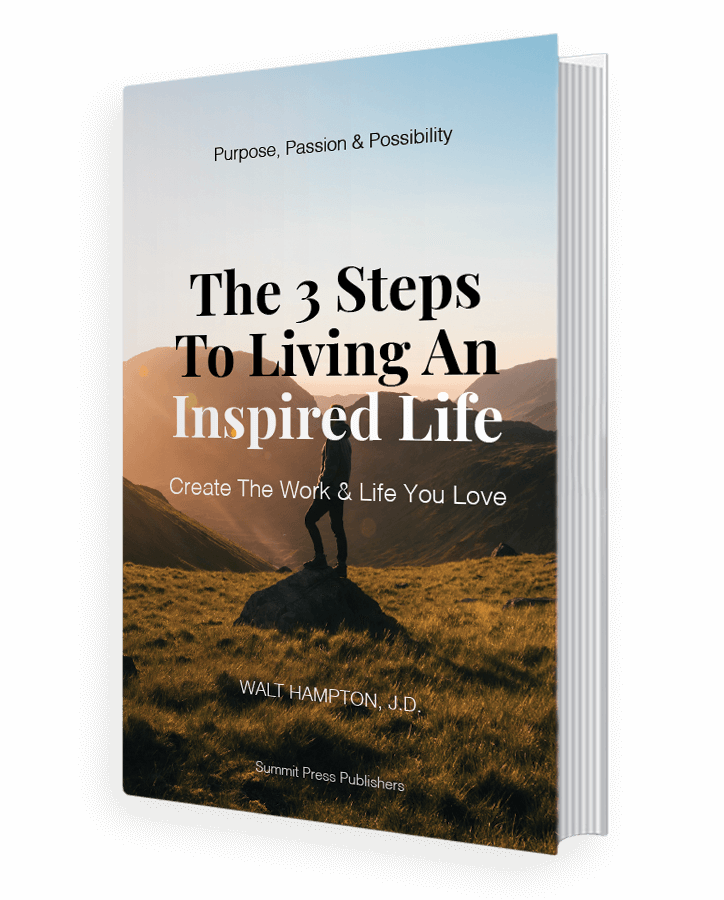
DOWNLOAD your FREE BOOK!

The-3-steps-to-living-an-inspired-life

DOWNLOAD Your Free E-Book NOW! Click Below And Get Going!

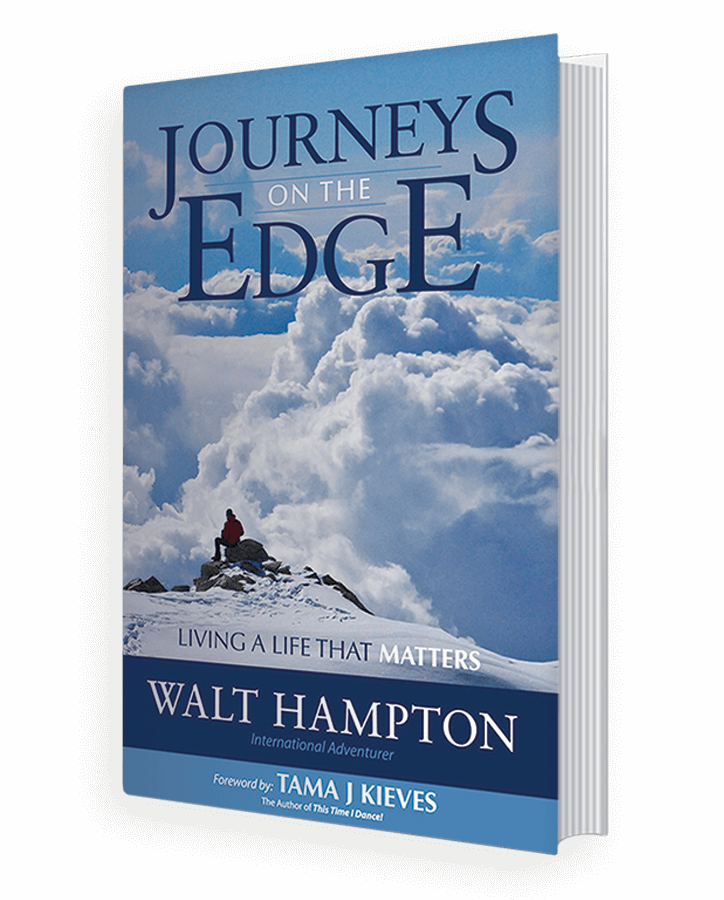
Click on the button for your copy of journeys!

Journeys-On-The-Edge

You’ll Get A Signed Copy!

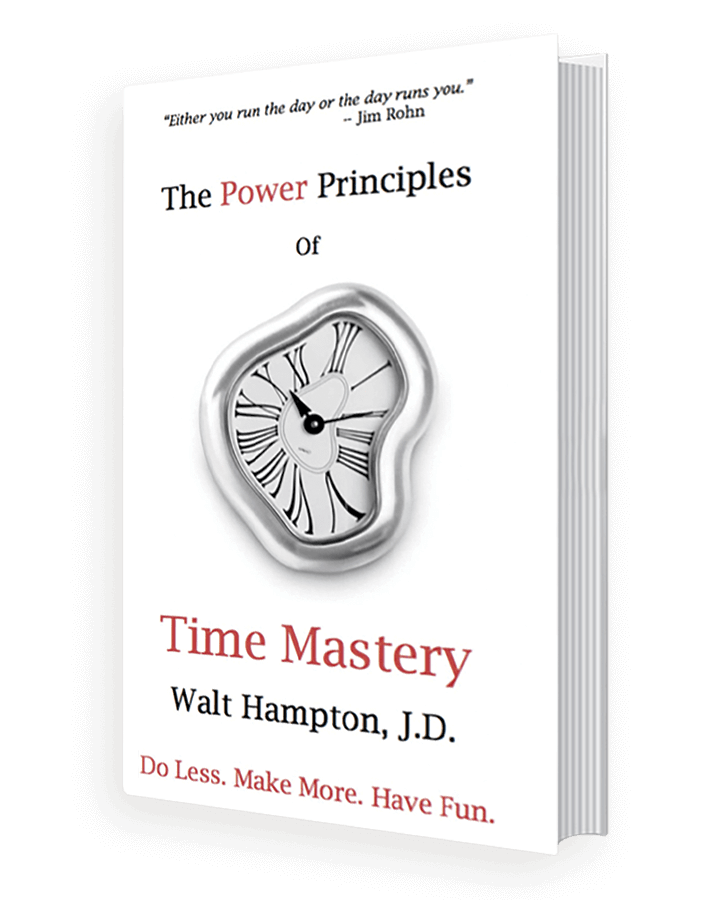
Click on the button for your copy of my brand new book “The power principles of time mastery!”

The Power Principles of Time Mastery

You’ll Get A Signed Copy!

REGISTER HERE

Free Online Training Workshop

Thanks for signing in to the workshop!