Walt Hampton, J.D.

Creating the Work & Life You LOVE

The Beavers Are Busy. Are You?

Behold, I will do a new thing; now it shall spring forth; shall you not know it? I will even make a way in the wilderness, and rivers in the desert. — Isaiah 43:19

I’ve noticed the beavers at work along the river these past few mornings.

It seems that spring came in the northern hemisphere last week. A good thing. It’s been a long and malingering winter.

Some winters are like that.

Winter, for many, means hardship. Storms and brutal cold; grey skies, short days and long, dark nights; shoveling snow, icy roads and heating bills that seem to never end.

Things tend to lay dormant in the winter. Many in the animal kingdom hide out and hibernate.

In the people kingdom too.

Then the spring comes. New life, new energy, new hope. A reprieve; a new beginning.

And so it is in all our lives.

What we do in the springtime of our lives matters. How we till the soil; what we plant; where we plant it; how much we care.

What we build; how we build it.

The summer will surely come. And then the harvest time. It always does.

That harvest, what we reap, will depend on these very moments in our lives: What we sow in the here and now will dictate the seasons yet to come.

  • In our businesses and careers;
  • In our networks and relationships;
  • In our marriages and partnerships and families;
  • In our health and fitness;
  • In our financial lives;
  • In the service of others.

It’s easy to be complacent in the spring, what with the weight of winter finally lifted off. But spring is a time for focus; the time to re-charge, to re-double our efforts. The seeds that we plant, the investments that we make, the care and the attention that we bring to the spring in our lives will yield a thousand fold in the soft glow of our autumn time.

Of course, the seasons of our lives don’t always correspond with Mother Nature. I surely have experienced some desperate winters in the midst of spring; and brutal heat that killed the seeds long after harvest time had come.

But the spring of the year is a good time to remind ourselves of the never-ending rhythm of things; that even in the darkest of nights, the light will return. And that when it does, we have an opportunity to begin again; to create anew; to make our lives the masterpieces they’ve always been meant to be.

Jim Rohn said, “You cannot change the seasons; but you can change yourself.”

In every moment – in every spring – we get to choose.

Wherever you are, whatever the season for you, let’s begin again.

___________________________________________________________________

This is an encore of a post first published on March 28, 2014.


Your Feelings Don’t Really Matter

I had just finished speaking to a university audience on leadership and goal achievement, and had stayed on afterwards to chat with the students.

“I know exactly what I want,” my young listener proclaimed.

Looking earnest, he furled his brow. “It’s just that I don’t always feel very motivated.”

“I don’t really give a fuck what you feel,” I replied with an equal amount of furling and earnestness.

“If you know exactly what you want… and you want it badly enough, then you’ll show up every day and do what needs to be done whether you feel like it or not.

He flinched, only slightly, as I jabbed my finger in the air for extra dramatic import: “Motivation is vastly overrated.

And it is.

I rarely feel motivated to run, or go the the gym, or put on over mitts to go out into the arctic cold to climb. There’s not a whole lot of motivation going on when I think about driving three hours to a ski area or hoisting the kayaks onto the roof of a car. I almost never feel motivated to write. In fact, I’ve put off writing this blog until the very last moment possible, perhaps just to dramatically punctuate my own perpetual lack of motivation!

You see, motivation is flighty. It’s not dependable. It comes… and it goes. Sometimes it shows up; more often than not, it doesn’t. Even when it comes to stuff we like or want.

What’s important is the knowing. Knowing what you want. Knowing what you like. Knowing where it is you want to go. And why.

When you’re clear about your destination, when you know your outcome, then all you need to do is act. You’re pulled forward by the vision of what you will achieve. How you feel from moment to moment is irrelevant. In fact, your transitory ‘feelings’ usually just end up getting in the way.

I know how much I value my fitness and vitality over time when I run. And so I run. Whether I feel like it or not.

I know how much I love the creative process of writing and the sense of satisfaction I have when the words I have written have an impact on someone I have never even met. So I write. Whether I feel like it or not.

Get clear on what you really, really want.

Then get going. And stay at it.

In the meantime, it doesn’t really much matter how you feel.

___________________________________________________________________

This is an encore of a post first published on March 20, 2104.


The B.S. Question

If there is one question that comes up more frequently than any other in the course of getting started with a new coaching client, it’s this one: How do I do that?” As in, how do I start my own firm or launch a new product or transition into a new career?

The question is almost always a b.s. question.

Because here’s what true. People who come to me for coaching – frequently lawyers who want to make more money or create more clients or start their own businesses or transition into different careers – are highly educated peak performers. When I ask them to reflect back over the course of their lives, I ask them a different question: “Has there ever been a time in your life when you have wanted to achieve something – really, really, really wanted to achieve something – and you haven’t been able to achieve it?” And every single time I ask that question, without exception, the answer is: “Never.”

That’s because the folks who come to my door are achievers; they bust through obstacles; they wrestle things to the ground; they make stuff happen… when they want to.

But here’s what often happens in mid-career, in mid-life… especially when we’ve been “successful” at something for a long, long time… especially when we think about the effort it takes to change: We become afraid… and then we ask a different question: “How do I do that?”

And, really, who can fault you for staying stuck if you’re trying – really trying – to figure something out; if you’re earnestly (cue hand wringing) grappling with “how to” do something. It sounds perfectly reasonable, completely understandable (you certainly don’t want to make a “wrong” move!) … until you recognize that anything you’ve every really wanted to do, you’ve figured out how to make happen; that you never really asked the “how to question;” you’ve just done it.

The only question then – the only relevant question – is do you want what you say you want? Do you really, really want it? If you do, we’ll figure out the how. I promise you.

That other question: pure b.s.

Managing The Monster

There’s a wonderful story that I loved to read to my boys when they were young: There’s A Monster Under My Bed by James Howe. It’s speaks playfully but powerfully to that irrational fear of the dark that so many of us struggled with. And, of course, most of us came to realize that the monster existed only in our imaginations.

But there’s another monster that lurks for many of us. It’s called our email inbox. And it’s real!

I shared my Time Mastery training workshop recently in NYC. The CEO of the company admitted to me he had thousands of emails in his inbox, many of them unread!

Talk about lions and tiger and bears. Oh my!

All of us are inundated with emails every single day. And for many, the inbox becomes a vast wasteland of garbage and chaos.

It’s time to manage the monster.

Start by applying what I call The Three Ds: Do. Delegate. Delete.

  • By Do, I mean respond in that moment to the email; or if it requires no response and is important as a record, file it in an appropriate folder, moving it from your Inbox.
  • Delegate means forwarding it, in that moment, to your assistant or colleague together with appropriate instructions to be handled by that other person.
  • Delete means getting rid of it. Right then.

By the way, take the time, in the first instance, to unsubscribe to unwanted emails or mark them as spam (of course, the exception to this would be emails from me). And set appropriate filters to segregate emails for easier review. (Gmail is especially useful for this practice.)

Ok, you say… but I’m that CEO with 2000 unanswered emails in my Inbox. I’m drowning. Tell me how to start!

Declare email amnesty. Set up a file folder called Old Inbox. Move your entire Inbox to that folder. And start again.

This way, you can begin anew with these more powerful practices. If something crops up from an old email, you’ll be able to find it. The likelihood is that you’ll discover that the Old Inbox is kinda like that shabby cardboard box that’s been sitting in the back of your garage for the last 6 years… good for not much of anything. (But, of course, if you’re in a profession like law or medicine or financial services, you probably shouldn’t just chuck it.)

When I was a student at Cornell Law School, there was a grand old movie, based on a book, about legal education called The Paper Chase. Indeed, when I first started practice, it was all about the paper. Email, and its attendant technologies, was supposed to cure us of that. But alas, we’ve been left with a monster.

But it can be tamed.

______________________________________________________________________

By the way, here’s a short video I recorded on the topic for The Connecticut Bar Association that you might enjoy:

If I Call You, Please Don’t Answer

During a job interview, a client of mine received a phone call. She answered.

A realtor friend told me that his broker expected him to answer every phone call he received regardless of what he was doing; and, in no event, should he ever take more than 9 minutes to return a call.

The general manager at the hotel we stayed at took a phone call in the middle of a conversation we were having about my reservation.

We were at one of our favorite restaurants. Five women came in and sat down at the table next to us. Every one of them pulled out their smartphones and began to talk or text.

It is the paradox of connection: that the more our technology allows us to connect, the more disconnected and fragmented we become.

Research in the field of interruption science shows that, following an interruption like a phone call, it takes us (physiologically) 25 minutes to refocus. On average, most of us experience interruptions every 11 minutes in the day. Which means that, not only do we feel like we can never catch up, we never really can.

On top of the stress and overwhelm caused living in a state of continuous partial attention, there is a huge relational cost. (You know how you feel when someone you’re with answers the phone or sneaks a look at a text.)

The young interviewee (of course) didn’t get the job. When my realtor friend takes a phone call while showing a property to a client, he dishonors both relationships. The general manager at the hotel couldn’t possibly take care of two guests at once. And the women at the table next to ours missed out on the opportunity to connect with one another.

So consider these ideas as possible ways to reconnect with yourself and those around you:

  • Voice mail exists for a reason. Use it
  • Turn your phone off when you are otherwise engaged
  • Don’t slap your phone down on the table at the restaurant; it tells your colleagues you’re already distracted
  • Don’t sleep with your phone; it’s toxic and depleting
  • Have a smartphone free dinner (or weekend!)

When you’re in a conversation with a client, be in that conversation. When you’re on the phone, be on the phone. When you’re with your friends and family, be with your friends and family.

Relationships fuel our businesses (and our lives). Our real presence, our complete attention: these are the most powerful gifts of our humanity.

Do one thing; and then the next. And if I call, you don’t need to answer.

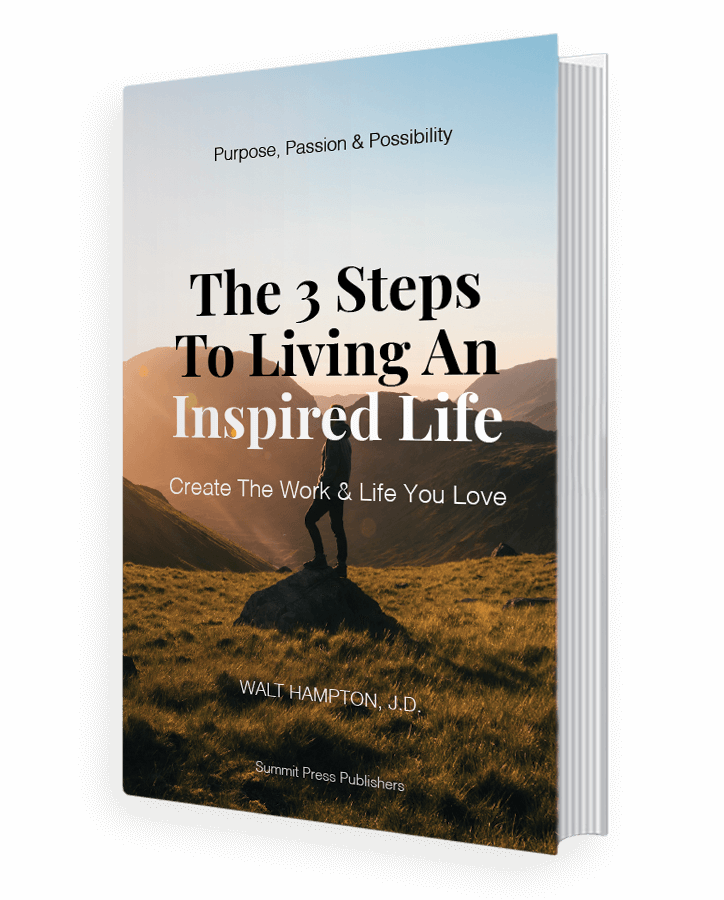
DOWNLOAD your FREE BOOK!

The-3-steps-to-living-an-inspired-life

DOWNLOAD Your Free E-Book NOW! Click Below And Get Going!

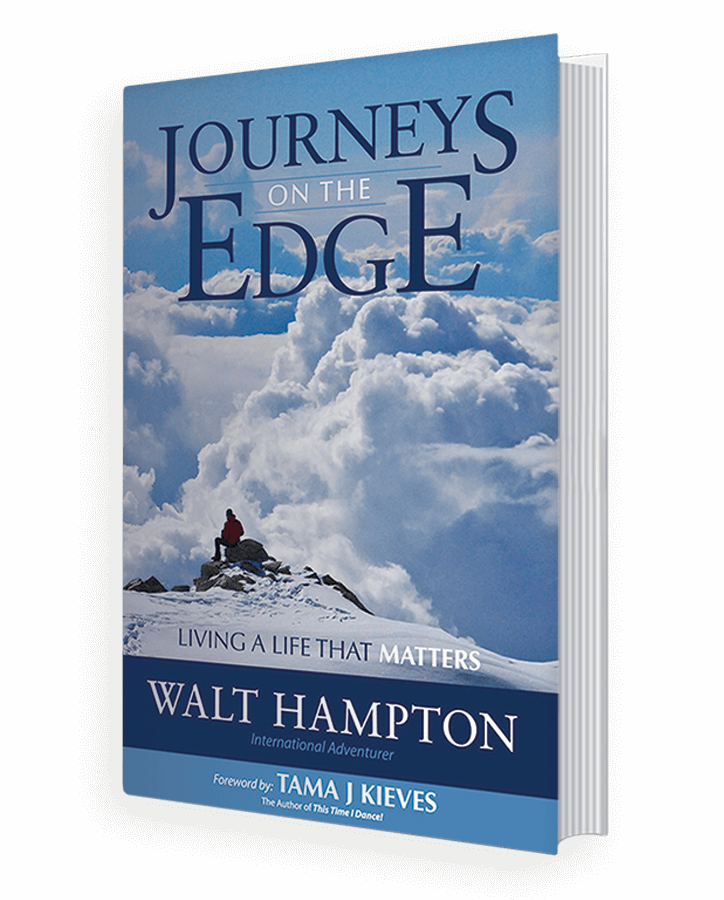
Click on the button for your copy of journeys!

Journeys-On-The-Edge

You’ll Get A Signed Copy!

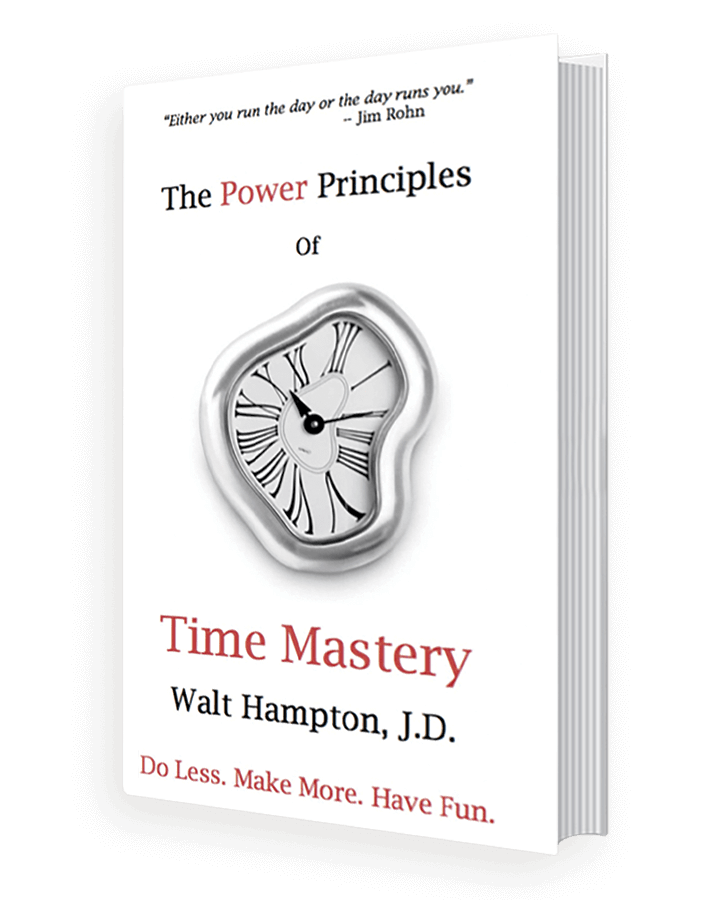
Click on the button for your copy of my brand new book “The power principles of time mastery!”

The Power Principles of Time Mastery

You’ll Get A Signed Copy!

REGISTER HERE

Free Online Training Workshop

Thanks for signing in to the workshop!