Walt Hampton, J.D.

Creating the Work & Life You LOVE

Why Happiness Is Old School

Happiness is all the rage these days. A good thing, I say.

Gretchen Rubin’s book has been on the New York Times bestseller list for a bazillion weeks. And Shawn Achor’s  getting 15 grand a pop for his keynotes on happiness.

(That sure would make me happy!)   images-1

Last month, there were 5 million Google searches worldwide using the keyword happiness.  And there are more than 25,000 books in print that have something to do with happiness.

So I guess it’s kinda a big deal.

I tend to think so… I talk about it a lot in my own keynotes.

It’s a key to our success, I think. And, it’s a choice.

A colleague challenged me last week over my happiness toot. He said that the pursuit of happiness is a narcissistic, superficial, self-serving preoccupation of the modern world.

I had to think about that for a bit.

Not that I don’t have a capacity for self-serving pre-occupation; but, I think my colleague is wrong.

Granted he grew up in a third world country. And I get it that folks who are scrounging  for food and just getting by don’t have the luxury of existential reflection. Don’t Worry, Be Happy isn’t likely a theme song.

And yet…

Some of the happiest folks I’ve ever come across in my travels are folks who have far fewer bells and whistles and toys than most of us have.

So I had to go back and dig deep into my thinking on this thing called happiness.

Turns out that long ago and far away Aristotle had some things to say about it: He thought happiness was the central purpose of human life!

But here’s the rub: Turns out that Aristotle and, later, John Locke and Thomas Jefferson (you, know that ‘pursuit of happiness thing’ in the Declaration), when they were all talking about happiness, weren’t referring to beach volleyball, cigarette boats or Paris in the springtime.  They were talking about fulfillment, the attainment of our human potential, and the depth and meaning of our lives.

I came across a great article from The Atlantic, a rather dense deconstruction of happiness and meaning. Seems like Aristotle probably had it right all along.

The article spends a fair bit of time reflecting on Viktor Frankl’s Man’s Search For Meaning, a book I love. Frankl was the Austrian psychiatrist interned in the Nazi death camps, who lost his entire life’s work (and, oh yes, his wife and his parents too) . Through his words and his actions, Frankl taught that happiness is a byproduct of the choices we make in every moment, regardless of our circumstances; that happiness is really about valuing our own uniqueness; and that it is only in the service of others that our deepest meaning – and greatest happiness – can be found.

(Or perhaps finds us?)

The pursuit of happiness – that happiness so fundamental to the fabric of our nation – that happiness that we search for and write and talk about – that happiness that always seems to be just beyond our reach and yet so key to our success – is not about our things.

It’s about how we connect with others. It’s about how we show up in the world.

It is about how we choose to frame our lives. Even in the midst of hardship.

It is a necessary quest. It is essential to our wholeness.

It is our wholeness.

So go out and give and love and share and serve.

Don’t hold back.

Choose in every moment to live out the highest expression of yourself.

Choose to believe that you will make a difference in the lives of others.

And (don’t worry); you’ll be happy.

Danger Will Robinson

“The desire for safety stands against every great and noble enterprise.” –Tacitus

Danger. And opportunity.

Risk. And reward.

I thought about these things as I was watching the Weather Channel from the warmth of the Dunkin Donuts… just before Ann and I headed off into the White Mountains for a day of climbing.

The weather folks – all wearing arctic gear and carrying yardsticks – were sounding the alarm: a nor’easter bearing down; a dangerous storm; a storm of historic proportions. Cataclysmic even.

Buy batteries; and flashlights; stock up with food and water; stay inside; hide out; don’t move.

We moved. And climbed and laughed and shivered. The wind tossed us around. But we experienced the beauty and the grandeur and the power of the storm. We connected with the mountains we so love; and with each other. We had a blast.

The Chinese symbol for danger is also read as opportunity.

The truth is, there is no reward without some risk.

But sadly, as a culture, we’re told that risk is bad. Playing it safe is “in.”

Insure everything; protect it all; risk nothing.

But here’s another sad truth: When we play it safe, we play small.

It is those who have dared to push beyond the boundaries in medicine, science and technology; those who have dared to defy the odds in adventure, athletics and exploration; those not concerned by perception or bound by convention; who lead the charge, who make the breakthroughs, give us wonder, and reap rewards.

In every recession giants of industry and enterprise have been created. In every market crash millionaires are made.

In every arena victory belongs to those who confront their fears and, in the face of failure, in the face of risk, step boldly forth.

Meg Cabot writes, “Courage is not the absence of fear, but rather the judgment that something else is more important than fear. The brave may not live forever, but the cautious do not live at all.

Leadership expert Robin Sharma says, “Do work that scares you (If you’re not uncomfortable often, you’re not growing very much.”  As entrepreneurs, he says, “We’re paid to be scared. We’re paid to play out on the edges.”

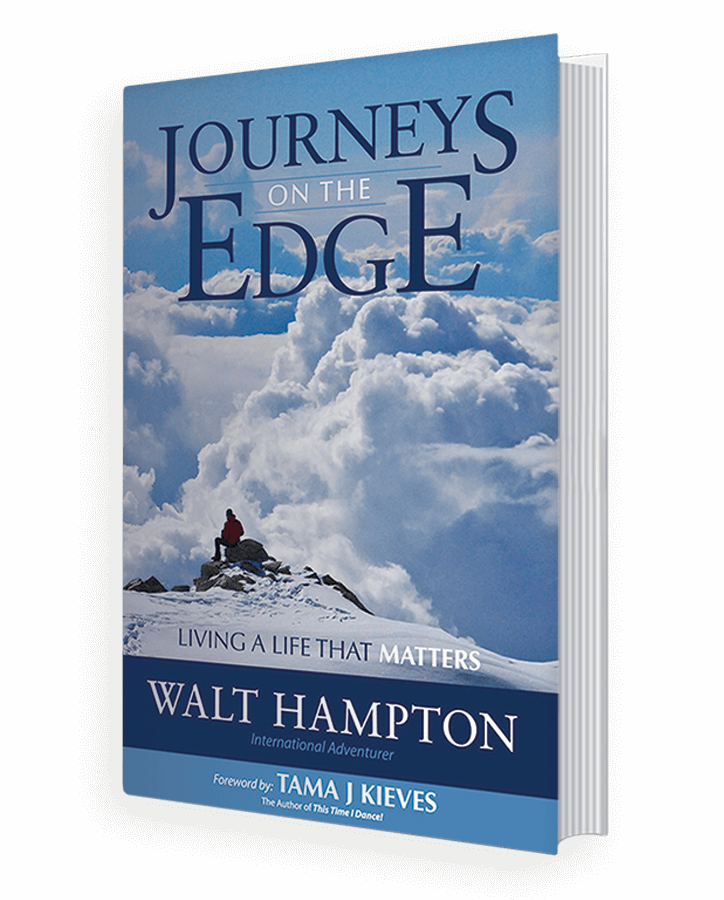
The message of my own book Journeys on the Edge is that life is lived most poignantly out there; that we come most alive out there on that edge.

Of course, we can cower. And many will. But none of us will get out of this thing called life alive.

So why not dare to dream; dare to live out loud; dare to play full out?

Dare to make your life extraordinary.

Eleanor Roosevelt said, “Do one thing every day that scares you.”

What will it be for you today?

______________________________________________________________________________

IMG_1084


Sight Unseen

I love ice climbing on frozen waterfalls. Often you can hear the water rushing underneath.  You can almost sense the motion. It feels alive.

But what happens when you can’t sense the motion?  What then?

I received an email from a coaching client late last week. She felt frustrated.  She’d made a lot of progress in 2012; scored a lot of victories. Now, though, she said, she couldn’t see much forward progress. She felt like she’d lost momentum.

I wondered aloud whether it was just the season of things.

The late great thought leader Jim Rohn spoke of the seasons of change; the seasons of our lives that always come; those season that always repeat themselves. The rhythm of things.  The springtime of planting and new life; the summer of cultivation and care; the fall of reaping and the harvest; the winter of darkness, contemplating and planning.

The seasons of things. Interconnected. Locked in balance. Necessary one to the other.

I look outside my window at winter’s frozen landscape here in the northeast. There doesn’t seem to be much of anything going on. But I know on some particularly warm day, not many weeks from now, flowers will bolt from the ground. And spring will be here.

Not by accident. Not without the work of winter.

Spring doesn’t just happen.  Stuff’s going on in the ground even now.

Momentum.  Just unseen.

I asked my client whether she was continuing to do the work… attending to her daily practices; whether she was ‘showing up’ even though she didn’t ‘feel the love.’

“Of course,” she said. Which was the right answer. (At least as far as her coach was concerned.)

Because, as I’ve written many times, it is the showing up, even in the face of failure – and especially when we can’t see the progress – that matters most.

The small, tiny, incremental, perhaps imperceptible, steps over time. The ulta-marathon of life.

We might say we hate the winter. But the winter always comes.

And so the spring.

I told my client (and myself): Do the work. Keep at the work.

Hold fast the vision.

And trust more.

Just trust. In the rhythm of things.

_____________________________________________________________________

SharpEnd


Fall Down Seven Times. Bleed A Bit.

Fall down seven times, get up eight.   – Japanese Proverb

Abe’s been in the news quite a bit lately. Spielberg’s movie about his presidency will likely win all sorts of awards. And there have been countless articles about his management and leadership style.

I think it’s Lincoln tenacity that captivates me most; his willingness to keep on keepin’ on, even in the face of catastrophic failures: employment failures, business failures, election losses, the death of his sister, the death of his son. He fought depression; grappled with a divided nation; stood by an unpopular cause; and was witness to defeat after bloody defeat in battle.

And still he kept on going. images

I love knowing that the legendary Michael Jordon didn’t make his varsity basketball team in high school when he first tried out. He wasn’t good enough. Over the course of his career, he missed more 9000 shots; he lost more than 300 games.

And still he kept on going.

Edison’s tenacity is almost cliché: 10,000 failures on the road to success.

Thank god he kept on going.

This past week, my friend Lonnie Dupre, a renowned and indefatigable polar explorer, was spit off Denali (Mt. McKinley). Raising money for environmental advocacy, he was hoping to become the first ever to reach North America’s highest summit in the dark of winter by himself. Battling arctic darkness, ferocious winds, and temperatures so low that flesh freezes in an instant, he’s gone back there three times to pursue his goal.

And he’s kept on going.

Benjamin Bloom, a professor at the University of Chicago studied 120 exceptional artists, athletes and scholars looking for the common denominator of mastery and greatness. It turned out not to be intelligence or family background.  It turned out that there was only one common characteristic: extraordinary drive, the willingness to keep on going even in the face of setback and insurmountable odds.

All of us will face loss and defeat along the way. All of us will fail.

No one escapes.

As I tell Ann when we’re running trails: You will fall and you will bleed.

It’s what happens next that matters most.


Sexy. Not.

I had the absolute worst run ever last weekend.

It wasn’t very long; it wasn’t very cold. It was the same damn course we always run.

But I was slow; it was painful; I never loosened up. And when I was finished, I felt as if someone had beaten me with a 2 x 4.

The next run might be painful too. Or not. Who knows?

It doesn’t really matter.

Because here’s the scoop: At the end of the day, there is only one core principle of success.

Doing the work.

We coaches love to have fancy templates for goal setting, and mind maps and vision boards… and all sorts of stuff that helps folks get clear and excited and juiced up about where they’re going. And juiced up and excited is good. But the bloom comes off the rose pretty fast.

I looked around the gym on Friday. Most of the newbies had disappeared. Right on time.

Few folks who even bother to resolve make it beyond the 1st of February.

Because doing the work is hard. And it just ain’t sexy.

Of course the “why” is important. But if you’re crystal clear about your “why;” why it is you want to bother; why it is that the result really matters; why it is that you really care; then you’ll stay the course.

Nietzsche said, “He who has a why to live for can bear almost any how.”

So claim your “why.” Know it well. And then shut up and do the work.

George Leonard who wrote that great old book Mastery using the metaphor of Akido practice said that the only thing that really mattered on the road to mastery was showing up on the mat.

Julia Cameron, author of the Artists Way, said that a writer’s only obligation was to show up on the page and write.

Nike™ in its venerable campaign would say, “Just do it.”

  • Run the miles
  • Lift the weights
  • Follow the plan: the eating plan, the financial plan, the weight-loss plan.

Discipline’s a dirty word. So call it practice. Or whatever.

Just show up and do the work.

Because that’s the only way it will get done.

Sexy. Not.

_________________________________________________________________________________

IrelandRaveRun

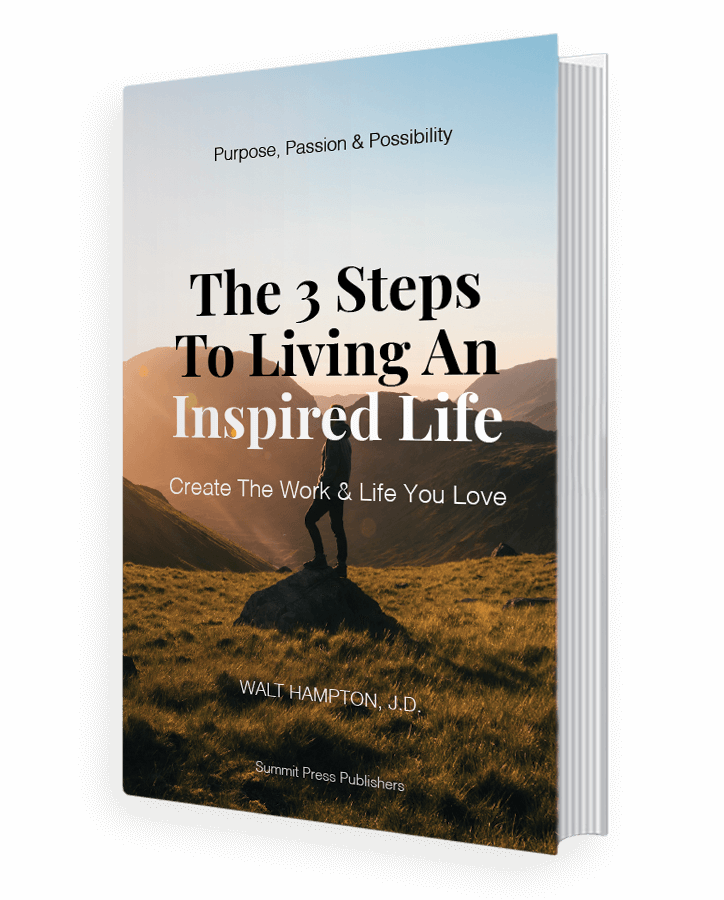
DOWNLOAD your FREE BOOK!

The-3-steps-to-living-an-inspired-life

DOWNLOAD Your Free E-Book NOW! Click Below And Get Going!

Click on the button for your copy of journeys!

Journeys-On-The-Edge

You’ll Get A Signed Copy!

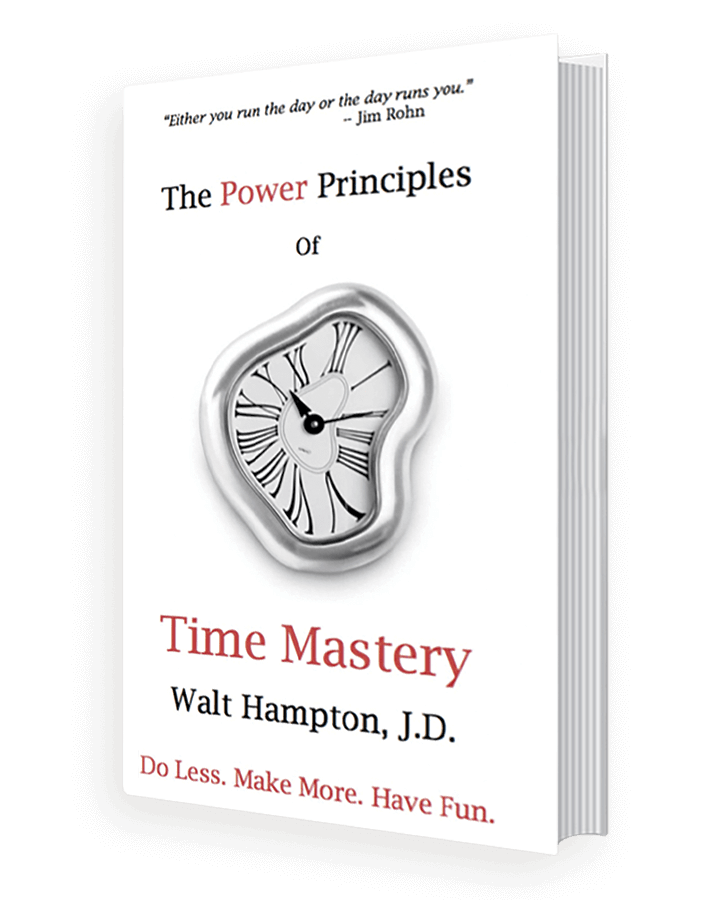
Click on the button for your copy of my brand new book “The power principles of time mastery!”

The Power Principles of Time Mastery

You’ll Get A Signed Copy!

REGISTER HERE

Free Online Training Workshop

Thanks for signing in to the workshop!