Walt Hampton, J.D.

Creating the Work & Life You LOVE

Be A Control Freak

OK, people, it’s done.

Summer’s over. The vacation’s behind you. No more lazy lunches.  No more casual Fridays.

It’s time to put away the Dockers… and the swimmies. It’s time to get back to it.

September’s here. Time to get busy; time to get serious.

No more leisure, no more playtime.

It’s time for work.

Uhhh, wait a minute: I object. I don’t want to give up playtime!

It is a busy time of year. But perhaps we can take some of summer with us?

In summer, it seems, time is more expansive; the rules more flexible; the boundaries softer.

And then September comes and – maybe it’s a holdover from going back to school – it seems like the time for fun is over.

We move back into our busy lives, our schedules chock full, shuttling around the kids, out to soccer games and swim practices, with evening meetings, volunteer activities and board commitments.

Many of my coaching clients feel like they’re moving back into the forest fire armed only with their squirt guns; their lives turned into an out-of-control carnival game of whack-a-mole. Reacting endlessly, and breathlessly, to the urgent.

Never really getting to what is really, truly the important in their lives.

And summer slips silently into the rear view mirror with perhaps some vague hope for respite and reprieve on some distant unencumbered weekend… or maybe in February on that “vacation… .”

There is a different way.

But it requires that you become a control freak.

That’s right, a control freak: someone who takes control of their lives!

No one else is gonna do it for you. You’ve gotta do it for yourself.

And this means that you need a bit of courage and audacity.

I know. I live it too. Bombarded by unceasing demands and expectations in every area of our lives. Inundated by inputs. Juggling multiple modalities of communication. Over committed and suffused with the anxiety of dropping the ball.

But here’s the truth: the in-box will always be full. None of us will ever get it all done. If you died tomorrow, you’d be replaced.

So why not pay attention to what truly matters?

People ask me how it is that I take so much time away traveling and adventuring. The answer: it’s a choice.

Last year, I took 13 weeks off. There were no disasters. No one missed me. The world went on.

And, damn, it was fun.

So here are some practices to consider before September gets too crazy:

  • Decide what really, really matters to you. Spend time on that. Get rid of the rest.
  • Get really good at saying no; if you find yourself saying you “should” do something, you probably shouldn’t.
  • Carve out time for yourself – every single day. No one else is going to do it for you.
  • Get up an hour early and enjoy the quiet. Use it to read and write and meditate and create.
  • Plan your weeks; and plan each day; actually schedule in the time for the things that matter most to you.
  • Turn off the TV at night and focus on the life you really want.

Here’s the scoop: at the end of our lives, no one is going to wish they spent more time in the office, billed more hours, sold more product, sat on more boards, went to more PTO meetings, or volunteered for more committees. It won’t matter whether you went to one more network group, whether your Facebook status was up to date, or whether you were well LinkedIn. What will matter will be the experiences you have had, the love you have shared, the lives you have touched.

What will matter will be whether you showed up in each and every moment to know the fullness and the joy of your life.

What will matter is whether you have lived without regret.

For that to happen, you’ll need to become a control freak.

_____________________________________
p.s. If you’re working on creating the work and the life you love, and would like some support and coaching, consider booking a complimentary breakthrough Strategy Session with me. We’ll get laser focused on you and figure out exactly what needs to happen to get you the results you want. Email me: [email protected]


The Devil You Don’t Know

Have you ever gone out in the morning to start the car and it groans and cranks and chugs – but it won’t turn over?

You discover that the dome light has been on all night. And the battery is dead.

That little draw of energy has drained all the juice.

This happens all the time, you know. And I’m not talkin’ ‘bout the car.

It happens when we allow those areas of vague dissatisfaction in our lives to nibble at us:

  • The relationship that’s not quite working.
  •  The co-worker who bugs you.
  •  That extra 5 or 10 pounds you’ve been wanting to lose.
  •  The job that has no spark.
  •  The clutter you’ve been meaning to clear away.
  •  That project you’ve been wanting to start and haven’t.

So often we end up tolerating things – letting things slide – because it seems like too much effort to switch things up; because we’d rather not confront what’s not working; because the vague discomfort we experience moment-to-moment feels more comfortable than the discomfort we perceive the unknown to hold; because the devil we know is better than the devil we don’t.

But here’s the truth: when we allow those vague dissatisfactions to fester, our energy and vitality are sapped.

To live richly and fully, to enjoy vibrant happiness and peace, we must confront those things that nag; those draws that diminish and deplete.

The reality is that everything we really want is just beyond our comfort zones.

And the devil that we think is out there… really isn’t.


_________________________________
The question: What are you tolerating that needs to change?


It’s The Journey, Stupid

She rolls her eyes when she says it.

“Whatever.” (Pronounced whaaatevvvverrrrrr.)

And it’s usually accompanied not only by a derisive snort but also by a look of exacerbated irritation.

As a definitely “not-whatever” kind of guy, I find myself feeling extraordinarily pissed off whenever this word comes out of my sweet stepdaughter’s mouth.

But I’ve begun to wonder whether it might be worthwhile to develop a better “whatever” frame of mind.

I had the privilege recently of guiding the first ever Special Olympian in his quest to climb Mt. Rainier. From a mountaineer’s perspective, achieving the 14,410’ summit is a significant objective: the mountain is big, steep, heavily crevassed and technical.

This was to be a barrier-breaking expedition. There had been extensive publicity.

We had assembled a strong team. We had planned extensively. We had trained with Patrick for months. We had done numerous fund-raising events. We had flown across the country with hundreds of pounds of gear. We had set aside eight days during the most favorable time of the year.

We had carried heavy loads across hot glaciers and established a high camp at 11,000’. We had had near-perfect weather. The route had never been in better shape.

On the night of our summit bid, the sky was crystal clear. The wind was light. The stars were so close we could touch them. The temperature was moderate. The snow was perfect.

The summit – victory – was near.

Although I knew the challenges of getting Patrick safely to the top and back again were huge, I was focused, single-minded, determined. I would achieve this objective. I would accomplish this goal.

I could taste it.

And then Patrick sat down on his pack. It was just after dawn. We were at 13,000’. Still more than 1000’ to go. He was spent.

Altitude had taken its toll.

I suspected I could coax him further on. The team was strong. But the terrain is unforgiving. And it was a long, long way back to base camp.

I made the heart-wrenching decision to turn the team back.

My glacier goggles hid the tears; the thin air good cover for my wrenching chest.

Back in the tent, I wept.

I had wanted that summit so badly.

I felt like I had failed; like I had let Patrick down, that I had let his parents down; like I had diminished the hopes and aspirations of the organization that so ardently supported Patrick, and his countless fans; and like I had failed the organization’s visionary executive director who had become a dear friend.

When I emerged from the tent a couple of hours later, Patrick was smiling. He was wondering when we were going to go back to the car, back to Seattle, whether there’d be a hot tub in the motel room, whether he might be able to buy a new set of headphones.  

He was happy.

He had let it go.

To strive and not attach. To hold the vision and not the outcome. To be fully present and alive in each and every moment. This is the greatest of Buddhist wisdom; so easily set aside in this age in which success is valued above all else.

It is, of course, about the journey. (And this journey was so fine.)

Patrick, my great teacher once again.

I must learn to say “whatever.”

The question: How are you at saying “whatever?”


Sorry, That’s Not Going To Work For Me

This is a guest post by Ann Sheybani.

Several years ago I opted to work with a Jack Canfield coach.  I wasn’t sure what the arrangement was going to be like, I just knew I needed a kick in the ass so I could get out of my own way and accomplish some really big goals.

I was required, as part of the process, to fill out a questionairre–the Winslow Dynamics Profile– that would highlight some of my “issues”, and what came up–a startling lack of assertiveness– surprised the living shit out of me.

It’s not that I didn’t recognize my inability to say no to those I love, or the paralytic fear of abandonment that arose in me each time I faced a conflict. It’s not that I wasn’t tired of fuming because, for the quadrillionth time, I’d dropped what I was doing to attend to somebody else’s perceived emergency. I was just amazed at how thoroughly my lack of back bone seemed to have held me back in every area of my life.

I believed, whole-heartedly, what Canfield and his league of coaches claimed:

Our psychological emergency brakes–negative images about ourselves, our comfort zone “prison” of can’ts, musts, must nots, our inaccurate beliefs about reality, our self-doubt–are all keeping us stuck.

I figured it was time to take responsibility for myself so I could get unstuck, because blaming others hadn’t really helped.

I started by rereading The Adult Children of Alcoholics Syndrome, just to confirm how I got so messed up in the first place.  Then, done rolling around in the mud, I began ordering assertiveness and self-esteem and personal boundaries books off of Amazon like I was shoring up for Armageddon.

Now, I hate God talk in books.  If I see a reference to Jesus, or to the Bible, or to Tammy Faye Baker, I go running for the hills. That being said, as rife with church lingo as Boundaries is, this is one of the best books about setting healthy boundaries so people won’t eat you alive that ever landed on my doorstep.

Ah, Boundaries.

You know all those little anecdotal stories authors use to illustrate a point? Yah? Well, I saw myself, as I relate to others, in nearly every single one.

I was the daughter backpedaling with her guilt-flinging mother.  The wife doing back-flips to appease a disdainful husband.  The mother rescuing her children from natural consequences.  The friend giving away her precious time so someone else could take a break. The employee too afraid to ask for that overdue raise.

Worse were the questions posed in Chapter 1:

  • Do you bend over backwards to appease?
  • Are you tired of trying to soothe your husband out of his tantrums?
  • Do you find yourself feeling nothing more than resentment and fear?
  • Do you sense that your life is out of control?
  • Are you a master of taking care of the feelings and problems of others?

Ruh-roh!

Now, it’s one thing to read about setting personal boundaries, it’s another thing entirely to apply the concepts.  It took a long time to deal with the fact that no one cheers when you stop doing for them what you’ve always done. Truth be told, there’s an awful lot of flack. Because people love it when you over-provide. People love it when they can drop their problems in your lap and run off to Cancun with your credit card in hand.

I had to practice saying no a lot. I repeated, over and over again, “Sorry, that’s not going to work for me,” every morning while I brushed me teeth. I had to lean on my husband–a professional boundary setter if ever there were such a thing–whenever I faced a particularly gruesome challenge.

Like that hysterical call from my twenty-two year old daughter. Who chose to take the Fung Wah bus from DC in the middle of the night.  Even though I’d told her I wouldn’t pick her up from a depot half a state away at 3 am.

Used to me rescuing her from every jam, she wasn’t “down for” facing her own irresponsibility.  She needed to lose the illusion that she didn’t have to plan ahead like the rest us.  That lesson, however, didn’t feel good. There were several moments I needed to be talked off the ledge.

So if you answer yes to those very same questions.  If you fantasize about running away to live in a convent. If the idea of making new friends makes you nervous because they represent one more time synch.  Then you, my friend, have boundary issues, too.

Life is short. But your calendar will open up when you learn what is your responsibility, and what is not.

Only you know what you can and want to give, and only you can be responsible for drawing that line.  If you do not draw it, resentment will rule.

If this seems daunting, get some help.

And know that I’m rooting for you.

One more thing.  If you want to know how those lack of boundaries are making you fat, check out Dr. Sara Gotfried’s article below.

http://www.saragottfriedmd.com/2012/05/04/cortisol-switcharoo/#

Yup, It’s Possible

Years ago, I had the privilege of studying with the late great outdoor photographer Galen Rowell. Galen was an icon. He lived life on a grand scale and made some of the most beautiful, memorable, moving images of the natural world that exist today.

Galen believed that his most powerful images were made on the edges: On the edges of time and space: at the edge of land and sea; in the gathering dusk; in the face of the oncoming storm; in the gentle light of a new day’s dawn.

Edges are powerful. They are exciting and exhilarating. I know this one is.  On the left, a drop of 1000’; on the right, a 5000’ drop across the great South Face of Mt. McKinley.  Not much margin for error. It keeps your attention, your focus.  It makes your heart beat fast. And, oh, yes, the view. You can see forever.

You can see what is before you… all that is possible.

Life is lived most poignantly along the edge.  Where we are engaged and vital and alive.

When we find our edge in our jobs, our sales, our careers, our businesses, our professions, we are happier, more satisfied, more profitable, more prosperous.

When we find our edge in our relationships, we feel loved, appreciated, joyful and safe.

When we are healthy and fit, at the top of our game, when we push ourselves to the edge of what we are capable of, we feel energized, we feel as if we can accomplish anything.

What would it be like to have that edge in your life?

What would it be like to believe that what you dream of is POSSIBLE.

Here’s a well-kept secret. It doesn’t really take a lot of extra effort to up your game.  Do you know what the time difference was between Michael Phelps’ recent Gold medal finish in the 100 meter butterfly and the dude who got the Silver? Two-tenths of a second! What’s water at 211º? It’s hot. At 212º it becomes steam… with enough power to drive a locomotive.  Two-tenths of a second; a one-decree difference; just a LITTLE extra effort. And EVERYTHING is transformed. Everything becomes possible.

And here’s another well kept secret. Big changes don’t generally happen all at once. It’s small, consistent steps over time; a slow, steady pace that gets you to where you want to go. With a very moderate training schedule, you could run your first marathon inside of a year, even if you’ve never run before! If you lost just a 1/4 lb a week, that would be nearly 25 lbs over the course of a year! Just $2k deposited each year in a Roth IRA (less than 6 bucks a day) starting at age 20 would leave you a millionaire. And a date night just once a month with your significant other might well restore the sizzle to the steak.

So let’s think about the POSSIBILITY of just a LITTLE extra effort.  Pick an area of your life; just one to start. Maybe it’s health and fitness; maybe it’s your work; maybe it’s your relationships.  But imagine, for a minute, that you could crank it up just a bit; that you could make just a 10% improvement in the way things are. Imagine for a minute what it would be like to get up every day excited about your job; imagine what it would be like to have just 10% more money in the bank; a paycheck that was 10% higher; imagine being at your ideal weight again; the weight you were in high school; imagine coming home every night to a relationship that rocked your world.

What would that be like? Pick just one area. Think about it just the way you would want it to be. Imagine it, picture it, feel it.

Now, say to yourself: it’s possible.

Yes, it’s POSSIBLE.

Now begin.


DOWNLOAD your FREE BOOK!

The-3-steps-to-living-an-inspired-life

DOWNLOAD Your Free E-Book NOW! Click Below And Get Going!

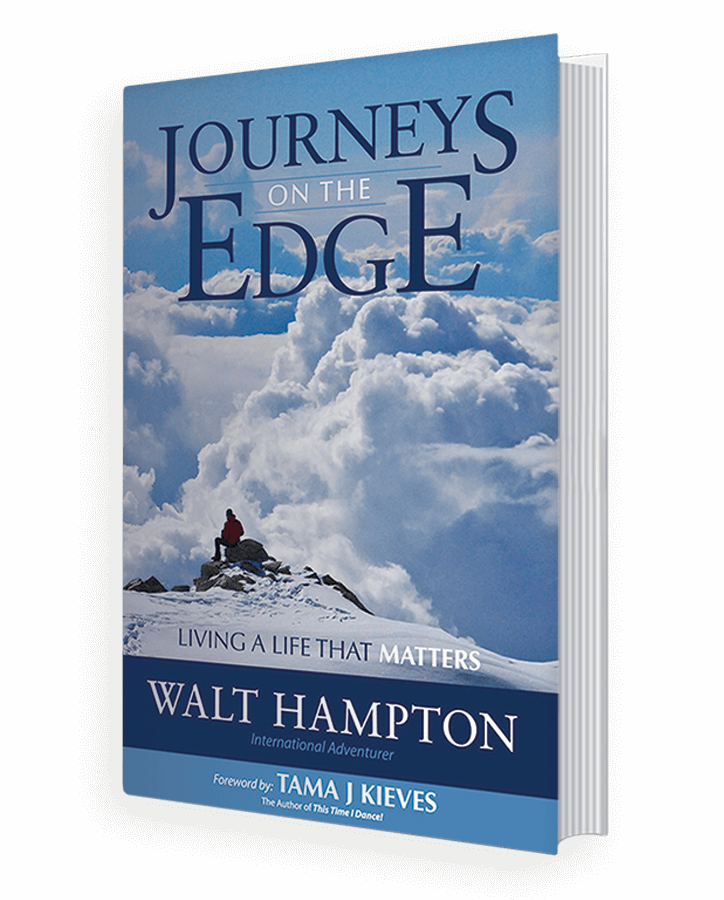
Click on the button for your copy of journeys!

Journeys-On-The-Edge

You’ll Get A Signed Copy!

Click on the button for your copy of my brand new book “The power principles of time mastery!”

The Power Principles of Time Mastery

You’ll Get A Signed Copy!

REGISTER HERE

Free Online Training Workshop

Thanks for signing in to the workshop!