Walt Hampton, J.D.

Creating the Work & Life You LOVE

Mind Matters

Whether you think you can or you think you can’t, youre right.

— Henry Ford

“It’s not my fault.”

Parents, how many times have you heard that one?

As a defense attorney, I’ve heard it countless times.

It’s a pervasive cry across our societal landscape; a pandemic failure of individual responsibility.

It’s easier to blame someone else for a problem than to brainstorm a solution. It’s easier to complain about politics than to get involved in the process. It’s easier to complain about economic inequality, than to innovate and risk.

“It’s not your fault,” wrote Linda Bacon in her 2008 book Health at Every Size explaining why diets fail.

Biology trumps will, she said. It’s the genes that make you fat. (And yes, those jeans probably don’t help.)

But I’ve got some bad news. Or maybe it’s good?

There’s “startling new research” that suggests an astounding proposition:

Will power matters. How we set our mind, how we think, actually affects outcome.

In their book, Mindset: The New Psychology of Success, reviewed this past week in The New York Times, Standford professors Greg Walton and Carol Dweck establish convincingly that those who believe in the strength of will are far more likely to overcome life’s challenges than those who believe that will power is a limited and exhaustible resource.

We actually have the capacity to will our way to success. If we believe we can, we much more likely will.

Now, of course, this is not exactly new.

Will has been around since man first roamed the Garden.

In every moment, we get to exercise our will. In every moment, we get to choose.

We can choose to be angry at the telemarketer; or grateful that we have a phone. We can choose to be frustrated by the line at the register; or grateful that we have the resources to shop. We can choose to be depressed about the economy; or grateful that we live in a free society.

To be sure, the exercise of will is not always easy.

I know this all too well: going out the door on a dark morning run in the rain; or going to the gym on a cold winter’s afternoon; or when I face an unpleasant battle in the courtroom.

I know too from my experiences in mountaineering and distance running that my body has the capacity to push far beyond what my mind thinks it’s capable of; that a failure of will is far more likely than a failure of strength.

Victor Frankl, in his shattering death camp memoir, reminds us though that even in the most desperate of circumstances, we have the power to choose how we will be.

Happiness is a choice, says Gretchen Rubin. And Joel Osteen reminds us of our our capacity – and our obligation – each day – to choose joy.

The exercise of will – our power to choose – is our greatest gift.

May we use it well.


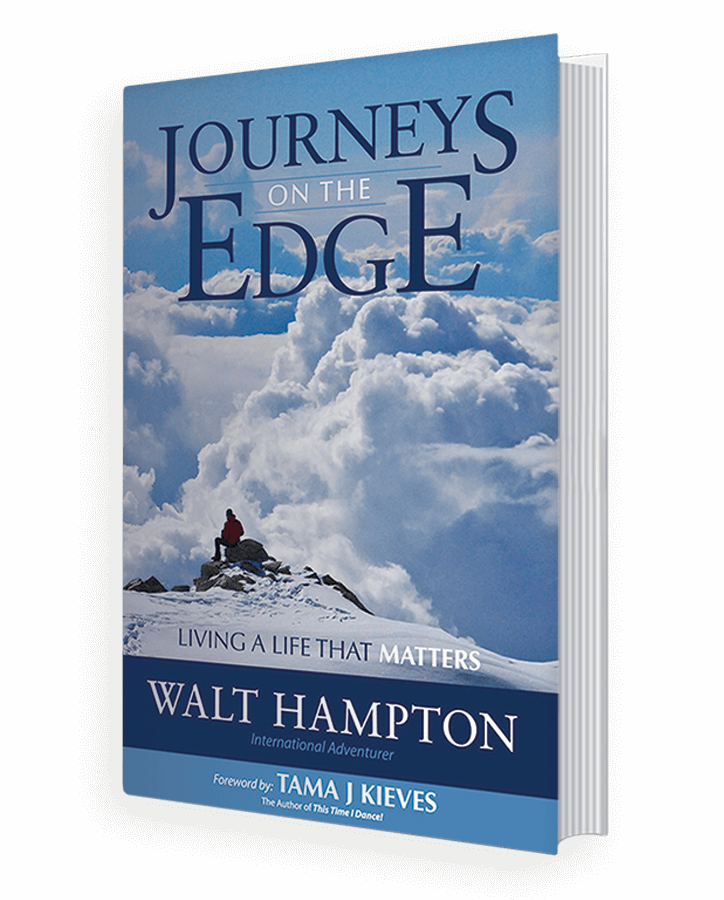
Journeys on the Edge: Living a Life That Matters.  Click HERE to get your signed copy today!


One Hand Clapping

Two hands clap and there is a sound; what is the sound of one hand?

— A Zen Kōan

It was 4:00 p.m. It was snowing. And thundering. And lightening.

I stood on the summit of the highest point in the Western Hemisphere.

I could look out about 100 feet and see shadows of the great South Face of Aconcagua swirling in the mist. But there was not another soul for miles – and thousands of vertical feet.

Our group had started out nearly three weeks earlier. Storms had delayed our progress. And ferocious winds had battered us up high for days. The team was exhausted. Our numbers had dwindled. And morale was low.

On the last possible summit day, I dug deep into my reserves, climbing solo into the teeth of an oncoming storm, to achieve the goal that had alluded me just two years before.

But it was bittersweet.

Because I was alone.

Nearly a dozen years later, on a crystal clear windless night, under the Alaskan midnight sun, I summitted Denali.

Climbing Denali had been a dream I had held in my heart for nearly 40 years.  I had attempted it twice before – and failed.

As I stood on the summit that night, I looked down at spot just 700′ below me where I had wept tears of sadness and frustration the year before, across the famed Archdeacon’s Tower, down toward Denali Pass. I could see the glistening river of the Kahiltna glacier stretching for miles in the falling shadows and the vastness of the Alaska Range spread before me. I looked across the years, the decades of this dream. And felt such joy.

Standing next to me was my wife.

Last week, in a beautiful and thought-provoking comment to my post “Selfish Dreams,” my friend Audrey wrote: “It wasn’t very long that Adam walked the earth before the Creator decided that Adam needed a partner. We are created to live in community and to care for each other.”

Success coach Sharon Hess, in another poignant comment said, “You simply cannot give to another what you don’t have yourself.”

I know this to be true.

And I also know that we are called to give what we have; that in discovering how to feed ourselves, we must feed each other; that in living out the longings of our heart, we must share our gifts, our love, our joy.

I also know that dreams fulfilled feel doubly full when shared with those we love.

And that the view from the top is twice as good.

Mother Teresa once said, “Love cannot remain by itself – it has no meaning. Love has to be put into action, and that action is service. I slept and I dreamed that life is all joy. I woke and I saw that life is all service. I served and I saw that service is joy.”

As we enter into this season of joy, how can we  share our dreams and our gifts with those we love?


Get your signed copy of Journeys on the Edge: Living a Life That Matters.  Click HERE!


Selfish Dreams

“I have a bone to pick with you.”

I had been stuffing my laptop back into its bag after the talk. I turned around and stared at the well-dressed gentleman in his mid-fifties. He had been in the audience on the right. His eyes drilled into me.

“Following your dreams is selfish,” said the man.

I had been speaking to a group of entrepreneurs and business folks about my new book, Journeys on the Edge: Living a Life That Matters. Its overarching message: live your dreams before the clock runs out. In my talk, I say that our dreams are the engines of our hearts.; that they reflect the essence of who we are; that we must live our dreams if we are to live at all.

“Well, I must respectfully disagree with you,” I said.

I was about to say that, if we are to live fully, deeply and well, we must pursue what brings us joy; that when we live in joy, we bring our best selves to the world. I was about to say that, in order to serve others well, we must first be whole and complete in ourselves.

But before I could get another word out, the man asked, “What about Beck Weathers? Weathers nearly died! Think of the hardship he caused his family, all because he dreamed of climbing Everest! How selfish can you be?”

Weathers, a pathologist, was involved in the ill-fated 1996 Everest debacle.  Left for dead after a brutal storm high on the mountain, Weathers staggered back to high camp and was later airlifted in a daring high-altitude helicopter rescue. He lost his nose and parts of both feet.

I told my listener that the Weathers accident was unfortunate.

I wanted to tell him about my friend Chris whose life slipped away in my arms after a head-on motor vehicle accident on an ordinary Sunday afternoon on a clear stretch of road not far from where I live. I wanted to share with him the story that Joan Dideon tells about how her husband died as they sat down to dinner. “Life changes in an instant, in an ordinary instant,” she says. (And it does.)

I wanted to tell him that we cannot give what we do not have; that in order to share the fullness of life, we must first know the abundance of life; that in order to share joy, we must find joy; that in order to give love, we must first love ourselves; that in order to reflect peace, we must first know it in our hearts.

I wanted to tell him that life is short; that life is risky. But that even in the face of risk, we are challenged – indeed we are called – to make our lives extraordinary.

And to be extraordinary means expressing – and, yes, sharing  – the very core of who we are in the world. Without compromise.

He was in a hurry though. He said his piece. And off he went.


Get your signed copy of Journeys on the Edge: Living a Life That Matters. Click HERE.


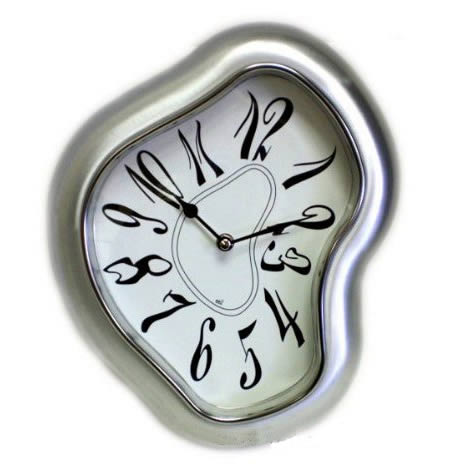
Time Is Money

What if money didn’t exist anymore? What if it was no longer the medium of exchange?

What if, instead of money, time was our currency?

This is the premise of the new Justin Timberlake movie, In Time.

In the movie, everyone who is born lives to age 25; and is then allotted just one more year. A clock, ingrained on each person’s forearm, starts counting down to zero.

Zero is the moment of death.

People earn more time by working. The harder and longer they work, the more time they earn. People expend time by buying groceries – and lattes. Time is traded between friends and loved ones. And stolen by thieves.

Such a commodity has time become that it is publicly traded on world exchanges.

People who have only a little time are poor.  They live from minute to minute, day to day, barely getting by. The poor, those without time, rush about in frantic efforts to survive, hoping to scrape enough together to live another hour, or another day.

The rich have amassed great surpluses of time. They live palatial lives in walled cities, guarded carefully against the masses who threaten to overthrow their comfort and occupy their streets.

Time is controlled and manipulated. It favors the smart and the quick and those of the manner born.  It is dominated by the powerful. The rich get richer; their years accumulating into decades and centuries.

For the poor, the clock runs out.

Even for a die-hard capitalist, In Time challenges significant assumptions and raises troubling questions: Shouldn’t everyone have equal access to time? Why should the “rich” have more time than the “poor?” Shouldn’t there be a redistribution of time so that everyone has an equal amount? Why should the few live long lives at the expense of those many who are less fortunate?

Of course, there are those who have worked long and hard for the time they have saved. They are rewarded for their tenacity and creativity,their intelligence and ingenuity.

And then there are those who squander their time; and piss it away.

The movie forces us to confront the ultimate truth of our lives: money doesn’t really matter; time is our only currency.

It’s all we ever really have.

How we spend our time makes manifest our being in the world; it is our legacy.

At the end of the movie, Timberlake’s character is asked how much time he has left.  He looks at the clock counting down on his arm and says, “Just a day. But think of what we can do in a day.”

Each day, a new gift.

What can you do in a day?


Journeys on the Edge: Living a Life That Matters. Get your signed copy today. Click HERE.


The Pill That Cures Insanity

Weight-gain, diabetes, cardiovascular disease, anxiety, stress, sadness, depression, intra-family conflict, financial strife.

Yes, the holidays are here again!

The Christmas decorations have been out in Wal-Mart for over a month already. But it seems like after Halloween, time suddenly warps and accelerates. We’re sucked into a vortex of madness. And then spit out into the mid-January cold feeling exhausted and depleted and broke.

What worked well for you last year during the holidays? More important, what didn’t work? Did you spend too much? Eat too much? Drink too much? Did the office party leave you feeling empty and resentful again? Did you fight with your sister-in-law at the family dinner? Did you accept one too many invitations? Did you max out all the credit cards? Did you cook for hours only to have no one really notice or appreciate it? Did you rush around frantically trying to get it all done without enjoying any of it?

Here’s the scoop: If it didn’t work last year, you get to do it differently this year. You can make it the way you really want it to be, even if other folks may be offended or bent out of shape. You get to choose. You really do.

Just because its always been done in a certain way, doesn’t mean that it needs to be done that way again. And in case you haven’t noticed yet, there are no awards or medals handed out for spending yourself on the altar of societal expectation or being bullied into doing what you perceive others think you ought to do yet again. Especially if it doesn’t work for you. Especially if it doesn’t bring you joy.

The definition of insanity is doing the same things over and over expecting different results.  This year, avoid insanity.

Here’s the pill that cures it all: say no.

Happy holidays!


Journeys on the Edge: Living a Life That Matters. Click HERE for your signed copy now.


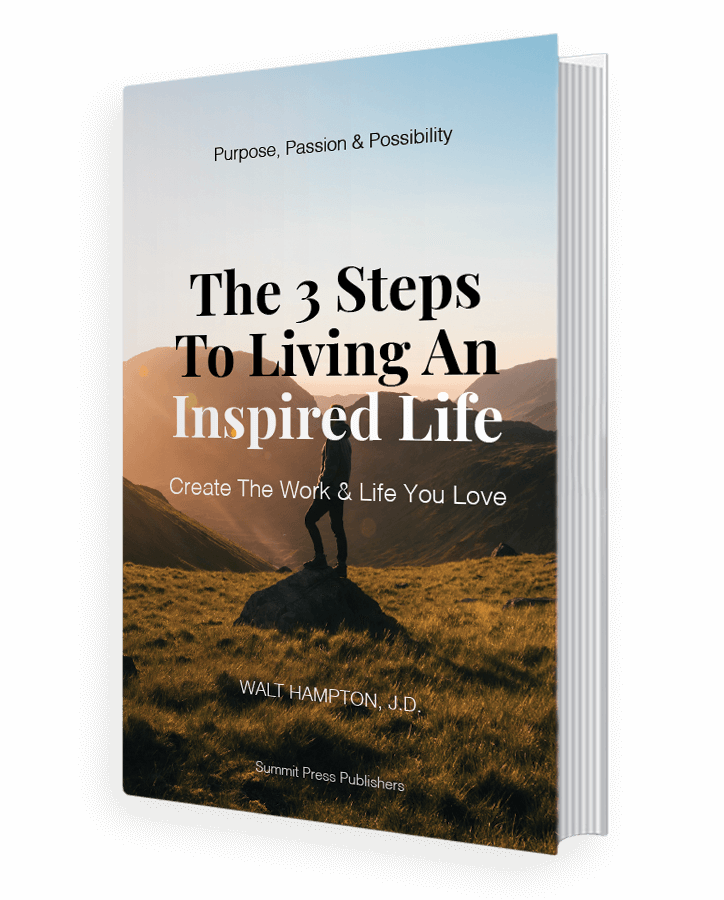
DOWNLOAD your FREE BOOK!

The-3-steps-to-living-an-inspired-life

DOWNLOAD Your Free E-Book NOW! Click Below And Get Going!

Click on the button for your copy of journeys!

Journeys-On-The-Edge

You’ll Get A Signed Copy!

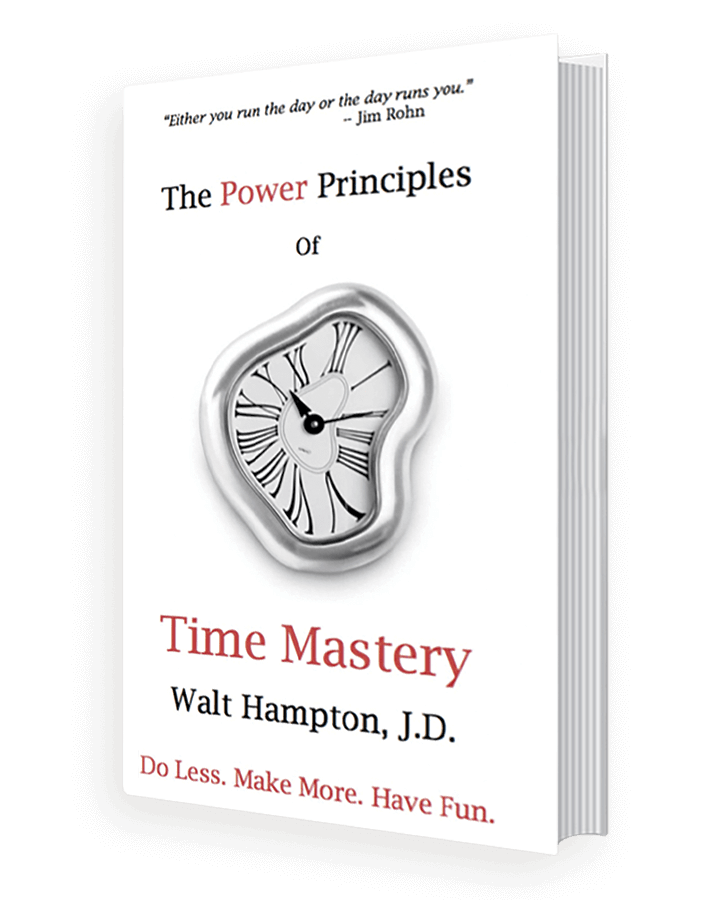
Click on the button for your copy of my brand new book “The power principles of time mastery!”

The Power Principles of Time Mastery

You’ll Get A Signed Copy!

REGISTER HERE

Free Online Training Workshop

Thanks for signing in to the workshop!