Walt Hampton, J.D.

Creating the Work & Life You LOVE

Through The Open Door

“There are two mistakes one can make along the road to truth. Not going all the way, and not starting.”

— Siddhartha Gautama

We’ve talked about Resistance, that evil Lizard that speaks to us in the dark hours of our fear: “Don’t start; you’re too tired; you’re not ready; you will fail,” it whispers.

The Lizard Has An Evil Twin

There is another vile form of that Resistance, its Evil Twin, that lurks in the shadows, laying in wait along our path: It says, “Stop; you’ve gone far enough; no need to finish now.”

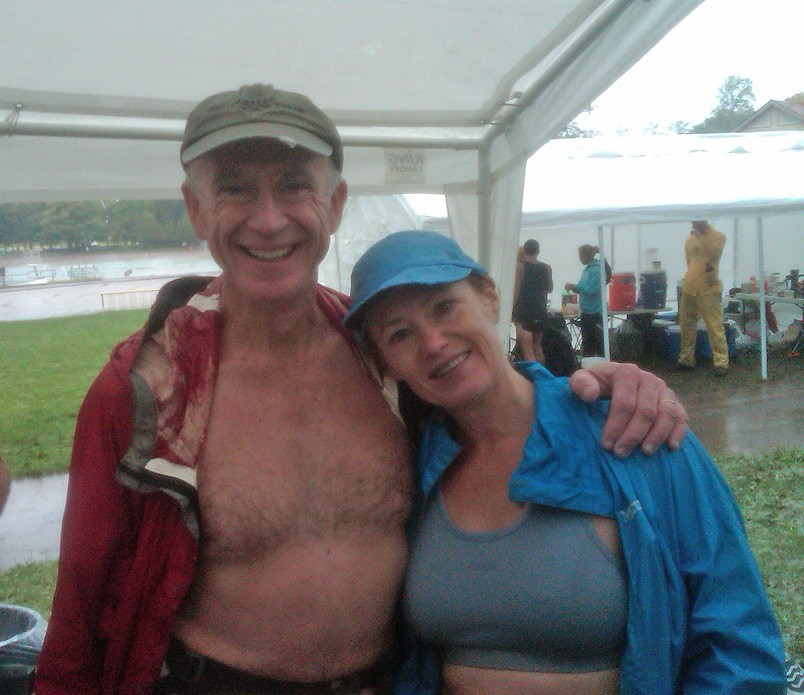
Ann says it’s a variant of the “barn door syndrome.” The cows coming home from the field see the open door to the barn; and they stop to dawdle.

On my ultra training runs, I’ve learned this lesson: It doesn’t matter whether I’m out for 22 miles, 14 miles or an easy 6. The last mile is always the toughest.

This is true in our other projects too: finishing the last revision of a chapter, the last draft of the brief, the final edit of a photo, the final leg of a voyage.

Resistance sets in. Why?

It seems that what we set as our expectation becomes our reality. The barn door appears, near or far, just when we expect it to appear. Not sooner, not later. And when we see the door, we want to quit.

We Want To Quit

  • We want to quit because we’re worn out, and exhausted; we tell ourselves we have nothing left.
  • We want to quit because we’re so close; close enough; close enough for government work, we say.
  • We want to quit because we deserve to quit. We’ve worked hard, we’ve been at it a long time; long enough we tell ourselves.
  • We want to quit because we question: our worthiness, our ability, our tenacity.
  • We want to quit because we fear rejection: if the world never sees the work, we can never be judged in our inadequacies, we can never be discovered as the frauds we believe ourselves to be.
  • We want to quit because we are afraid not to quit. What will it mean to finish? And what now will be expected of us?

Finishing is the critical part of any project, Seth Godin says.  If you don’t finish, you’re a dawdler, not a pro. If you don’t finish, it wasn’t really worth starting.

“Resistance is strongest at the finish,” Steven Pressfield writes in his new book Do The Work.

We Can Beat The Evil Twin – Seven Secrets to Success

So what can we do to overcome this Evil Twin?

  • Know the goal. Don’t be fuzzy. We can only hit a target that we can clearly see.
  • Keep a vision of the finish clearly in our minds: how good we will feel, how very fine it will be.
  • Believe that we cannot fail; that the Universe supports us; that we possess strength beyond our wildest imaginations.
  • Take baby steps. Big steps overwhelm. Small consistent steps over long periods of time lead to magnificent results.
  • Take rest stops. We need to reward ourselves along the way.
  • Believe in the worthiness of the mission. If we don’t believe, we cannot persevere.
  • Believe that we deserve to succeed.

Marianne Williamson writes this: “Our deepest fear is not that we are inadequate. Our deepest fear is that we are powerful beyond measure. It is our light, not our darkness that most frightens us.”

“We are all meant to shine,” she says.

So finish up. Run like the wind. Through the open door.


Re-Boot, Re-Charge, Re-Launch

I hate it when I have to take the battery out of my Blackberry, or unplug the computer from the wall. But sometimes, it’s just necessary. Too much stuff has accumulated. The operating system is overloaded. Everything is locked up.

It happens in our lives as well. Weighed down in projects and problems. Overwhelmed by demands and expectations. Undone by the “to-do” list. We need to stop. Re-boot, re-charge. In order to re-launch.

Those of you who have been following the training I’m doing for the ultra marathon know how much I rail against the rest days, neurotically obsessing that they are a wasteful devolution into lassitude. But intellectually, I know that the rest days are the critical part of the training, a time when the muscles rest, repair and get stronger.

We need those rest days in all the other places in our lives as well: in our work and in our creative endeavors.

Many can perhaps identify with my affliction: when my productivity begins to slip, when I feel as if I am not making the progress I want to make, my knee-jerk reaction is to buckle down, work harder, work longer.

But in reality, what I really need to do is to stop.

The edge, the paradox is this: that in the stopping, in the rest, we renew, we get stronger. We become more creative, more productive, more alive.

I’ve spent that last three days as a guest, once again, of the Benedictine monks in the Green Mountains of Vermont.  Entirely off the grid.

Even though I know how essential it is for me to take time away, I needed to drag myself there kicking and screaming. Too much on my plate right now to stop: a graduation party to plan this week, our son’s wedding next week, the manuscript deadlines, the product launch, the clients who need me.

But by stepping out, I am able to step back in – with new energy, with fresh perspective, with renewed purpose.  While I was away, nobody died, no disasters unfolded, few even noticed I was gone. But for me, it made a world of difference.

Summer is a wonderful time to re-create. Many of us look forward to vacations.  The problem, of course, is that most of the vacations we plan are so full of input and activity, that we return to work and collapse at our desks in order to rest.

This summer, think about taking a day – at least a day – just for you. No phone, no Internet, no television.  Just you. Just quiet. Just rest.

The great philosopher Paul Tillich talks about his Source of life as “the ground of all being.” Regardless of what your source of renewal is, take the time this summer to seek it out. Find your ground.

To re-boot, re-charge, re-launch.

It’s really hard to do. Will you give it a try?

Lessons of the Lying Lizard

“It’s steeper near the top,” Seth Godin writes in his chapter on Resistance.

This is not always true. I’ve crested many a summit ridge after a steep and arduous ascent to find a short, gentle walk to the top.

But I think I know what Godin means. So often, the deeper we move into a big project, whether it be a work-related start-up,  a creative endeavor, an athletic goal, or a high mountain summit, the scarier it gets. This is especially true if we have a lot of skin in the game, a lot at risk, a lot on the line, our livelihood at stake. And if we have “burned the boats” and foreclosed a means of escape, sheer terror can set in.

The truth is this: the greater the fear, the higher the resistance; the starker the terror, the greater the temptation to turn around, give up, go back.

The English theologian Thomas Fuller said, “the darkest hour is just before the dawn.” Fuller wasn’t a climber. But he knew what he was talking about. Up high in the mountains, it is the darkest hour. And the coldest one too! It’s that hour when the feet feel like cement blocks;  the hands like meat hanging on a hook. Fatigue is high. Morale is low.

It’s that hour when I am most vulnerable. When the warmth of my tent beckons, when thoughts of my sleeping bag call to me. It is that hour when I most feel the fear.

It is our lizard brain, as Godin calls it, that fuels that fear. Our lizard brain says: Abandon the fight; engage the flight; take the easy way out.

I wish I had a simple solution for this. But I don’t. I fight the lizard on every project, every run, every summit morning. The lizard always wants me to turn back. It always wants comfort. It always wants safety. It never wants change.

The only advice that I can offer is this: hold fast to the vision of success, hold fast the vision of the dream. Take one step at a time. Don’t look down. Don’t look back.

Often the first step is the hardest. As momentum builds, our adrenaline kicks in and carries us through.

But deep in those projects that take weeks or months or years, it is easy to get lost and disoriented, disheartened and discouraged. In the darkness of those pre-dawn hours, the lizard screams. It’s then that we need faith in ourselves. And a partner or coach who encourage and empower us; and fellow travelers on the Journey to cheer us on.

Susan Jeffers says feel the fear and do it anyway. Tony Robbins says that the difference between success and failure can be just 2mm, perhaps a hundredth of a second.

Don’t stop. Push through. Stay the course.

The lizard brain says turn back: back to comfort, back to safety, back to what you know. The lizard brain says it will always be cold, it will always be dark.

The lizard lies.

The dawn always comes.

And oh the summit is so good.

A Connection Issue

So caught up are we in connecting that we fail to connect.

No email. No Facebook. No Twitter.

No online banking.  No online anything.

We couldn’t connect. The Internet was down. Again.

It had plagued us for weeks. And we had lost our minds.

The disembodied troubleshooter from Delhi was flummoxed. The signal kept dropping out. A 30% drop in the line, she said. Whatever that meant. She couldn’t fix it from there. She had to send someone here. Presumably not from Delhi. But it didn’t really matter to us. We just wanted to get back online.

And so Jim arrived: he had tools and meters and measuring devices and a plethora of doodads. He spent hours testing stuff, re-wiring things, taking things out, putting things in, moving stuff around.

New wires. New modem. New router. Definitely a connection problem, he said.

Internet restored.

But what was most remarkable about the event was the connection Jim made with us. He wasn’t in a hurry. He listened to us. He took his time to understand the problem. He empathized with our frustration. He was methodical. Hours went by. The job got done. And still he lingered. To be sure the problem would not recur. To reassure us. To tell us, as if we couldn’t tell, that he liked his work. “Here’s my card with my cell phone on it,” he said. “Call me if it happens again. Call me. And I’ll come right over.”

I thought back to an event a few weeks earlier: Mark at the gate. The plane was late leaving BWI. People were cranky. I was cranky. But this guy Mark who worked for Southwest went out of his way to answer the same questions over and over again, with courtesy and patience and care. He spoke to folks like it mattered – like it mattered to him that they were frustrated and tired and just wanted to get home. He smiled. He spoke gently. He kept folks calm and comfortable in the boarding area. And then he worked thoughtfully to get folks on the plane and on their way. He communicated. More than that, he connected.

In Seth Godin’s parlance, Jim and Mark are linchpins: they are indispensable.  “These people invent, lead (regardless of title), connect others, make things happen, and create order out of chaos. They figure out what to do when there is no rule book. They delight and challenge their customers and peers. They love their work, pour their best selves into it, and turn each day into a kind of art.”  They are people who bring their gifts to the world and the work they do; people who go out of their way to make a difference in the world and in the lives of others.

They are, in Robin Sharma’s language,  leaders even though they have no lofty titles.

Knowledge matters. But for knowledge we can go to Wikipedia. Skills matter. But robots can master skills. What really matters today is relationship: the ability to connect at a deep level. In an impersonal mechanized world, we need more linchpins, more leaders.

We need more folks like Chris and Mark.

As we hurry and tweet through our busy Linkedin Facebooked lives, the challenge is to worry less about connecting. And connect.

Consider Life As A Giraffe

You can either fit in or stand out. Not both.

— Seth Godin, Linchpin

As I ran along the Boise River, the movement in the trees to my left caught my attention. It was a giraffe.

You can tell a giraffe by its exceptionally long neck. Even in Boise.

There is a danger in having a neck that sticks out too far: you can lose your head.

We’re taught at a very early age not to stick our necks out. We’re taught not to rock the boat. We’re taught to keep our heads down and fit in. We’re taught to conform and comply. We’re taught to follow the rules and maintain the status quo.

We’re taught that our teachers need to like us, that our bosses need to approve of us, that we need to be popular. We’re graded and promoted and included by how well we fit the norm.

Vanilla is good. Ripple bad.

We are well-trained: indoctrinated, inculcated  and domesticated. Drilled and practiced, as Seth Godin says, into “subservient obedience.”

For good reason: We can only get ahead, we can only succeed, if we follow instructions and color inside the lines. So they said.

Unfortunately, they lied.

Narrow mindedness may have worked in an industrial age. But in an information age, it is anathema.

Conformity and compliance with orders may be useful in the military. It may be necessary for a consistently second-rate burger at a fast food joint. Or helpful on a Detroit assembly line.

But for a remarkable life, vanilla doesn’t cut it.

We don’t need more factory workers; we need more thought leaders. We need problem solvers and visionaries. We need creatives, artists, and mavericks. Today, “it’s the art and the insight and the bravery of value creation that are rewarded,” writes Godin.

But here’s the problem (or the challenge): To level up, to break out of the mold, to move beyond the electric fences in which we’ve been trained, requires insight and imagination and initiative. It requires us to be bold and to exert effort. It requires good mentors, wise coaches, and supportive friends.

And a thick skin.

The problem with sticking out is that it’s uncomfortable. And sometimes scary. The road can be lonely. The folks we thought were friends may not like us anymore. (Resistance prefers mediocrity; resistance wants us to fit in.)

To be remarkable takes courage. And fortitude. And the ability to shed criticism and derision.

“It’s always been done that way,” we’re told.

“Why can’t you just be happy with the way things are?” goes the old refrain.

Godin writes, “The only way to succeed is to be remarkable, to be talked about.”

“Take the risk that you might make someone upset with your initiative, innovation, and insight,” he says. “Turns out you’ll probably delight them instead.”

It’s said that well behaved women rarely make history. Goes for men, too.

We have the capacity – and the obligation -to do things that matter, to live a life that matters.

It may be risky. But to be exceptional, to live a remarkable life, we must stick out like a giraffe.

Join me on the savannah?

DOWNLOAD your FREE BOOK!

The-3-steps-to-living-an-inspired-life

DOWNLOAD Your Free E-Book NOW! Click Below And Get Going!

Click on the button for your copy of journeys!

Journeys-On-The-Edge

You’ll Get A Signed Copy!

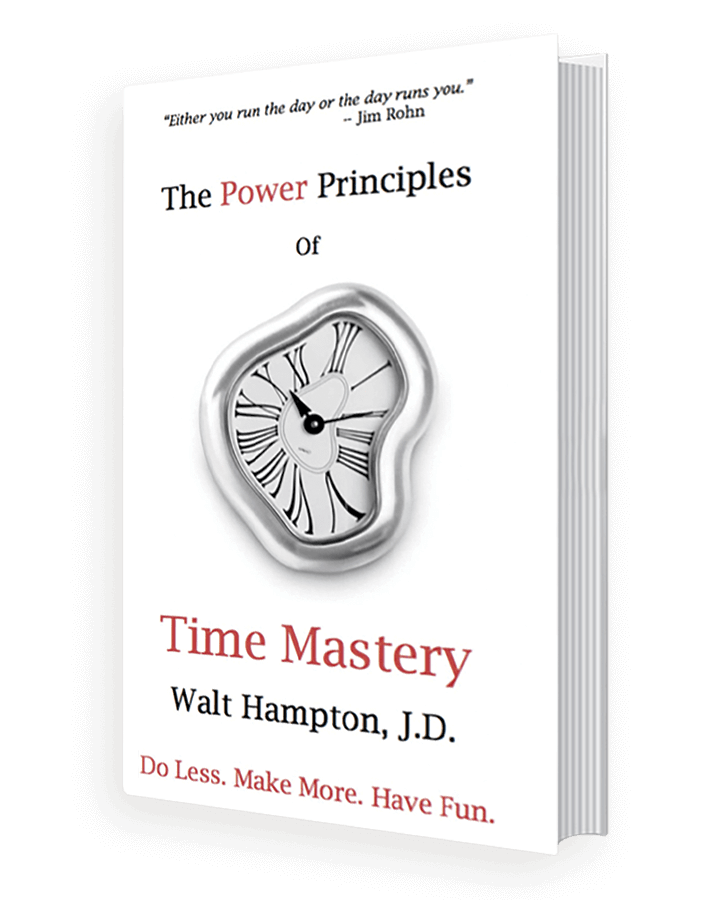
Click on the button for your copy of my brand new book “The power principles of time mastery!”

The Power Principles of Time Mastery

You’ll Get A Signed Copy!

REGISTER HERE

Free Online Training Workshop

Thanks for signing in to the workshop!