Walt Hampton, J.D.

Creating the Work & Life You LOVE

Godot Never Comes

The voice seemed to come from far away.  “We’re going to build snow walls.”

That’s nice, I thought.  How generous of Paul!  Building snow walls at such an early hour!

I burrowed down deeper into my sleeping bag to shield my ears from the scream of the wind. Cozy, I shut my eyes hoping to drift back to sleep.

Until I realized that the “we” meant “me.”

We had been stuck at the 11,000′ camp for three days.  Waiting out the storm.  The visibility was less than 50 feet.  The wind had blown a constant 70 mph. Our cook tent had been flattened.  The walls we built yesterday were scoured thin.

Climbers climb.  And here we sat.  Our time window for the summit closing rapidly.

Waiting.

What a waste, I thought.

Perhaps because its genre originates in the theater of the absurd or perhaps because it resonates with my apophatic theology, Samuel Beckett’s Waiting For Godot is one of my very favorite plays.  It is the story of two men, Estragon and Vladimir, who wait expectantly, and unsuccessfully, for someone named Godot to arrive. They claim that he is an acquaintance. But in fact they hardly know him. They admit that they would not recognize him were they to see him. To occupy themselves, the pair eat, sleep, converse, argue, sing, play games, exercise, swap hats, and contemplate suicide — anything “to hold the terrible silence at bay.”

Throughout the play, the experience of time is attenuated, fractured or sometimes non-existent. The landscape is barren. Ridiculous conversations devolve into silence. A sense of emptiness pervades.  They decide to do nothing. “It’s safer” that way, explains Estragon.

Beckett always denied that Godot was God.  But the play is wrought with biblical overtones. “We’re saved!” they cry on more than one occasion when they feel that Godot may be near. And yet, they have no idea what they might do were Godot to actually come.  When asked, Vladimir replies, “Oh… nothing very definite.”

At the end of the second act, as at the end of the first, Estragon and Vladimir agree to abandon the wait and leave.  But neither of them makes any move to go.

The storm unabated.  We continued to wait at the 11,000′ camp.

But in the waiting, we didn’t just build snow walls.  We built friendships.  We laughed and talked and slept and read.  We celebrated birthdays.  We played in the snow.  We photographed.  We met fellow journeyers from around the globe. We recounted adventures past.  And yet to come.

In the waiting, our team grew strong.

“Life is being on the wire; everything else is just waiting,” tightrope performer Karl Wallenda said.

I know what he means.  I so love the high summits.  The excitement of the edge is exhilarating.

But I think Wallenda was wrong.

“Before enlightenment, chop wood, carry water.  After enlightenment, chop wood, carry water.” The old Zen proverb speaks to the ordinary interstices of life.  The wire is not the most of life. Most of life is in the waiting.

“Enlightenment does exist,” says Jack Kornfield in his splendid book After the Ecstasy, the Laundry.  “Unbounded freedom and joy, oneness with the divine…these experiences are more common than you know, and not far away.”  But even after achieving such realization, we are faced with the day to day task of translating that freedom into our imperfect lives.  We are faced with the laundry, he says.

It is in the ordinary that the extraordinary unfolds.

We eventually agreed to leave the 11,000′ camp. Unlike Estragon and Vladimir, we actually did move.  And although we fell short of our summit, we had a magnificent adventure.

The waiting had not been wasted.

Life unfolds in the waiting.  Can we wait well?

Godot may never come.

“This being human is a guest house. Every morning a new arrival.

A joy, a depression, a meanness, some momentary awareness comes as an unexpected visitor.

Welcome and entertain them all; Even if they’re a crowd of sorrows, who violently sweep your house empty of its furniture.

Still treat each guest honorably; He may be clearing you out for some new delight.

The dark thought, the shame, the malice, meet them at the door laughing, and invite them in.

Be grateful for whoever comes, because each has been sent as a guide from beyond.”

— Rumi


Dare To Be Dumb

I struggled up the hill under the weight of my load.

No.  Let me start again.

I staggered to the base of the cliff with my day pack and a climbing harness.  There had been way too much merriment the night before.  And way too little sleep.  My efforts to head off my climbing partner before the 7:00 a.m. pick-up had failed.  And now I had to pay the price.

I stood there looking up at the route that had thwarted my attempts for weeks.  I had studied it. I had thought about it. I had worked my upper body strength. I had rehearsed the moves. I had tried putting it together dozens of times. To no avail.

The sweat poured off me.  Perhaps it was the humidity of the early August morning. But more than likely, it was the tequila still leaking from my pores.

What I hoped would be my first 5.11 was thin and delicate and balancey.  It had failed to yield to brute strength.  Finesse would be necessary.  And skill.

“On belay,”  my partner called.  (“Don’t shout,” I thought.)

My head spun – and my stomach lurched  – as I looked down to check my knot.  Yes, the tequila. Not the heat.

I stepped off the deck.

And then…  I was on the top.  Every move – perfect.

Clear Mind. No thought.  Just flow.

How easy it is to get caught up in our thinking.

Ann and I were at Jack Canfield’s Success Principals Workshop in Boston this past weekend. Jack showed us a film of two groups of people passing a basketball to one another. Before he began the clip, he instructed us to focus intensely on just one of the teams and count the number of times the ball was passed. After the clip, he asked us, “How many of you saw the gorilla?”

Huh?  A gorilla?

Only a few had seen it.  I wasn’t one one of them.

Jack showed the clip again.  And there, as clear as day, a person dressed in a gorilla suit walked in amongst the basketball players, turned toward the camera, beat its chest, and walked off screen.

How is it possible to miss a gorilla in the middle of a basketball scrimmage?

The curse of too narrow a focus, of too much thought.

Canfield also told the story of Cliff Young, a 61-year-old potato farmer who not only won the Sydney to Melbourne Ultra Marathon, but also beat the previous record for the 543.7 mile course run by nearly two days!

Cliff arrived at the start line with overalls and gumboots. He had never run a race before.  The race officials wanted to deny him entry to the race fearing that he would collapse and die.  Bad for publicity.

Cliff argued that he really did have experience.  He told the officials and the press that he had previously run for two to three days straight rounding up sheep.

The race officials eventually relented.  At a loping pace, Cliff ran continually for 5 days, 15 hours, beating all five of his competitors.

How?  He ran while his competitors were sleeping.  He didn’t know he was supposed to sleep!

The beauty of not knowing.

There is an old Buddhist classic entitled Zen Mind, Beginner’s Mind by Shunryu Suzuki. Beginner’s mind, according to Suzuki, springs from “the innocence of first inquiry.”  “It is the open mind, the attitude that includes both doubt and possibility, the ability to see things always as fresh and new.”

It is the mind free just to be awake.  It is the mind that is clear and curious.  It is the mind unburdened by opinion and judgment and preconception.

Of course, knowing is important.  Without knowing, we wouldn’t find our way to the grocery store.  But knowing too much – and thinking that we know – and thinking about thinking that we know(!) – rob us of the opportunity to truly see.  We miss things.  Like the gorilla.

In the state of not knowing, we have the capacity to break barriers.  And charge to the finish line.

Zen mind.  Beginner’s mind.  Don’t know mind.

Can we dare to be dumb?


Every Which Way Is Right

It wasn’t a bitter argument.  We’d known each other far too long for there to be rancor.

It was more of a spirited disagreement.  It was the place really that made the conversation unpleasant.

The wind blew a constant thirty.  The gusts drove the rain and sleet up underneath our jackets. We were soaked and shivering.

Hunkered between two rocks, we debated which way to go.  Sam said the route went east.  I was sure it went west.

We had climbed the Armadillo Buttress on Mt. Katahdin, a stunningly beautiful 5.8 ridge rising 1000 feet above the glacial cirque at Chimney Pond.   What had begun as a picture perfect late fall day had taken a nasty turn as we had ascended into the clouds, the dense fog and rime ice leaving us feeling a bit unhinged.

The Buttress joins the Knife Edge between Baxter Peak and Pamola Peak.  We knew that we had topped out.  We just couldn’t quite figure out which direction we needed to go to get down.

Sam said left.  I said right.

After nearly 20 minutes of “spirited” dialogue, a lone figure appeared in the mist. Another climber. One who knew.

Turns out, either direction would have worked.  Both ways were “right.”

A truth in so many of our Journeys.

We struggle so to get it “right.” And so often, it really doesn’t matter.

As our youngest, a high school junior, approaches the threshold of the college process, I watch as the seniors (and their parents!) struggle with where to go. Where’s the “right” place to spend the next four years? What’s the “right” choice?

Turns out, it doesn’t really matter.

My oldest refused to go to college.  Ten years later, she’s finishing her freshman year with a near perfect GPA.  Her brother went to two colleges in six years. Tenaciously striving to succeed after nearly flunking out, he was just hired in one of the toughest job markets in history as a project engineer.  Their father made all the wrong choices and went to three colleges in four years. Seems he got into a decent graduate program though.  And turned out ok.

There’s no “right” path.  There’s no wrong way.

Every path will get us there.  Each with its own obstacles and challenges.  Each with its own opportunities and majesty and beauty.

I am reminded of the scene early on in the old classic The Wizard of Oz where Dorothy comes to a fork in the road.  She’s not sure which fork to take to get to the Emerald City.  She asks the Scarecrow who points her in one direction.  Then immediately points her in the other direction. And then crosses his arms and points her in both directions.

She finds her way to Oz.  Most of us do.

But we are all so inculcated with the notion that there is only one right way; and so filled with fear that we will chose wrong.

What if we embraced that every path was our path?  What if we believed that we couldn’t make a wrong choice?  What it we trusted that no experience was wasted?

How freeing that would be.

Susan Jeffers says it this way:  “Start thinking about yourself as a lifetime student at a large university.  Your curriculum is your total relationship with the world you live in, from the moment you’re born to the moment you die.  Each experience is a valuable lesson to be learned. If you chose Path A, you will learn one set of lessons. If you chose Path B, you will learn a different set of lessons.  Geology or geometry – just a different teacher and different books to read, different homework to do, different exams to take. It doesn’t really matter… . ”

There is opportunity to grow, to learn, to love, to experience, to find joy, regardless of the path we chose.

And if we don’t like the path, we get to change it.  We can always correct our route finding along the way.

I was fascinated to learn that an airplane flying thousands of miles to a distant destination can be off course 90 percent of the time and still arrive in the right place and on time guided by its internal inertial guidance system. Through constant course correction.

We all have an inertial guidance system.

Every path is an adventure. Every which way is right.

What’s Your POA?

“What’s your POA?” her husband asked.

My sister was annoyed.  She didn’t have one.

There is a Buddhist story about a man on a horse.  As the man rides past his friend who is standing on the side of the road, the friend yells, “Where are you going?” The rider turns toward his friend and yells, “I don’t know, ask the horse!”

The legendary Jim Rohn was fond of saying, “If you don’t start making plans of your own, you’re always going to fit into someone else’s plans.”

POA.  Plan of Action.  Pretty important for Journeys of all sorts.

The plan is the first step.  And it’s not just an idea. Ann and I love ideas.  We can get lost for weeks in our ideas. A plan is something different.  It is an idea that has been shaped and refined into an objective, a goal.

Andrew Carnegie said, “If you want to be happy, set a goal that commands your thoughts, liberates your energy and inspires your hopes.”

But even more than that, a plan is like a road map.  It tells you how you’re going to get to your goal. And when.  A plan is something that will guide you step by step along the way.  And remind you when you lose sight of what you want to achieve.

“Most of us do not “sculpt” our lives,” says Susan Jeffers.  “We accept what comes our way…then we gripe about it.”

We have the power to sculpt our lives.  We have choices. We can make clear plans.

I sat for hours in front of my computer before we went to the Andes in January pouring over my maps and entering dozens of GPS coordinates.  I charted out where we were going to be on any given day, where we were going next, how many kilometers we’d hike, and how long it would take us.  With the GPS, we’d know for sure that we were on course and when we’d reach our goal.

That’s a plan.

Now here’s the tricky part: Action.

It was warm in front of my computer.  It wasn’t particularly so in the Andes. But to implement the plan, we actually had to tie on the boots, lift the heavy loads.  And start walking.  Yup. Action.

There’s an old story that goes something like this: Once there was a man whose home sat by a river.  For days it rained and the river rose up surrounding the house. A neighbor rowed a boat up to the front door and asked the man if he would like a ride to safety.  The man declined. “God will provide,” the man said. Well the rains kept coming and the river kept rising. Soon the river was up to the second floor of the house. A power boat from the National Guard came along and offered to rescue the man. The man declined. “God will provide,” he said.  As the river kept rising, the man was forced to the roof of the house.  A helicopter hovered overhead.  The pilot shouted down to the man offering him a ride to safety.  You know what happened. The man declined.  “God will provide,”  he said.  Well, of course, the man drowned. He appeared at the gates of heaven.  Rather annoyed, he confronted his Maker.  “I trusted in you God.  I thought you would provide.”  God replied, “I sent you a row boat, a power boat and a helicopter. What more did you want?”

Action is required.

Without action, a plan is useless. Without action, we drown in a river of empty ideas.

To succeed, take massive action, Tony Robbins says.  “All manner of good things begin to flow in your direction once you begin to take action,” says Jack Canfield.  English author John Ruskin says, “What we think or what we know or what we believe is, in the end, of little consequence. The only consequence is what we do.”

Every runner knows that the first step out the door is the most difficult one.  And going to the gym is the hardest part of the workout.

POAs are essential in just about everything we do.  Without them, we lose focus at work.  We get lost in the mountains.  We fall over the edge.

We even need them for our days “off.”  Otherwise, we end up wandering about, wondering where our time “went.”

Of course, like most things in life, there’s a bind.

Action without a plan gets us nowhere.  Action for the sake of action depletes us.   Ann and I get caught up in frenzies of activity sometimes and come to the end of the day feeling like burned out husks. We can get so focused on “getting things done” that we lose sight of why we’re doing them, or even whether there is a why.

The Plan.  And the Action. Both are necessary.

And most of all the Balance between the two.

You can’t cross a sea by merely staring into the water. — Rabindranath Tagore

Be A Selfish Bastard

“You’re a selfish bastard.”

The teenager said.  With a fair amount of animation.  And I think a hand gesture.

We were going out on our run.  And had refused to capitulate to the request for transport to some random destination of perceived import.  Or perhaps the destination had some import. And yet we still refused.

“Asshole,”  muttered the teen as it turned on its heels.

We continued to stretch.

The run is something we don’t mess with.  It’s ours.  It’s for us.  We hold that time sacred.  For ourselves.

Selfish?  Absolutely.  Essentially so.

Remember the schpeel that the flight attendants give just before you take off?  About what happens if there is a sudden change in the cabin pressure?  The oxygen mask drops down from the ceiling.  You’re supposed to extend the tubing and place the mask over your face.  And you’re supposed to put your’s on first before you help anyone else, even your children!

Why is this so?

Because your useless if you’re blacked out on the cabin floor.

There are certain things I do every day.  For me. I write. I meditate. I run. I go to the gym.

I do these things without fail.  Regardless of whatever other demands there may be.

They are oxygen for me.

We were out at dinner recently with some dear friends.  Their daughter had just been accepted to a number of fine colleges.  They were of similar caliber.  But the tuitions and the financial aid packages varied widely.  They were in the midst of struggling together with what choice to make.  The daughter wanted the most expensive school with the least generous package.  What to do?  Capitulate to the daughter’s “choice?”  Or make a hard decision. There are younger siblings.  And aging parents.  And bills to pay.  And personal goals. And a marriage to be nurtured.

One of my colleagues at the firm struggles with her older teens who can’t quite launch. They turn to her repeatedly for resources, money and transportation. She’s a good mom.  And wants to “do right” by them.  She often gives in, limiting her own resources and precious time.  But what is “doing right?”

Where are the boundaries?

Where is oxygen?

There are no easy or “right” answers.  But each of us needs to discover what nurtures us at our core.  And protect it at all costs.

If we fail, we end up blacked out on the cabin floor.  Useless. Helpless to help the others when they need us most.

There is no valor in self sacrifice. Self sacrifice is the most selfish act of all.

We live in a world so rife with errands and obligations, demands and expectations that if we don’t schedule and hold fast to what we need for ourselves, for our souls, there will be nothing left to give.

Most folks order their priorities like this:  God, family, job, self.  Darren Hardy in this month’s Success magazine says: “This order will eventually cause you to run out of oxygen. You are no good to God, your family, your company or anything/anyone else if you are rundown or you get sick or drop dead of a heart attack. You cannot give what you do not have. If you want to give more, serve more, contribute more, build more, create more, you have to be stronger and more vital, have more stamina and vigor. You need to make you your first priority so that you can give more, be more and do more for others.”

You are like a high performance race car, leadership expert Robin Sharma says in his wonderful fable The Monk Who Sold His Ferrari. You don’t run the car full-out all the time.  You bring it in for pit stops.  Let the engine cool down.  “Saying that you do not have time to improve yourself, whether this means improving your mind or nourishing your spirit, is much like saying you do not have time to stop for gas because you are too busy driving.  Eventually it will catch up with you.”  You will run out of gas.

The late great Jim Rohn said it so well:  “You take care of you for me, and I will take care of me for you.”

Sharma, in his new book The Leader Who Had No Title, says “to be a great leader, first become a great person.”  “Do the inner work required to make your character richer, your intentions purer, and your acts bigger.  Train hard to get your health into high gear so that each day you are full of energy and radiant in vitality.”

To lead well is to love yourself first.

Find what is oxygen for you.  And hold it dear.

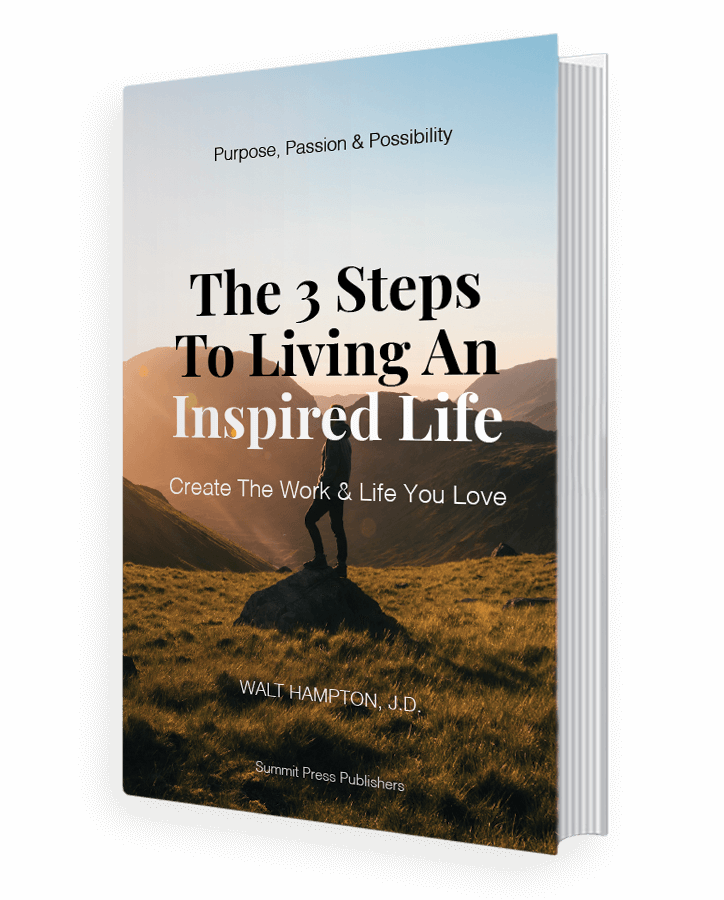
DOWNLOAD your FREE BOOK!

The-3-steps-to-living-an-inspired-life

DOWNLOAD Your Free E-Book NOW! Click Below And Get Going!

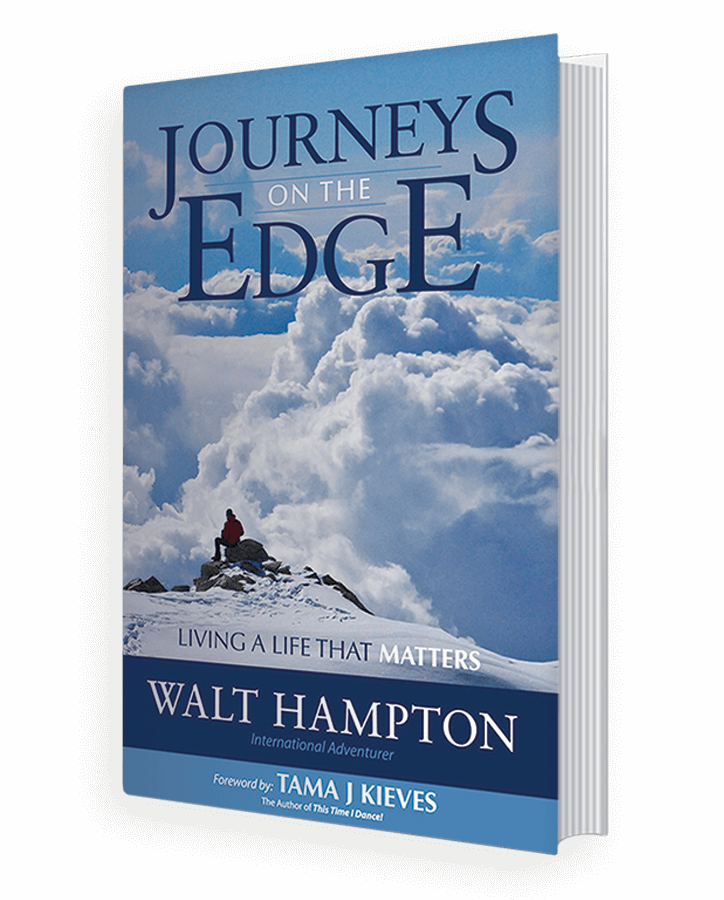
Click on the button for your copy of journeys!

Journeys-On-The-Edge

You’ll Get A Signed Copy!

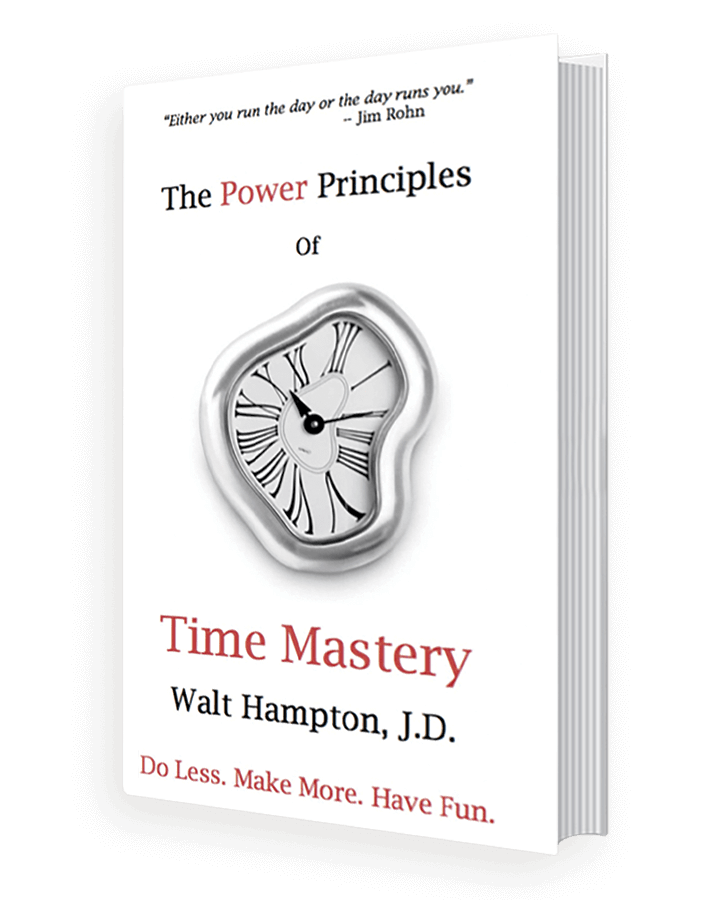
Click on the button for your copy of my brand new book “The power principles of time mastery!”

The Power Principles of Time Mastery

You’ll Get A Signed Copy!

REGISTER HERE

Free Online Training Workshop

Thanks for signing in to the workshop!