Walt Hampton, J.D.

Creating the Work & Life You LOVE

The Sharp End

“You’re on belay, dad.”

I double checked my harness and my knot.  And started out on the long traverse.

The Teton air was cool and dry.  But the rock was still damp from the rare morning thunder storm that we had narrowly averted.

I glanced down beneath my feet at the talus some 1200 feet below – and momentarily my head swooned.  Regaining my concentration, I worked my way along the narrow ledge. And soon I was anchored in and secure.

“Off belay,” I yelled into the wind.  My seventeen year old quickly dissembled the anchor and easily dispatched the traverse.

He’ll be wanting to lead – he’ll be wanting the sharp end soon, I thought.

Who leads?  And who follows?  Interesting questions, I think.

I like to lead.  I’m most comfortable on ice.  I like the puzzle of rock as well.  But most of all, I love the intricacies of a long alpine expedition.  There the logistics and demands of environment and team are the most challenging.  There the stakes are highest.

Not everyone likes to lead though.  I have been thinking about this a lot lately as I have been interviewing applicants for a position in our firm.  There are lots of folks who prefer to follow, who don’t want the “stuff” that comes with being on the sharp end – business development, the insurance premiums, the responsibility for payroll.

I get that.  There have been plenty of days when the ice has been brittle and the protection marginal and the run-out way too long; there have been many cold mornings when the thought of climbing out of my bag to light the stove yet again has left me thinking about a Caribbean cruise.  And there have been more days than I can count when the requirements of running a business – from the choice of toner cartridges to the choice of who argues a case before the Supreme Court – have left me pining for the comfort and solitude of my tent.

But it’s on the sharp end where things happen.  It’s on the sharp end where life is lived most vitally and intensely.

I’ve been reading Robin Sharma’s fabulous new book The Leader Who Had No Title. The premise of the book is that everyone can lead. In fact, according to Sharma, everyone must lead to attain their highest potential.  Regardless of  role or job or position, leading matters. Leading is essential. Yes, even for my seventeen year old.

“I believe that the single best move any organization can make – whether the organization is a business or a not-for-profit or a government or school or even a nation – is growing the leadership potential of every single one of its constituents. Leadership is not only the most powerful competitive advantage for companies – it really is the ultimate tool of our current age to apply if we want to build a better world,”  Sharma says.

Powerful stuff.

But not impossible stuff. Folks aren’t born leaders, according to Sharma.  It is a learned skill.  We need to practice it in every area of our life.  And it starts close to home.  “You cannot lead others until you have first learned to lead yourself,” he says.

I’ve just finished Nick Kristof’s new book Half The Sky, a brilliant and staggering account of human trafficking and gender discrimination.  I’ll write about it one of these days.  But one of Kristoff’s take home messages is the importance of empowerment.

Mary Robinson, Ireland’s former prime minister, now U.N. high commissioner for human rights, speaks of people – women in particular – who are suffering in poverty in places like Darfur and Chad. And the significance of using leadership to empower, to change people’s lives.

Leadership changes lives.

And as leaders, we change lives by becoming the change we want to see.

I like to climb with strong leaders.  And to be sure, I won’t be hiring a follower.

The sharp end is scary. But it beats the alternatives.

The Other F* Word

My mother kept a bar of brown soap next to the kitchen sink.  And she’d use it if any one of us uttered a profanity.

So it’s with great trepidation that I dare to write about the other four-letter F* word.

Fail.

There.  I said it.

Growing up, it was an unmentionable word.  An inconceivable concept.  Failing wasn’t an option.  In school. In sports.  In life. In anything.  Anywhere.  Anytime.

It was expected that we would succeed at everything we did.

I understand the reason why.  In most professions, including mine, it’s poor style to say, “Oops, failed again.  At least we tried.”  It can get one sued.  Or worse.

The problem with avoiding failure, though, is that it leads to mediocrity.  And stagnation.

William Gladstone, a former prime minister of Great Britain said, “No man ever became great or good except through many and great mistakes.”

“Many people fail to take action because they’re afraid to fail,” says Jack Canfield in his book The Success Principals.  “Successful people, on the other hand, realize that failure is an important part of the learning process.”

It is said that when Thomas Edison was endeavoring to invent the light bulb, he tried more than 10,000 different approaches.  When asked about these “failures,” Edison replied, “I have not failed. I’ve just found 10,000 ways that won’t work.”  “I am not discouraged, because every wrong attempt discarded is another step forward”, he said.

“Your next level of excellence is hidden behind your next level of resistance,” says leadership guru Robin Sharma in his new book The Leader Who Had No Title. According to Sharma, “You really don’t grow unless you move toward your areas of discomfort.”  And fail.

Darren Hardy, the publisher and editorial director of Success magazine, recalls a time in his youth when he told his father about a day on the ski slope.  “I didn’t fall once,” he said proudly. His father replied, “Then you didn’t get any better.”

What a wonderful way to look at failure.  

My friend Bob is a very successful business man.  He was raised with a completely different paradigm than mine.  Failure for him growing up was not something to be avoided. It was a way to discover what works.  

“Mistakes are just opportunities for learning something new,” says Canfield.

I can see how that idea has played out in Bob’s life.  Even in the throws of a very difficult business environment, Bob is not afraid to push the edges of what is possible. He is not afraid to fail.

Intuitively, I know this.  There have been times that I’ve avoided a difficult climb because I “knew” I’d fall.  Of course, it’s tough to learn much like that. In falling, I discover what doesn’t work.  And what does.  I get stronger. And better.  

In embracing the possibility of failure, we are free to experiment, to play, to create, to grow.

Not only that, but in failing, we also have the capacity to move from the merely good to the truly great.  

Tony Robbins uses the idea of 2 millimeters: the two millimeters that often separates success from failure, the 2 millimeters that separates the excellent from the outstanding, if only we push through our failures.  Edison said, “Many of life’s failures are men who did not realize how close they were to success when they gave up.”  

If we don’t retreat from failure, but learn from it instead, it can catapult us to brilliance.

For me, it’s a constant struggle to embrace failure. I know I’ve made my children neurotic about it. At least I didn’t bring out the soap.

“Fail forward,”  Canfield says.

Use the other F* word!

The F* Factor

I come from a long line of worriers.

My grandfather was a worrier.  He would wring his hands for days before he’d travel about what the weather might be on the day he was set to start out.  And when he’d arrived, he would become obsessed about what the weather might be for his return.

My father is a worrier.  He worries about the weather too.  And the stock market and his business and his health and his children and their children and whether he should retire or not retire and what may or may not happen in the next hour or on the next day or the next week or the next year.  And did I mention that he worries about the weather?

I’m a worrier too.  And I can be even more resourceful than my father.

“Worry saps energy, warps thinking and kills ambition,” said Dale Carnege in his classic How To Stop Worrying and Start Living.

Worry is a waste.

Worry is the bastard child of Fear.

FEAR: False Evidence Appearing Real.

Fear resides deep in the ancient part of our brain, the amygdala.  It served us once. When we hunted on the plains and needed to avoid the predators: the mastodons and the woolly mammoths.

But as I drove to work this morning, I noticed a curious thing:  the plains appeared devoid of wild beasts.

Today, fear is the predator.

Fear limits. Fear paralyzes. Fear diminishes. Fear robs us of opportunity.

With fear, we fail to life fully.

I’m reading a great book:  Feel The Fear …And Do It Anyway by Susan Jeffers. Jeffers says, “We can’t escape fear.  We can only transform it into a companion that accompanies us on all of our exciting adventures; it is not an anchor holding us transfixed in one spot.”

But how do we transform it?  By holding it and moving through it.  By feeling it – deeply – and doing what makes us afraid – anyway.

It sounds overly simplistic.  But it really is supported by the “evidence.”

Mark Twain said, “I’ve seen many troubles in my time, only half of which ever came true.”

Jeffers says: “It is reported that more than 90% of what we worry about never happens.  That means our negative worries have less than a 10% chance of being correct.  If this is so, isn’t being positive more realistic than being negative?  Think about your own life.  I’ll wager that most of what you worry about never happens. So are you being realistic when you worry all the time? No!”

Fear never goes away.  As long as we grow, fear goes with us.  Those of us who journey out on the edge recognize fear as a pretty steady companion. But the paradox is, that in moving through our fear, we do grow.

And here was the big revelation for me: everyone is afraid.  We’re not alone. No matter how successful someone is, no matter how confident someone appears, fear looms in the dark recesses, in the unknown, the untried, the unexplored.  Whenever we risk – whether in business, in relationship, or at play – we invite fear.

But as Jeffers says, “Pushing through the fear is less frightening than living with the underlying fear that comes from a feeling of helplessness.”  If we don’t confront our fear – and move through it –  we stay stuck. And fear full.

“Courage,” Mark Twain said, “is resistance to fear, mastery of fear, not absence of fear.”  He also said, “Do the thing you fear most and the death of fear is certain.”

Ultimately, the conquest of fear is about trust:  trust in ourselves. “All you have to do to diminish your fear is to develop more trust in your ability to handle whatever comes your way,” says Jeffers.

Trust.  Trust that we can handle it.

The F* Factor. Whatever comes my way.  I’ll handle it.

I wonder what tomorrow’s weather will bring?

“Today is the tomorrow we worried about yesterday.”

More Than Enough Fish

There is an old story about a lawyer and a fisherman.  It goes something like this.

He looked ridiculous standing on the dock in his tasseled loafers and knee high black socks. An incongruity with the plaid Bermudas and lime green polo.  A cigarette hung from his lip as he punched his Blackberry frenetically.

It was ten o’clock in the morning and the sun was already hot. Frustration dripped from his face.

Two days into a seven day “vacation” in this backwater Mexican village was way more than he could stand.  The deal back in his New York office really couldn’t wait.

As the lawyer considered his options, a small fishing boat pulled up to the dock. Its skipper, deeply tanned, quickly tied up his craft and jumped off the boat and onto the dock  carrying a huge black bass.

“That’s a mighty big fish,” the lawyer said.  “Yes, it is, isn’t it? Thank you, Senor,” replied the man.

“Do you fish for a living?” inquired the lawyer.

“I do, Senor,” said the fisherman.

Now this piqued the curiosity of the lawyer.  After all, it was mid-morning and the man had a single fish. So the lawyer, being lawyerly, inquired further.

“Why only a single fish and why are you back so early?”

“Well, Senor,” said the fisherman, “it’s really all I need.”

This really perplexed the lawyer.  “What do you mean that’s all you need? How do you live?”

“Senor,” the fisherman replied, “my life is really fairly simple. I go out each morning at sunrise to catch a fish.  I’m usually back by late morning.  I have lunch with my beautiful wife Maria, we make love and have our siesta.  Then we usually walk on the beach together and collect sea glass.  We get together in the evening with our friends and cook the fish, enjoy some wine, sing and dance.”

“I think I can help you,” the lawyer said.

Now it was time for the fisherman to be perplexed.  “How so, Senor?”

“Well,” said the lawyer, now standing in full lawyer mode (although still looking quite silly), I’m an attorney from New York.  And I do big corporate deals.  I can tell you how to become massively successful.”

The fisherman was curious.  “Tell me more, Senor.”

“The first thing you need to do,” the lawyer said, “is to spend more time out in the boat to increase your catch.  Fish like that one will fetch a good price in these local restaurants.  Once you build some capital, you can buy a second boat, hire another fisherman, and leverage his work and the catch he brings in.”

The lawyer was getting excited now.  “If you keep building your capital like this, you can buy more and more boats.  Soon you can control a whole fleet.”

“What then?,” the fisherman asked.

“Well you could build a distribution plant here in the village,” said the lawyer. “Cut out the middleman in distribution.  Control a larger and larger share of the market.”

On a roll, the lawyer continued.  “Then you could move to New York, import the fish, distribute them thorough out the United States.  Why, I am sure that you could make millions with this plan.  And I can work with you to make it happen. This is the what we do.

“How long will this take?” inquired the fisherman.

I think about twelve to fifteen years,” replied the lawyer.  “It’ll take a lot of work, make no mistake about that. But it will be worth it. By then, you’ll have amassed a fortune, enough to retire.”

“Then what?” Senor.

“Well that’s the beautiful part,” said the lawyer. “You can move to a little village by the sea, fish for yourself, be home in time for lunch with your wife, walk on the beach, drink wine in the evening, and sing and dance with your friends.”

How easy it is to miss the joy that stands before us.  How often we forget that there are more than enough fish.

Patrick Power

It was minus 5.  The wind gusted to 50 m.p.h.  But the smile never faded.

Patrick stood on top.

On Friday, March 5, 2010 at 11:35 a.m., after months of preparation and training, Patrick Kral summited Mt. Washington.  As far as we know, he is the first ever Special Olympian to make a winter ascent of the peak.

I must admit to having had a fair amount of skepticism when I first heard of Patrick’s desire to do a winter climb of Mt. Washington.   By any standard, it is a difficult and dangerous objective. Mt. Washington has the reputation of having the most ferocious weather on earth. The yellow warning sign at the trailhead says it all: “many have died” attempting the climb.

So when the executive director of the Farmington Valley ARC, the organization that works with Patrick, approached me to discuss Patrick’s goal, I doubted the wisdom of any of it.

Until I met Patrick.

I found myself instantly engaged by his passion. His passion to climb. But more than that, his passion to experience life.

At 29, he retains the fresh enthusiasm of a teenager.  And although somewhat stocky, he is marathon runner with some truly impressive times.  But it is his spirit that is most remarkable.

When I first discussed the project with Patrick, I explained what would be required to train for the trip: the running, the stair stepper, the technical skills he had to master.  He never flinched. With his signature grin, he simply wanted to know when we would start.

So we began the months of planning and preparation.  But in the end, it was the guide who was guided.  I learned far more than I taught.

Here are the lessons I learned from Patrick:

Live without fear.  I’ve introduced plenty of folks to climbing over the years.  Fear and climbing are pretty steady companions.  There are  those precipices and that nasty thing called gravity. There are the pointy tools and sharp objects and falling rock and ice.  There is the snow and numbing cold.  There are lots of things to be afraid of. And by in large,  a healthy fear is, well, a healthy thing to have.  But unmitigated fear gets in the way – of learning – and of living.  It is not possible to experience and enjoy the fullness that life offers if you constantly live in fear.

I don’t know whether Patrick is really fearless.  But he certainly seems to live that way. Everything we did together he entered into with excitement and bold anticipation. And the sheer joy that is experience untainted by fear is a thing marvelous to behold.

Persist. Learning any new skill – especially as an adult – is tough.  We don’t want to look stupid.  We do. We think we should learn things faster.  We don’t.  We think we shouldn’t fail.  We do.  We turn back.  We give up.  We fail to persist.  And in doing so, we miss out.

Patrick never quit.  I don’t think he ever though of quitting.  If he did, he didn’t say so.  He never complained.  He never whined. Up steep slopes where his balance was precarious, over icy rocks with crampons, through unconsolidated snow, Patrick kept on going.  In the marathon of life, Patrick will win.

Believe that anything is possible. When working on any big project, it is easy to get discouraged. The logistics and the  immensity of putting the myriad pieces together to achieve a goal can easily overwhelm. When you don’t believe, your dreams die. The self-fulfilling prophecy of doubt dooms you.

I don’t think Patrick ever doubted that he would accomplish his dream of summiting Mt. Washington.

Want more. Life is not static.  It holds such promise. Such fullness. There is so much that waits for us if we but seek it out.  The next goal, the next adventure, the next experience of joy.  We can chose to make our lives extraordinary.  And yet, it is easy – especially as time goes by – to limit ourselves in what we hope to experience and attain, resorting again and again to the old refrains of job constraints, lack of time, money, age and fitness.

At our celebration dinner after summiting, I was still basking in the glow of success on a nearly perfect winter day in the White Mountains.  As the beer dulled the soreness in my quads, Patrick looked at me across the table and grinned.  “Do you want to sky dive?” he asked.

Without a doubt, a lot of what enables Patrick to succeed is the community that supports him. Steve Morris, the ARC’s executive director, is a true visionary.  He believes in his heart that, given the opportunity, anyone can accomplish anything, regardless of disability.  But all of us have the choice to surround ourselves with visionaries, people  who support our dreams and goals; and we have the option to avoid the naysayers.

Patrick Power.  Would that we all could have it.

DOWNLOAD your FREE BOOK!

The-3-steps-to-living-an-inspired-life

DOWNLOAD Your Free E-Book NOW! Click Below And Get Going!

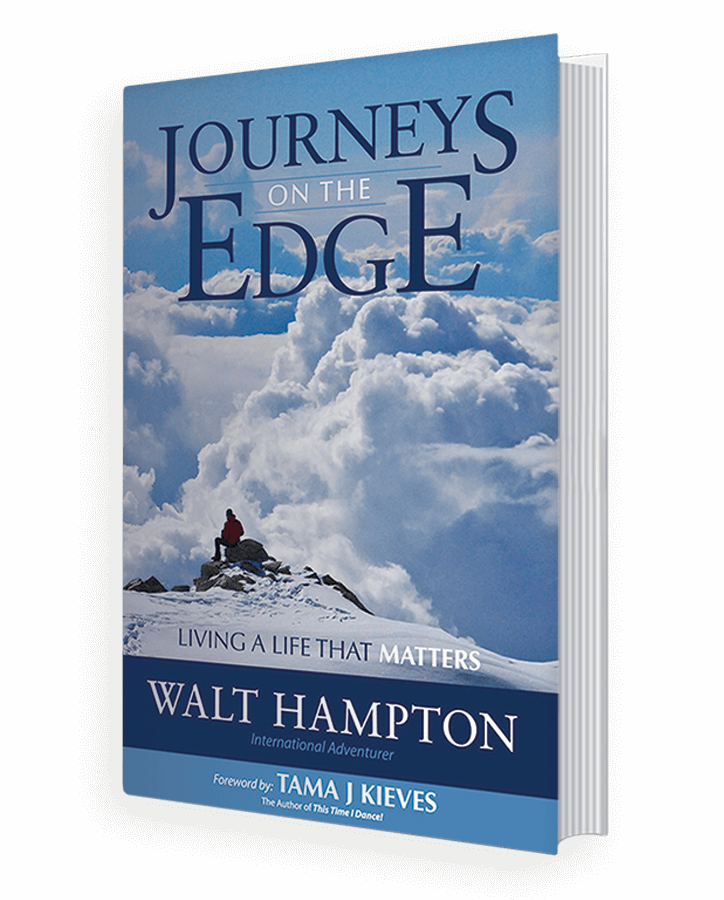
Click on the button for your copy of journeys!

Journeys-On-The-Edge

You’ll Get A Signed Copy!

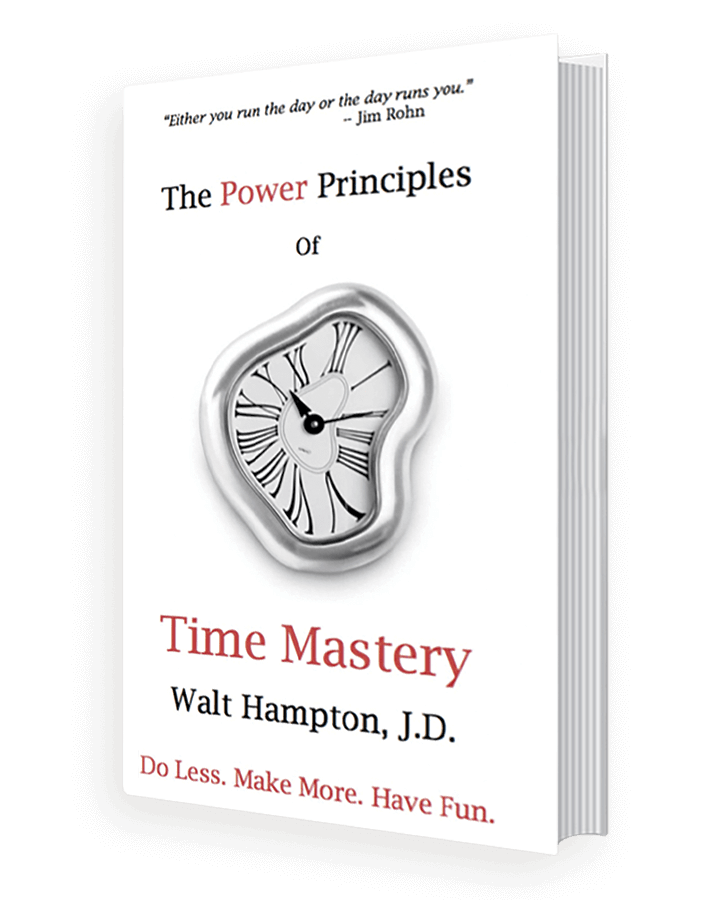
Click on the button for your copy of my brand new book “The power principles of time mastery!”

The Power Principles of Time Mastery

You’ll Get A Signed Copy!

REGISTER HERE

Free Online Training Workshop

Thanks for signing in to the workshop!