Walt Hampton, J.D.

Creating the Work & Life You LOVE

What Is Your Processing Speed?

Our microwave has an “Express” button on it.  I like that.  I press the button and my coffee is “nuked,” just like that.  Fast.  No waiting.

My BlackBerry delivers my emails to me 24/7.  I never have to wait to respond.

My iMac has a quad core Intel i5 processor.  No waiting there either!

I hate to wait.  It makes me crazy.  Doesn’t matter where:  traffic lights, check-out lines, doctors’ offices.  Especially doctors’ offices.  Pointless.  Such a colossal waste of time, I say.

I move fast.  Very fast.  Perhaps too fast.

As I move back into the work-a-day routine after nearly a month in the mountains, I ponder this.

My mind drifts back… .

I struggled up the steep snow. The clouds moved in and out.  At times I could see down into the valley 6000 feet below where we had trekked a week before.  At times I could catch a glimpse of the ridge above at nearly 17,000 feet where we would put Camp 1.  But for the most part, I was caught in a world right in front of me, a world of slow motion.  A step up.  Five or six long breaths.  A step up.  Five or six long breaths. Another step up.

The sixty pound load bent me forward.  My lungs heaved against the thin air.  It would take me more than an hour to cover the remaining 900 feet.  All that existed was my breathing and the relentless steps.

I found myself, as always, railing against the constraints of altitude.  But altitude doesn’t care. Slowing down isn’t an option. High altitude is the great equalizer:  everyone moves slowly.

And after a time, moving slowly becomes the way one lives. Moment to moment.

Of course, it’s only after being tossed back into the cauldron that I see the contrast. And I wonder whether living at warp speed is the way one should be in the world.

Driving to work, multi-tasking on the BlackBerry, I miss the alpenglow that shines as surely on the ridgecrest of Sweetheart Mountain in Canton, Connecticut as it does on the steep ramparts of Aconcagua. And I miss the swoop of the owl over the fire road in the Nepaug every bit as glorious as the condor above the Vacas Valley.

All we have is here and now; this moment.  And to miss so much of it by moving too fast is a crime.

“How strange it is, our little procession of life!” wrote Stephen Leacock.  “The child says, ‘When I am a big boy.’ But what is that?  The big boy says, When I grow up.’ And then grown up, he says, ‘When I get married.’ But to be married, what is that after all? The thought changes to ‘When I am able to retire.’ And then, when retirement comes, he looks back over the landscape traversed; a cold wind seems to sweep over it; somehow he has missed it all, and it is gone. Life, we learn too late, is in the living, in the tissue of every day and hour.”

“Peace is every step,” writes Thich Nhat Hanh.  “We are very good at preparing to live, but not very good at living.  We know how to sacrifice ten years for a diploma, and we are willing to work very hard to get a job, a car , a house and so on.  But we have difficulty remembering that we are alive in the present moment, the only moment there is to be alive.”

Speed kills.

Slowing down allows us to be  present. It enables us to touch peace.

On the way home from Argentina, I asked Ann what lesson we could bring with us from the mountains.  She answered, “we need to be mas tranquilo.”

It will be a project.

A monk said to Joshu, “I have just entered the monastery.  Please teach me.” “Have you eaten your rice porridge?” asked Joshu.  “Yes, I have,” replied the monk.  “Then you had better wash your bowl,” said Joshu.


Flight Status: Uncertain

The flight has been delayed.  Two hours.  Maybe three.  No one is saying.  A security issue in Toronto, so the rumor goes.

The bags from the  flight with the gear we need are supposed to be on the conveyor belt. They’re not.  They’re somewhere else: another country.

The hotel we planned on is booked.  The busy season, you know.

We have no clue as to how to find another hotel.  The phone doesn’t work.  The server is down. We don’t know the city.  We don’t speak the language.

The airline won’t re-book us on a different flight.  Yes, of course there  are seats available, even though it’s the busy season.  But they’re not the “right class.”  So we can’t get them – at least not at a cost that mere mortals can afford.

The weather sucks.  The wind blows too hard.  The wind blows too long.  We go down instead of up.

The plans change.  They become uncertain.

It all changes.  It’s all uncertain.

How to be ok with that – that is the question.

What a challenge for someone like me.

Here’s the way I think things should go: (i) make the plan; (ii) work the plan; (iii) achieve the goal.

Anything that disrupts this model is, well, disruptive.

I so admire folks who are flexible.  People who can shift gears easily, who go with the flow.

I’m not one of those folks.  When the flow – my flow – gets interrupted, I get frustrated and cantankerous. When the plans get switched up, I come unhinged.

The problem with this, of course, is that inflexible folks (like me) can miss the unexpected opportunities that come with change. New and different flows lead to new and different places. A barrier can become an invitation to a new experience, a closed door an entrance to a new world. If only we allow it, if only we are open to it.

And this requires grace.

According to the dictionary folks, grace is “elegance and dignity in form, movement and expression.”  To be graceful, to be grace-filled, allows one to move easily in the world.  And to be ok with uncertainty.

Grace flows from wisdom.  “Wisdom is not knowing, but being,” says Jack Kornfield.  “The wise heart is not one that understands everything – it is the heart that can tolerate the truth of not knowing,” he says.

Wisdom allows for ambiguity.

Suzuki Roshi once summed up all of Buddhist teaching in three simple words: “Not always so.” Wisdom and grace allow us to let go of our preconceived notions of how things “should” be and permit us to experience the fullness of life as it is, life as it actually unfolds before us.

Although we are supposed to be on a mountain, we stand instead in a city park. At midnight. Long past the hour that should have been bedtime, we watch the Milonga – tango dancers from Mendoza – moving, gliding, spinning across the walkways.  Obstacles for these dancers become opportunities to exhibit style and flourish. The edge of the pavement, the unanticipated intrusion of another dancer, are welcomed only as further chances to demonstrate elegance and grace.

To live with grace.  In the face of obstacles, change, adversity, disruption, ambiguity, uncertainty.

That is the challenge.

FlightStatus


You can’t stop the waves.  But you can learn to surf.

– Swami Satchitananda

Lacuna

Lacuna – from the Latin – means a gap or space.

In music, it refers to an extended period of silence in a piece.

A journey to the edge is, for me, a lacuna.

Some folks – extroverts mostly – don’t seem to require much space.  They seem to gain their energy from jumping into the heart of the mix.  They like noise and activity.  They thrive on constant interaction with others.

Others – like me – need to go off to quiet places to recharge.  The more remote the place – the deeper the silence – the greater the sense of peace.  Renewal comes in the lacuna.

I have always admired Thoreau.  He wasn’t a hermit.  But he understood the importance of solitude. “I never found the companion that was so companionable as solitude,” he said.

Don Jose Rios, a revered Huichol Indian Shaman, who came to the United States at the age of 106, said:

“In my eighty years of training I have suffered much.  Many times have I gone to the mountains alone.  But you have to do this.  For it is not I who can teach you the ways of the gods.  Such things are learned only by yourself, only in solitude.”

When we step out of the battles, we see anew, as the Tao te Ching says, “with eyes unclouded by longing.”

The gap quiets the mind and softens the heart.  It allows for reflection.  It permits perspective. Out of lacuna, one is able to live more deliberately.

And so it is time for a lacuna.

Ann and I are off to Argentina to the incomparable Andes mountains.  We will hike a beautiful river valley.  We will climb a spectacular peak.  We will walk along the edge.  And enjoy an extended period of silence.

Lacuna.

I recommend it highly.  Even for you extroverts.

More when we return.

DenaliPhone

To Turn Again

The movie Groundhog Day was, for me, one of the funniest movies ever.  Bill Murray played a down on his luck weather forecaster assigned a reporting job that no one wanted: reporting on whether or not Punxsutawney Phil would see his shadow on Groundhog Day.  In a freak accident,  Murray gets stuck in a time loop in Punxsutawney.  Every day when Murray wakes up, it’s Groundhog Day.  Over and over again. Every day the same as the last.

Kind of like real life.

In the movie, though, through the constant repetition of his days, Murray experiences change and growth – and ultimately freedom and redemption.

By in large, our days are like Murray’s.  One day much like the day before.  And the next. Sometimes grueling, sometimes exhilarating.  But often with a sameness that can be comforting and frustrating and demoralizing – all at the same time. Change – and growth – if perceivable at all, are incremental.

Because of this, it is easy to lose track of time.  A year spins away before we know it. Unless we somehow mark the way, we often fail to see the unfolding of our lives.

I mark change with the seasons of the year.  Next week is the Winter Solstice.  It is my favorite day of all.

The Winter Solstice has been celebrated by peoples and cultures since neolithic times.  The Christians appropriated it for Christmas.  The Jews celebrate their Festival of Light. For the last six months, the days have grown shorter and shorter in the Northern hemisphere.  After the darkest day and the darkest night of the year, marked by the Winter Solstice,  it is the time when the earth turns again toward the sun.  It is the time when we all begin the journey back toward the light. Slowly, incrementally.  Almost imperceptibly.

Our lives too unfold like this.

Karen Armstrong, perhaps the foremost religious writer of our time, wrote a memoir entitled The Spiral Staircase.  She uses this metaphor of the spiral staircase to describe the evolution of her life: I toiled round and round in pointless circles, covering the same ground, repeating the same mistakes, quite unable to see where I was going.  Yet all the time, without realizing it, I was slowly climbing out of the darkness.”

The earth does that as is passes through the Solstice and moves back toward the light.  We do it too – sometimes with grace – oftentimes not- usually in fits and starts – and usually with a fair amount of tripping over the staircase.

But with hope we turn again.

Happy Solstice.

ElbrusBlog

Because I do not hope to turn again
Because I do not hope
Because I do not hope to turn
Desiring this man’s gift and that man’s scope
I no longer strive to strive towards such things
(Why should the aged eagle stretch its wings?)
Why should I mourn
The vanished power of the usual reign?

Because I do not hope to know again
The infirm glory of the positive hour
Because I do not think
Because I know I shall not know
The one veritable transitory power
Because I cannot drink
There, where trees flower, and springs flow, for there
is nothing again.

Because I know that time is always time
And place is always and only lace
And what is actual is actual only for one time
And only for one place
I rejoice that things are as they are and
I renounce the blessed face
And renounce the voice
Because I cannot hope to turn again
Consequently I rejoice, having to construct something
Upon which to rejoice

And pray to God to have mercy upon us
And I pray that I may forget
These matters that with myself I too much discuss
Too much explain
Because I do not hope to turn again
Let these words answer
For what is done, not to be done again
May the judgment not be too heavy upon us

Because these wings are no longer wings to fly
But merely vans to bat the air
The air which is now thoroughly small and dry
Smaller and dryer than the will
Teach us to care and not to care
Teach us to sit still.

– T.S. Eliot


Stay This Moment

Change is the process by which the future invades our lives.

– Alvin Toffler

I so love still photography with its power to freeze moments in time.

Ann and I joined with dear friends of ours this past August as their twin sons celebrated their Bar Mitzvahs. It was a beautiful and moving affirmation of their coming of age in their faith tradition.

During the reception, the family shared a wonderful slide show that captured many of the significant – and ordinary – events that had unfolded in the lives of their boys. There they were – infants, toddlers, preschoolers and young adults – their faces looking out from the past.  Frozen in time.

This past weekend, we enjoyed a wonderful dinner with another couple.  As we sat around the table telling stories and reminiscing, one of our friends brought out a thirty year old Polaroid snapshot that had been taken of her standing in the very kitchen she had prepared our meal in. Her youthful face glowing in the camera’s eye. A moment of innocence and beauty held dear.

Photographs capture our most precious moments.  And our silliest, and our happiest,  and our saddest and our most mundane.  They allow us to hold those moments in our minds and hearts. To laugh in the face of time.

But they haunt us too.  They haunt us with the reality of how fleeting it all is. With age.  With loss.  With the reality of impermanence.

Impermanence is a fundamental principal of Buddhist philosophy. But Buddhism has no particular corner on it.

Joan Dideon recounts the year following her husband’s sudden death in her stark yet tender book The Year of Magical Thinking.  On the very first page she says,  “Life changes in an instant. An ordinary instant.”

So true.

This past Saturday, my three year old niece was diagnosed with leukemia.  Life so fragile. Life changed in an ordinary instant.

And beyond the walls of the hospital, life goes on.  Shopping.  Paying bills.  Going to work. Going to school. By necessity life goes on.

In the face of inevitable change, we need continuity.  We seek stability.  We crave the illusion of that which is permanent.

Virgina Woolf in her 1932 New Year’s Eve journal entry writes,

“If one does not lie back and sum up and say to the moment, stay you are so fair, what will be one’s gain, dying? No, stay this moment.  No one ever says that enough.”

Photographer Sam Abell published a beautiful collection of his landscape photographs using, as his title, Woolf’s words:  “Stay This Moment.”

Roscoe Pound says of my profession:  “The law must be stable but it must not stand still.”

That is our bind, isn’t it?  The absolute need for stability.  And the absolute truth of change.

Life must be stable.  But it doesn’t stand still.

As the days of December dwindle to a new year, stay the moment.

ZakKili


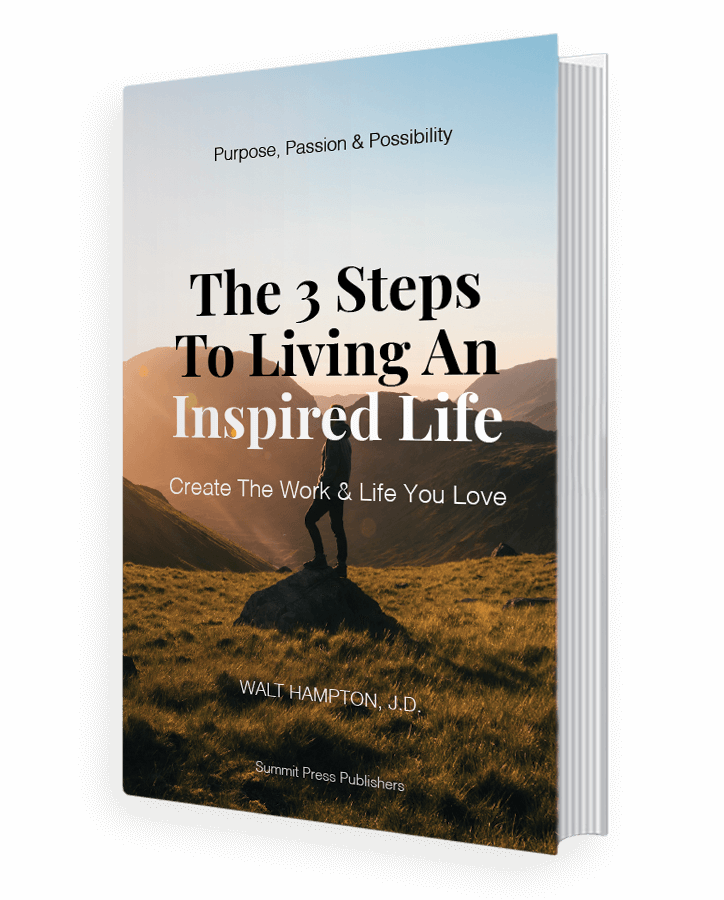
DOWNLOAD your FREE BOOK!

The-3-steps-to-living-an-inspired-life

DOWNLOAD Your Free E-Book NOW! Click Below And Get Going!

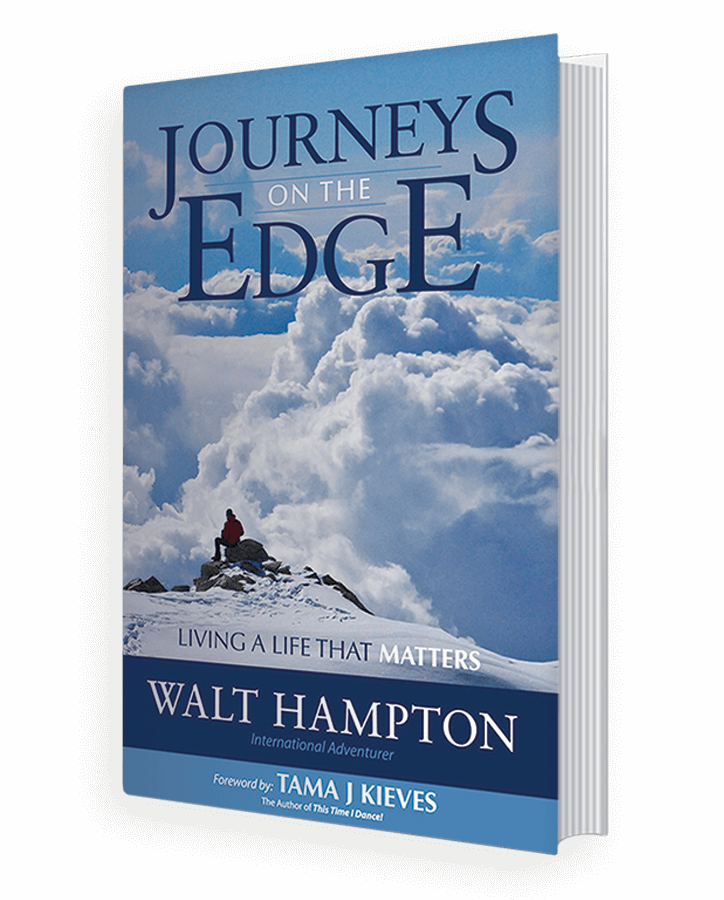
Click on the button for your copy of journeys!

Journeys-On-The-Edge

You’ll Get A Signed Copy!

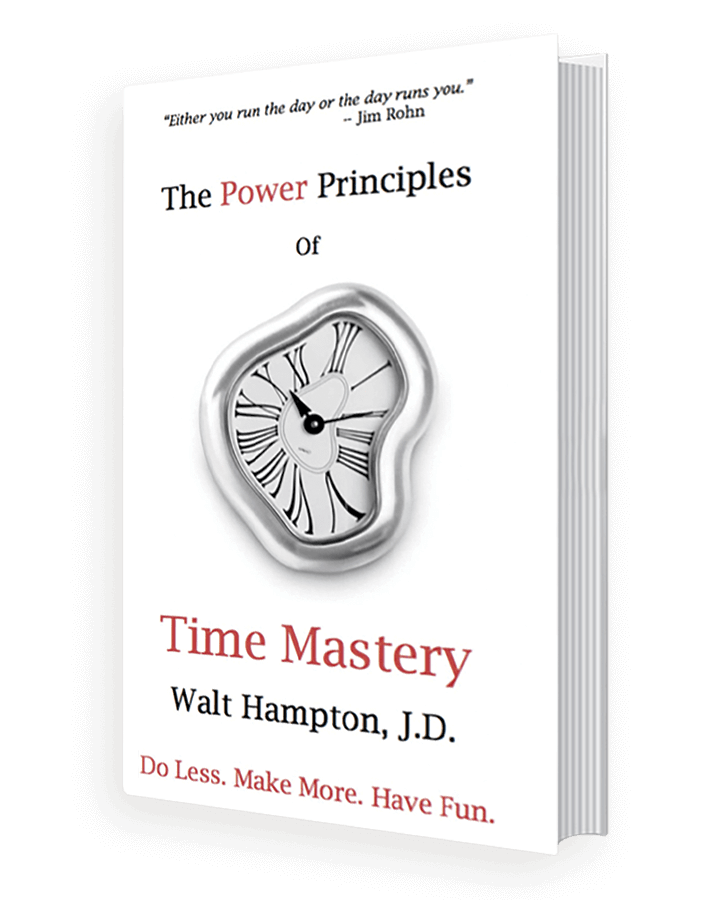
Click on the button for your copy of my brand new book “The power principles of time mastery!”

The Power Principles of Time Mastery

You’ll Get A Signed Copy!

REGISTER HERE

Free Online Training Workshop

Thanks for signing in to the workshop!