Welcome to my blog
Grow & Scale A Business That Will Set You Free
Bad Weather and Dead Racoons
I’ve had a lot of worries in my life, most of which never happened. ― Mark TwainSome folks seem to be blessedly care-free. They never seem to worry. Many, though, find themselves anxious and unsettled on a regular basis.There is certainly plenty to worry about in the world: Afghanistan, unemployment, a nuclear Iran, the price of gas, death, disease and hurricanes to name just a few popular topics.
 A coaching client of mine recently shared with me her worry. Her young daughter had a run-in with Leukemia. Now in complete remission, the daughter radiates health and happiness. The likelihood that she’ll live to a ripe old age is extremely high. Yet, my client says, “I can’t stop worrying that it (the disease) will come back. I want to enjoy every moment of the day. But I don’t know how.”She worries too about animals getting hit by cars. (Hey, who am I to judge. I have my own fairly random list.)Of course, as a coach, and as a Professional (Certifiable) Worrier, I had some pithy thoughts to share with her on the topic of worry. Here’s what I said:1. You were raised in a household of worriers. How has that worked out for them? What catastrophes has worry prevented?2. Worry is a habit; like biting your nails. With just a bit of mindfulness and effort, a habit can be broken and re-programed. Break the habit.3. Worry is a waste; there is absolutely no return on investment for the time; it yields no outcome; so you literally piss away the time. Do you like to piss away time?4. The chances of something extraordinarily good happening in any moment are just as high (or low) as the chances of something extraordinarily bad. You can focus on either. Why not choose to focus on the good?5. You usurp the province of the Divine when you believe that your worry somehow controls the outcome in the Universe. Do you really want that job too?6. The shit that actually befalls you (or someone you love) is almost never the shit you worry about. Maybe you should worry about that as well?7. Worry is a choice. You can choose to worry. Or not. Not is better.Here’s the truth: You’re gonna die; your parents are gonna die; your kids are gonna die; there will be wars and famine; there will be dead racoons in the road; there will be ups and down in the economy; and really unpleasant weather.Life is way short. Choose well. Focus on the good.Live, laugh, love, celebrate.Don’t waste a minute of it.
This Time It Should Be Different
Take the first step in faith. You don’t have to see the whole staircase, just take the first step.
— Martin Luther King, Jr.
It’s not fair.
It should be different. It should be easier.
This time, it shouldn’t seem so overwhelming.
But it does.
We’ve started our ultra-training for the season. Ann will run the Vermont 50 in September. I’ll run the Green Lakes 100K.
And even though we’ve run big distances before, even though we’re not starting from ground zero, it all seems so daunting, so unimaginably unpleasant.
Of course it’s easy to talk the game. When I speak to groups about success and goal achievement, I raise the question as to how one might go about eating an elephant.
One bite at a time, most folks will agree.
And so it is with distance races, high mountain peaks, writing books, and building businesses. One step. And then another.
Small consistent steps over time; magnificent results.
Easy to say. 
Harder to do.
Especially that first step part.
It is the getting going, the starting out that is the problem, isn’t it? You’d think that if you’d started out before, if you’d run the race, climbed the hill, written the book, had the banner year; if you’d gone to the gym, eaten right, watched your weight; if you’d landed the client, closed the deal, impressed the board; why should you have to do it all again?
Shouldn’t you get some bonus points, a head start, credit for time served?
Unfortunately not.
No one gets a pass.
Inertia is a universal (and unfortunate) law. An object at rest remains at rest and all that. However many times you’ve started out before, you’ve got to start again.
No matter who you are, no matter what your experience, no matter what the project, no matter who you’re comparing yourself to, know this: We all start out in the very same place. At the beginning.
So just do it; just take the first step.
There is magic in that.
Busy Is Bad
The need to leave a legacy is our spiritual need to have a sense of meaning, purpose, personal congruence, and contribution.
– Stephen Covey
I got caught up short recently with a question about Journeys on the Edge: Living a Life That Matters. 
The question: Doesn’t every life matter?
The answer: Of course.
But most of us want something more than simply to have existed.
Most of us want to make a difference, an impact on the world, however small. Most of us want our lives to really mean something.
In Abraham Maslow’s ground-breaking book Motivation and Personality, he suggests that, after our baser needs have been met, the need for self-actualization remains. Victor Frankl, who later contributed to Maslow’s work, calls it man’s search for meaning.
Meaning is what we seek.
Contemporary leadership expert Brendon Burchard says that, at the end of our lives, the questions that will remain are: did I live (did I REALLY live), did I love, and did I matter?
We want to have mattered.
If this is so, the work we must do is legacy work. And not just busy work.
Legacy work serves the greater good; it impacts the world in ways large and small. Just a few examples:
- Teaching
- Caring for the land
- Advocating for justice and peace
- Healing the sick
- Protecting the downtrodden
- Making fine art
- Inspiring greatness
The Bill and Melinda Gates Foundation does legacy work. Steve Jobs did legacy work. John Rockefeller did legacy work.
But fame and fortune aren’t required to do legacy work. Rosa Parks did legacy work. Paul Rusesabagina did legacy work. Oskar Schindler did legacy work.
Legacy work can be, as Mother Teresa said, small things done with great love.
Here’s a tip for deciding whether you’re doing legacy work:
- Ask this question: will the outcome of this investment of time, this project, this effort, this negotiation, this argument matter a week from now, a month from now, next year?
- If the answer is no, take some time to refocus and redirect your efforts.
Legacy work is like a pebble thrown into a pond. It ripples outward touching distant shores we cannot see, and perhaps cannot even imagine.
Legacy work is work that makes a difference. It is what we all long to do.
Busy work depletes. Busy is bad.
Bees can be busy. You… not so much.
Of course, the garage needs to be cleaned, the closets organized, the laundry folded. But if our lives consist only of busy work, we end up feeling like a stunt double in Groundhog Day. We end up exhausted and empty and sad. At the end of the day, we fall into bed and ask, “Is that all there is?”
The answer is no. There’s so much more, if we but choose.
Those of you who read me regularly know that I’m a big fan of action. Action. Not busyness. Action not for action’s sake. But action that leads somewhere. Action that is about significance. Action that makes manifest the essence of who you are in the world.
Bold action. Brave action. Mighty action. Creative action.
Legacy action.
Are you doing legacy work? Or busy work?
__________________________
Journeys on the Edge: Living a Life That Matters
Available now at: www.walthampton.com
__________________________
This is an encore of this blog entry, first published October 13, 2011.
Hairy and Audacious
There was an interesting piece in the Harvard Business Review recently. It’s message: large goals – stretch goals – at the corporate level weaken company morale, threaten integrity and invite decay. “Let’s dispense, once and for all, with the managerial absurdity known as ‘stretch goals,'” writes Daniel Markovitz. Markovitz postulates that stretch goals
- Demotivate
- Foster unethical behavior
- Lead to excessive risk taking
“When stretch goals seem overwhelming and unattainable, they sap employees’ intrinsic motivation,” he says. Better, he suggest, just to focus on small wins.
I think he’s wrong.
In mountaineering, we have a saying: Go big. Or go home.
Of course, there is a fair dose of bravado in that mantra. And yet, those high and lofty and difficult to reach peaks are what whisper to us in the darkness of the night; and drive us forward to achieve the unachievable.
I have many of my coaching clients make a bucket list: the things they want to do, be or have before they die. And I ask them to choose one grand goal from the list, and circle it. It is what I call the big, hairy audacious goal.
And my assignment to my clients is this: take one small step each day toward that grand goal.
Because it is the big hairy audacious goals that supply the juice for our lives. They are the great vision we hold for ourselves. They give meaning to our lives. They are the essence of who we are meant to be. 
Our vision, our purpose, our raison d’etre, is the core of our humanity.
Sure, we need the achievable in our day to day lives. Sure, small victories feel great and build momentum in our lives.
But the big hairy audacious goals are the ones that light our lives on fire.
Go big. Or go home.
Really?
When you’re looking for a doctor, lawyer, accountant, coach, psychologist, realtor, mentor, consultant, advisor, who’s the real deal?
And when you’re competing in the marketplace of services and ideas, how do you differentiate yourself, how do you stand out? 
Who can you rely on? Who can you trust?
How do you know what’s real, what’s authentic, what’s true?
Ann has faced this recently. She’s been looking for a marketing consultant to work with her as she moves her business to the next level.
The talking heads, the pseudo experts are everywhere.
“Enroll in my strategy session.” “Take my webinar.” “Work with me; you’ll have a $10,000 day.”
The cacophony is staggering.
How should you shop for your next consultant or expert? Here are the factors I consider:
- Does she walk the talk? I don’t want a fat doctor or a decrepit personal trainer. I don’t want an accountant who has had an IRS problem or a network marketer who has never built a team. If I have a running injury, I want to see a runner. If I need a realtor, I want someone who has survived the dark valley of real estate despair.
- Is he referable? I want someone who is 100% reliable, someone I would want to refer to others. Strategic coach Dan Sullivan teaches the concept of referability. He says people are “referable” when they show up on time, do what they say, finish what they start and have good manners. I like that. I want to work with someone who is referable. And has been referred.
- Is she present? How many of you have you been in a doctor’s office when you just as well could have been at a meat-packing plant? You know what I’m talking about: the doc comes in, looks at the chart, mumbles a few words, writes out a script and moves down the hall. I don’t want a professional who is distracted. I want my expert to be 100% connected with me; 100% tuned into what I need; 100% present. I want a relationship. Even if my professional has a dozen other clients that day, I want to feel like I’m the most important person in the world when it comes time to work with me.
And what if you’re on the other side of the fence? What if you’re trying to market your wares? How do you stand out from the crowd?
- Give a lot. I recently re-read the Go-Giver, a wonderful business parable that teaches anew the age-old principal that it is in giving that we receive. And paradoxically, the more we give, the more we will receive. Frank Kern and Jeff Walker have talked extensively about the movement of the “free line,” the content that experts must share freely in the marketplace of ideas if they have any hope of developing rapport and credibility with their prospective customers. Seth Godin executes on this concept brilliantly through his Domino Project and suffers not for prosperity or success.
- Say thank you. Common sense is, well, not all that common anymore. And manners seem to have disappeared with bell-bottoms. I had a client call me out of the blue recently to thank me for some work I did. It shocked the shit out of me. And set the man apart in my memory for all time. When we express gratitude, we not only deepen our connections with one another, but we also differentiate ourselves from an entitled world and attract even more abundance and prosperity into our lives.
- Just be you. Years ago in a photography workshop, ten of us lined our tripods up in front of a beautiful vista. You might predict that there would have been ten identical images. Not so. Ten very different photographs. Here’s the truth: Each of us see the world, touch the world, and impact the lives of others in our own unique ways. No one does it like we do it. And as long as we stand in our own authenticity, no one can compete with us.
It might seem as if you need to be a Jedi master to pierce through the noise of advertising, to look beyond the sizzle of social media, to see through the scammers, the illusionists, and the charlatans. But beyond the banality and the blather, there is truth. Just apply a few simple principals. Take your time. You’ll see it.
For real.
__________________________________________________________
Do you have your copy of Journeys on the Edge: Living a Life That Matters? Order your signed copy today. Click HERE!
DOWNLOAD your FREE BOOK!
DOWNLOAD Your Free E-Book NOW! Click Below And Get Going!
Click below for your copy of Journeys!
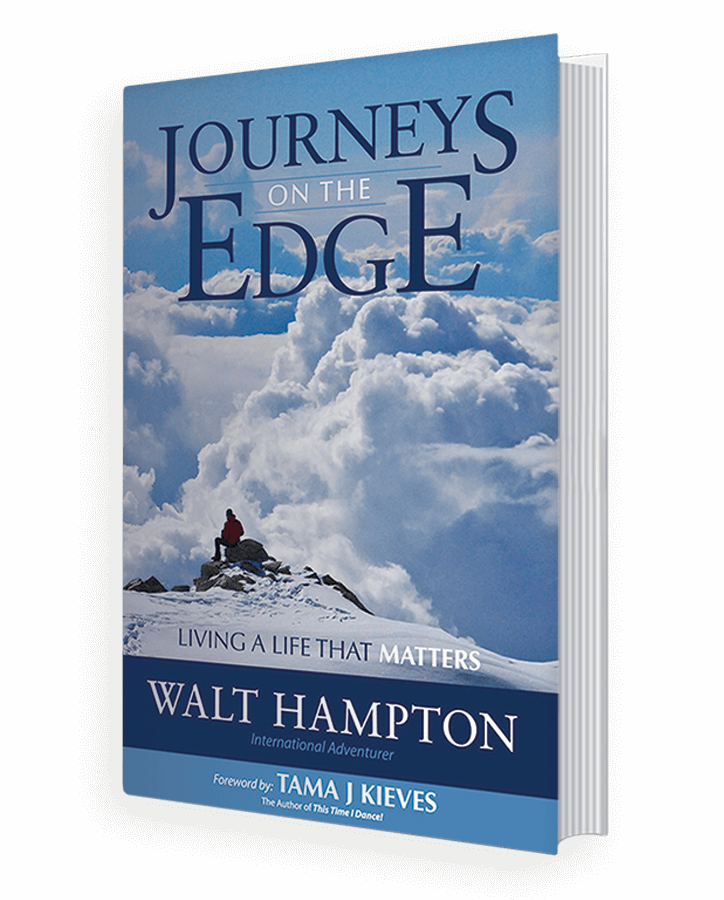
You’ll Get A Signed Copy!
Click on the button for your copy of my brand new book “The power principles of time mastery!”
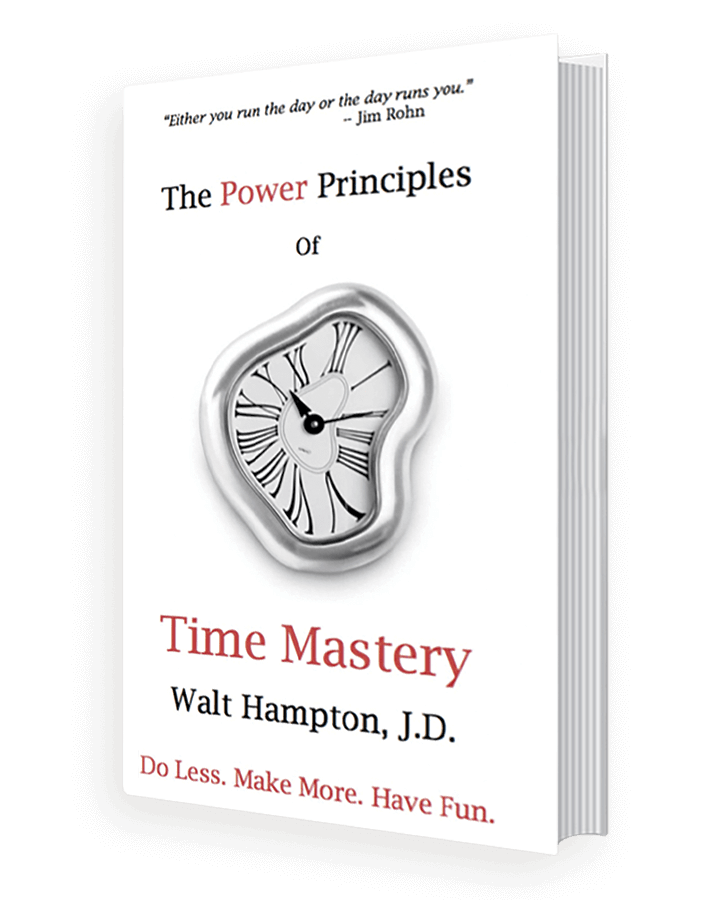
You’ll Get A Signed Copy!
Categories
Adventure
Finding The Way
Journeys
Leadership
Success
Ultra Training